Can Separation Anxiety Cause Night Terrors?
Story-at-a-Glance
- Night terrors affect 17-21% of toddlers and young children, with research revealing strong associations with anxiety-related problems including separation anxiety and other internalizing symptoms
- The relationship between separation anxiety and night terrors is bidirectional—anxiety can fragment sleep architecture, while disrupted sleep can heighten anxious responses
- Sleep terrors emerge from incomplete arousal during deep non-REM sleep, but emotional stress including separation anxiety significantly increases their frequency
- Recent data shows 11% of American children now have diagnosed anxiety disorders, with post-pandemic increases creating what experts call a “sleep anxiety epidemic”
- Understanding shared underlying mechanisms—including stress response systems, sleep fragmentation, and developmental temperament—helps parents distinguish between normal developmental phases and patterns requiring intervention
- Evidence-based approaches focus on consistent routines, emotional regulation support, and addressing both daytime anxiety and nighttime sleep architecture
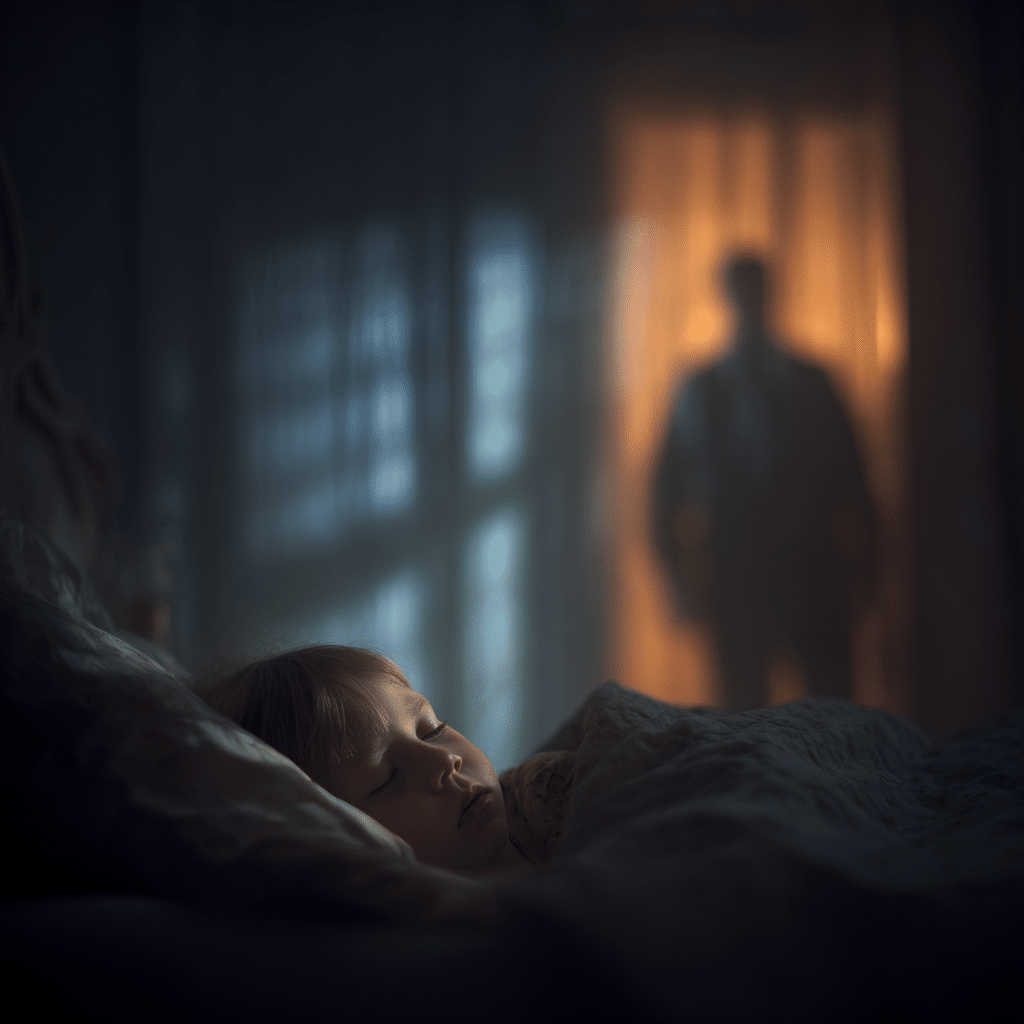
When a three-year-old begins experiencing terrifying nighttime episodes, parents often feel helpless. Picture this: the child sits bolt upright at 11 PM, screaming inconsolably. Eyes open but unseeing. Parents initially think these are vivid nightmares, unaware of the potential connection between separation anxiety and night terrors.
The pediatrician’s explanation—night terrors—typically brings both relief and confusion. Why would a child who’s clingy during the day suddenly develop these frightening episodes at night?
This scenario is far from unique. A longitudinal study tracking 324 children found that 16.7-20.5% experienced night terrors during early childhood. Higher frequencies strongly associated with internalizing problems at ages 4-5, particularly anxious and depressed symptoms.
What’s becoming increasingly clear to sleep researchers? The link between separation anxiety and childhood night terrors isn’t a simple one-way street. It’s a complex, bidirectional relationship that challenges our understanding of both conditions.
The Neurological Dance: How Night Terrors Actually Happen
First, let’s clarify what we’re dealing with. Night terrors typically occur in children between 4 and 12 years of age, with a peak between 5 and 7 years. They emerge during arousal from stage three or four NREM (non-rapid eye movement) sleep. This usually happens within the first three hours after falling asleep.
Unlike nightmares—which happen during REM sleep and children often remember—night terrors involve partial arousal from the deepest sleep stages.
Picture your child’s brain trying to transition between sleep states but getting “stuck” halfway. The autonomic nervous system kicks into high gear while consciousness remains offline. This creates the characteristic scene: intense fear expression, sweating, rapid heartbeat, screaming. Yet complete amnesia awaits the next morning.
But here’s where it gets interesting. Developmental, environmental, organic, psychological, and genetic factors have been identified as potential causes. Sleep terrors occur with increased frequency in individuals experiencing:
- Emotional stress
- Separation anxiety
- Sleep deprivation
- Anxiety disorders
- Bullying experiences
- Frequent headaches
Notice separation anxiety sitting prominently on that list.
The Anxiety Connection: More Than Coincidence
Understanding the link between separation anxiety and childhood night terrors requires examining both clinical observations and longitudinal research. Dr. Reut Gruber, Director of the Attention, Behaviour and Sleep Laboratory at McGill University’s Douglas Research Centre, has spent years investigating how sleep and emotional regulation intertwine in children. Her work reveals something parents instinctively sense but research now confirms: children’s daytime emotional experiences profoundly shape their nighttime sleep architecture.
What the Research Shows
The MAVAN cohort study found that higher frequency of sleep terrors in early childhood significantly increased the likelihood of presenting clinically significant internalizing problems in preschool. Specific associations appeared with emotionally reactive, anxious/depressed, and somatic complaints scales.
While this study measured general anxious and depressed symptoms rather than separation anxiety specifically, other research in school-aged children has documented direct links between sleep terrors and higher separation anxiety. The association between night terrors and anxiety-related symptoms held true in the MAVAN study even after controlling for sleep duration, maternal depression, and socioeconomic factors.
The Rising Tide of Childhood Anxiety
We’re seeing these patterns intensify against a backdrop of rising childhood anxiety. According to CDC data from 2022-2023, 11% of children ages 3-17 have current, diagnosed anxiety. This breaks down to 9% of males and 12% of females.
Overall mental, behavioral, and developmental disorder prevalence among children increased from 25.3% to 27.7% between 2016 and 2021. Specific increases appeared in anxiety and depression.
The post-pandemic landscape has amplified this further. Many families report that while lockdowns ended years ago, the emotional aftershocks continue to ripple through children’s sleep patterns.
Understanding the Bidirectional Highway
So which comes first—the anxiety or the sleep disruption?
Top sleep researchers would challenge this very question. The relationship flows both ways simultaneously.
Anxiety Fragments Sleep
When a child experiences separation anxiety or other forms of emotional distress, their stress response system remains partially activated even during sleep. Research comparing children with generalized anxiety disorder to healthy controls found that physiologic sleep characteristics directly contribute to the symptom profiles of clinically-anxious children.
Sleep architecture shows distinct relationships to daytime affective symptoms in clinical versus healthy populations. Anxious children often struggle to achieve the deep, consolidated sleep stages where night terrors paradoxically emerge. Yet when they do reach these stages, the arousal threshold gets disrupted.
Sleep Disruption Heightens Anxiety
Conversely, fragmented sleep depletes the emotional regulatory resources children need during waking hours. The MAVAN study demonstrated that the association between sleep terrors and internalizing problems remained statistically significant even when controlling for sleep duration.
This suggests that sleep architecture disruption itself—not just shortened sleep—contributes to emotional difficulties. Sleep fragmentation affects stress hormone regulation, particularly cortisol patterns. This creates a physiological vulnerability to anxious responses.
Think of it as two interconnected gears. When one starts moving irregularly, it inevitably affects the other’s rhythm.

The Developmental Context: Why Now?
Separation anxiety peaks during predictable developmental windows. Typically between 8-18 months, then again around 2-3 years as children navigate autonomy.
Between 8 months and 1 year old, babies develop object permanence. Separation anxiety develops, leading to agitation and upset when a parent tries to leave. This coincides precisely with the age range where night terrors become more prevalent.
Dr. Marie-Hélène Pennestri, whose research at McGill University focuses on sleep development in infants and preschoolers, emphasizes that understanding these developmental overlaps helps distinguish normal developmental phases from patterns requiring intervention.
Not every clingy toddler will develop night terrors. Not every child with occasional night terrors has an underlying anxiety disorder.
Individual Differences Matter
However, certain children appear more vulnerable. Research demonstrates that highly sensitive or deeply feeling kids struggle more with separation from birth. They experience separation more intensely than mild-tempered children.
These temperamentally sensitive children may be more likely to experience both daytime separation struggles and nighttime arousal disruptions.
Save This Article for Later – Get the PDF Now

Shared Underlying Mechanisms
Recent neuroscience research reveals why these two phenomena cluster together, illuminating the link between separation anxiety and childhood night terrors at a biological level:
Stress Response Dysregulation
Both separation anxiety and frequent night terrors involve hyperactivation of the hypothalamic-pituitary-adrenal (HPA) axis. Children with heightened baseline stress reactivity may experience more difficulty with both daytime separations and nighttime sleep-state transitions.
Sleep Architecture Vulnerability
Sleep terrors are believed to result from incomplete arousal from slow-wave sleep. The longitudinal study showed associations remained significant after controlling for sleep duration. This indicates sleep quality and architecture—not just quantity—matters critically.
Anxiety doesn’t just reduce sleep time. It fundamentally alters how children cycle through sleep stages.
Developmental Timing
The prefrontal cortex—responsible for emotional regulation—undergoes massive development during the preschool years. This same period represents peak vulnerability for both separation anxiety and night terrors.
The developing brain’s emotional regulation circuitry may struggle with both waking separations and sleep-state transitions.
The Modern Amplification: Screen Time and Sleep Anxiety
We cannot discuss childhood sleep anxiety without acknowledging 2025’s elephant in the room. Recent survey data reveals that 92% of UK children and 96% of US children look at screens before bed. Among 14-16-year-olds, 40% report being kept awake over concerns around social media and online messaging.
Even younger children aren’t immune. The blue light exposure, stimulating content, and FOMO (fear of missing out) all fragment sleep architecture while simultaneously heightening anxious arousal.
The parallel rise in what sleep experts now call “sleep anxiety” creates a particularly vicious cycle for already-anxious children. Worry about not sleeping well actually prevents sleep.
When Should Parents Worry?
Most children who experience sleep terrors in early childhood naturally stop experiencing them around age 5. This suggests that in many children, this manifestation appears to be part of normal developmental process.
Similarly, separation anxiety typically resolves as children’s cognitive abilities mature. They develop object permanence and emotional regulation skills.
Red Flags Requiring Evaluation
However, parents should consider professional evaluation if:
- Night terrors occur multiple times per week for extended periods
- Daytime separation anxiety intensifies or spreads to multiple contexts
- The child shows signs of anxiety or fear during waking hours that didn’t exist before
- Sleep disruption affects daytime functioning, mood, or behavior significantly
- The frequency of episodes increases rather than decreases over time
Research from the MAVAN study suggests that for some children, higher frequency of sleep terrors in early childhood might be a marker for children at risk of developing internalizing problems. Particularly depressive and anxiety symptoms.
Evidence-Based Approaches That Actually Help
1. Optimize Sleep Hygiene Foundation
The basics matter enormously. As sleep deprivation can predispose to sleep terrors, good sleep hygiene is essential. Your child needs an appropriate sleeping environment.
This means:
- Consistent bedtime and wake time (yes, even weekends)
- Age-appropriate sleep duration
- Cool, dark, quiet bedroom environment
- No screens for at least one hour before bed
2. Address Separation Gradually and Consistently
Practice being apart from each other. Introduce new people and places slowly. If planning to leave your child with a relative or new babysitter, invite that person over in advance. They can spend time together while you’re in the room.
Gradual exposure builds confidence without overwhelming the child’s regulatory capacity.
3. Implement Transitional Objects and Rituals
Comfort objects serve as tangible connections to parents during separation. Research has shown a comfort object can provide a sense of security during stressful transitions like moving, traveling, illness, and new environments.
Consistent bedtime routines create predictability that helps anxious children relax into sleep.
4. Respond Calmly During Episodes
Attempts to interrupt a sleep terror episode should be avoided. In the majority of cases, the patient does not awaken fully and settles back to quiet and deep sleep.
Parents should prioritize safety—removing obstacles, gently guiding back to bed. Resist the urge to fully wake the child. This often prolongs the episode and increases confusion.
5. Consider Anticipatory Awakening for Frequent Episodes
Anticipatory awakening, performed approximately half an hour before the child is most likely to experience a sleep terror episode, is often effective for treatment of frequently occurring sleep terrors.
This technique involves gently rousing the child before the typical episode timing. Briefly interrupt the sleep cycle, then allow them to fall back asleep naturally.
The Bigger Picture: Treating the Whole System
One fascinating aspect of this research is its emphasis on the family system. While the association between sleep terrors and internalizing problems remained significant when controlling for maternal depressive symptoms in the MAVAN study, maternal mood was significantly associated with child behavioral scores.
This highlights that multiple family factors influence children’s emotional and sleep patterns.
Effective intervention often requires addressing parental anxiety, family stress levels, and household routines—not just focusing narrowly on the child’s symptoms. When parents model healthy emotional regulation and maintain calm responses to both separation moments and nighttime episodes, children absorb these patterns.
Looking Forward: What the Research Tells Us About Prevention
For parents wondering how to prevent these patterns before they start, or worried about future risks, current research offers cautiously optimistic guidance.
The longitudinal design of the MAVAN study controlled for concurrent maternal depression, nocturnal sleep duration, child’s sex, and socioeconomic status. The relationship between sleep terrors frequency and later emotional-behavioral problems remained independent of these confounding factors.
This suggests that early identification and intervention around sleep quality—not just quantity—may offer protective benefits. Prioritizing consolidated, restorative sleep during the crucial preschool years could potentially reduce vulnerability to later anxiety disorders. Brain development and emotional regulation circuits are rapidly maturing during this time.
Additionally, we’re learning that not all sleep problems carry equal risk. The research distinguishes between transient night terrors (which most children experience occasionally and outgrow without issue) and persistent, high-frequency patterns that correlate with broader emotional regulatory challenges.
A Word on Professional Support
While many children navigate the link between separation anxiety and childhood night terrors as temporary developmental phases, some need additional support.
Cognitive-behavioral therapy adapted for young children can make significant differences. Parent-child interaction therapy helps. In some cases, brief medication trials may be appropriate when first-line approaches aren’t sufficient.
The key message from researchers like Dr. Reut Gruber? Early intervention—when patterns first emerge rather than after years of entrenchment—typically yields the best outcomes.
Parents shouldn’t feel they’re “overreacting” by consulting with pediatricians, child psychologists, or sleep specialists when their instincts suggest something needs attention.
Final Reflections
The emerging understanding of how separation anxiety and night terrors intertwine reveals something profound about child development. Our children’s daytime emotional world and nighttime sleep architecture exist as one integrated system, not separate domains.
When we support emotional security during waking hours—through responsive parenting, gradual separation practice, and anxiety management—we simultaneously strengthen sleep architecture. When we prioritize healthy sleep foundations, we build emotional resilience.
For parents navigating these challenges, remember that most children experiencing either separation anxiety or occasional night terrors will develop typically with time and supportive responses. The relationship between these phenomena, while complex, also offers multiple intervention points.
Whether you start by addressing daytime anxiety, optimizing sleep hygiene, or both simultaneously, each step forward influences the entire system.
As we continue learning more about these intricate connections, one thing becomes clear: understanding the link between separation anxiety and childhood night terrors isn’t just about solving sleep problems—it’s about supporting the whole emotional and neurological development of children navigating the challenging journey from infancy through school age.
What questions do you have about your child’s sleep patterns or separation behaviors? Have you noticed connections between daytime emotional states and nighttime sleep quality? Understanding these relationships can transform how we respond to our children’s nighttime needs.
For more information on related topics, explore our guide on Understanding Night Terrors and Anxiety: The Two-Way Connection.

FAQ
Q: What exactly is the link between separation anxiety and childhood night terrors?
A: The link is bidirectional and complex. Separation anxiety—the distress children experience when separated from primary caregivers—can fragment sleep architecture and increase vulnerability to night terrors. Simultaneously, frequent night terrors and disrupted sleep deplete children’s emotional regulatory resources, making them more prone to anxious responses during the day. Research shows they share underlying mechanisms including stress response system activation, sleep architecture vulnerability, and developmental timing, with both clustering during the preschool years when brain emotional regulation circuits are rapidly maturing. While large longitudinal studies have demonstrated associations between night terrors and general anxious/depressed symptoms, other research in school-aged children has documented specific links to separation anxiety.
Q: Are night terrors the same as nightmares?
A: No, they’re fundamentally different. Nightmares occur during REM (rapid eye movement) sleep, usually in the early morning hours, and children typically remember them. Night terrors emerge from deep non-REM sleep stages, usually within 1-3 hours after falling asleep. During night terrors, children appear awake with eyes open but are actually still asleep, don’t recognize parents’ presence, show intense autonomic arousal (sweating, rapid heartbeat), and have complete amnesia of the episode the next morning.
Q: How common are night terrors in children?
A: Research indicates that between 16.7% and 20.5% of toddlers and young children experience night terrors during early childhood, with prevalence peaking between ages 5 and 7 years. However, for most children, these are transient developmental phenomena that resolve spontaneously by late adolescence. The lifetime prevalence is estimated at approximately 10%.
Q: What triggers night terrors?
A: Multiple factors can trigger night terrors, including sleep deprivation, irregular sleep schedules, fever, full bladder, emotional stress, separation anxiety, anxiety disorders, certain medications, sleep apnea, and familial predisposition. Essentially, anything that disrupts normal sleep architecture or creates incomplete arousals from deep sleep can potentially trigger episodes in vulnerable children.
Q: When should I be concerned about the frequency of night terrors?
A: Most children experience occasional night terrors that naturally resolve with time. Consider professional evaluation if night terrors occur multiple times weekly for extended periods, if frequency increases rather than decreases over time, if they’re accompanied by daytime anxiety or behavioral changes, or if they significantly affect the child’s (or family’s) daytime functioning. Research suggests that higher frequency patterns may serve as early markers for children at risk of developing internalizing problems.
Q: Can I prevent night terrors?
A: While you can’t prevent all night terrors (especially in genetically vulnerable children), you can reduce frequency by ensuring adequate, consistent sleep; maintaining regular sleep-wake schedules; managing daytime stress and anxiety; avoiding overtiredness; addressing underlying sleep disorders like sleep apnea; and implementing calming bedtime routines. For children with predictable timing of episodes, anticipatory awakening 30 minutes before typical occurrence can be effective.
Q: What should I do during a night terror episode?
A: Remain calm and ensure safety by removing obstacles and gently guiding the child away from potential hazards. Don’t attempt to wake the child, as this usually prolongs the episode and increases confusion. Don’t shake or shout. Simply stay nearby, speak in calm, soothing tones, and wait for the episode to resolve naturally, which typically takes a few minutes. The child will return to normal sleep without needing your intervention.
Q: How does screen time affect the link between anxiety and sleep problems?
A: Screen time before bed has multiple detrimental effects: blue light suppresses melatonin production, delaying sleep onset; stimulating content increases arousal and makes relaxation difficult; and for older children, social media interactions can trigger anxiety that persists into nighttime. Recent data shows 92-96% of children use screens before bed, with 40% of teenagers kept awake by social media concerns. This creates what experts call a “sleep anxiety epidemic,” where worry about sleep performance itself prevents quality rest.
Q: What does “sleep architecture” mean?
A: Sleep architecture refers to the basic structural organization of sleep—the cyclical pattern of moving through different sleep stages including light sleep (N1, N2), deep slow-wave sleep (N3), and REM (rapid eye movement) sleep. Healthy sleep requires cycling smoothly through these stages multiple times per night. Fragmented architecture, where children repeatedly rouse partially or cycle irregularly, prevents restorative sleep even if total sleep time seems adequate.
Q: Are some children more vulnerable to both separation anxiety and night terrors?
A: Yes, research shows temperamentally sensitive or highly reactive children experience both conditions more intensely. These children, who feel emotions more deeply from birth, may struggle more with separations and have more disrupted sleep architecture. Additionally, children with family histories of anxiety disorders, sleep disorders, or parasomnias show increased vulnerability. However, vulnerability doesn’t equal destiny—with appropriate support, most children develop healthy emotional regulation and sleep patterns.
Q: Can separation anxiety cause long-term sleep problems?
A: If unaddressed, yes. Chronic activation of stress response systems during early development can alter sleep architecture patterns long-term. However, the research is also encouraging: when addressed through consistent routines, gradual separation practice, and if needed, professional support, most children’s sleep normalizes as their emotional regulation skills mature. Early intervention, when patterns first emerge, typically yields the best outcomes.