Does Stress Make Sleepwalking Worse?
Story-at-a-Glance
• The relationship between stress and sleepwalking is more nuanced than the simple “stress causes more episodes” narrative suggests. Chronic anxiety doesn’t necessarily increase frequency, and the connection may be U-shaped or mediated entirely by sleep deprivation
• In a landmark study of 100 adult sleepwalkers, 59 percent reported triggering factors that increased episode frequency and severity, with stressful events and strong emotions topping the list. Yet the mechanism appears to work through disrupting slow-wave sleep rather than stress acting directly on the brain
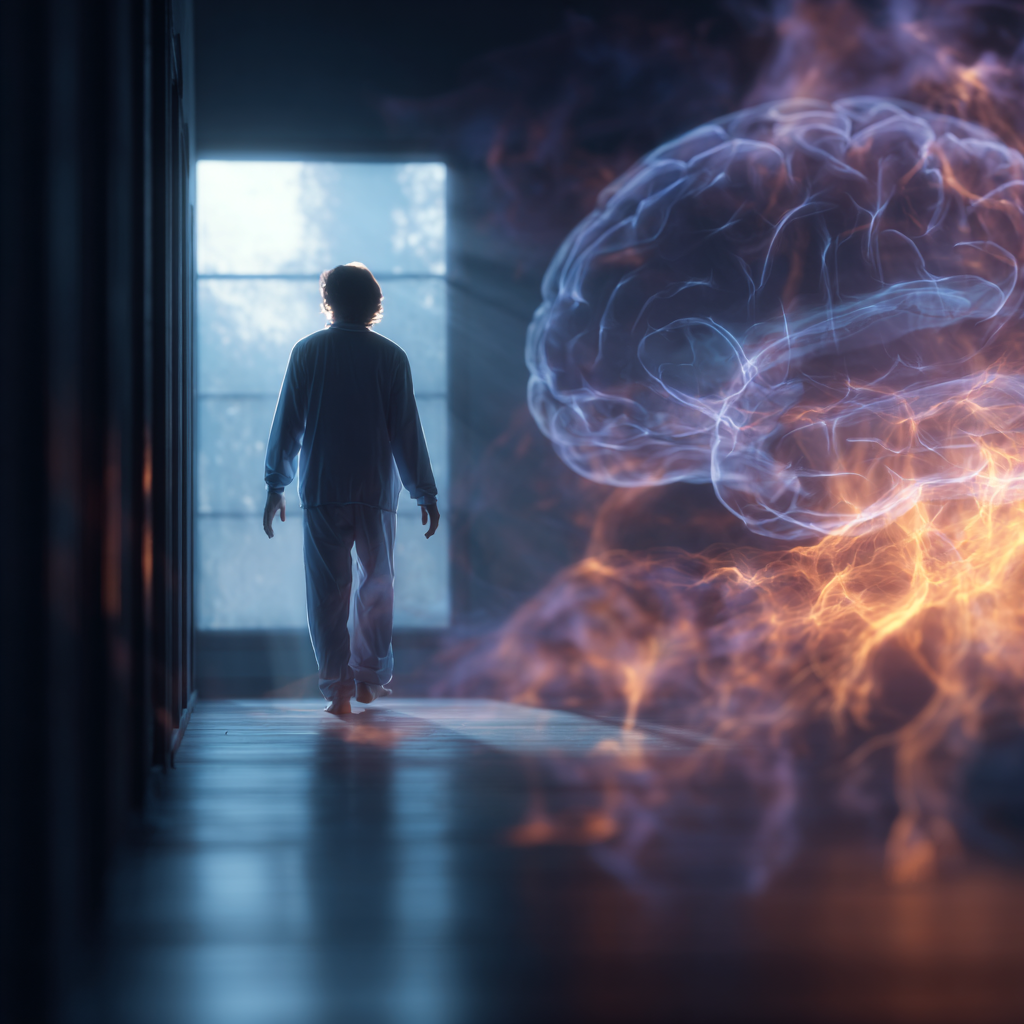
• Sleepwalking occurs during a peculiar state where parts of your brain are awake (motor cortex) while others remain deeply asleep (frontal regions controlling consciousness), creating what researchers call a “dissociated state.” Stress appears to destabilize the boundaries between these states
• State anxiety levels above 60 were associated with nearly three times higher odds of sleepwalking, according to research from Dr. Yves Dauvilliers. But trait anxiety showed only minimal association—suggesting it’s acute stress responses, not your baseline temperament, that matter most
• Two clinical case studies revealed that psychological treatment targeting emotional conflicts reduced sleepwalking frequency and intensity. Patients reported fewer episodes during vacations when daily stressors diminished
• Sleep deprivation—often caused by stress and anxiety—creates a perfect storm by simultaneously increasing slow-wave sleep pressure and destabilizing the very architecture that should keep you still. This explains why stressed individuals who aren’t sleeping well face compounded risk
I still remember the first time someone mentioned that stress might not be the straightforward culprit we’ve always assumed in sleepwalking. The conversation happened during a conference coffee break, when a sleep researcher offhandedly remarked that their data showed something unexpected about anxiety and nighttime wandering. “We kept looking for a linear relationship,” they said, stirring their coffee with more force than necessary. “The more anxious, the more episodes. But it just wasn’t there.”
That comment stuck with me, particularly because it contradicted what seemed so obviously true. After all, stress disrupts nearly every aspect of sleep—why wouldn’t the impact of stress and anxiety on sleepwalking frequency follow the same pattern?
The answer, it turns out, reveals something fascinating about how our sleeping brains respond to psychological pressure.
When Your Brain Can’t Decide Whether to Sleep or Wake
Dr. Antonio Zadra, a Full Professor at the Université de Montréal and researcher at the Center for Advanced Research in Sleep Medicine, has spent years investigating what he calls the “interplay between sleep and wakefulness” in sleepwalkers. His work paints a picture that’s considerably more complex than stress simply “causing” more episodes.
Sleepwalking happens during slow-wave sleep—the deepest stage of non-REM sleep, typically occurring in the first third of the night. During normal sleep, your entire brain either sleeps or wakes as a unified whole. But in sleepwalkers, something different happens. Brain imaging studies have shown that during episodes, the motor cortex and cingulate cortex show wake-like activity. Meanwhile, frontal and parietal regions—the areas controlling conscious awareness—remain firmly asleep.
Think of it as your brain being caught between two states, unable to commit fully to either. And here’s where stress enters the picture in an unexpected way.
The Stress-Sleep Architecture Connection
Research led by Dr. Yves Dauvilliers, Professor of Physiology and Neurology at the University of Montpellier and director of the sleep lab at Gui-de-Chauliac Hospital in France, examined the largest prospective cohort of adult sleepwalkers seen in a clinical setting. The study, involving 100 patients diagnosed with primary sleepwalking, revealed something crucial. Fifty-nine percent reported specific triggers that increased both the frequency and severity of their episodes.
Stressful events topped that list, followed by strong positive emotions (yes, even excitement can trigger episodes), sleep deprivation, and less frequently, alcohol or intense evening physical activity. What all these triggers share is their effect on slow-wave sleep. They don’t directly cause sleepwalking. Instead, they promote increased slow-wave sleep and what researchers call “NREM sleep instability.”
Here’s what that means in practical terms: When you’re stressed, your body tries to compensate by deepening sleep during the recovery periods when you actually do sleep. This increases slow-wave sleep pressure. Simultaneously, stress disrupts the normal architecture of that deep sleep, creating instability. This manifests as more frequent micro-arousals, altered brain wave patterns, and changes in how different brain regions communicate. It’s this unstable slow-wave sleep, not stress itself, that creates the conditions for sleepwalking.
The distinction matters. It explains why someone might experience their worst sleepwalking during a stressful period. This happens not because stress directly triggers episodes, but because stress disrupts their sleep, which then creates the neurological conditions conducive to sleepwalking.

The Anxiety Paradox: Why Chronic Worry Doesn’t Equal More Wandering
In Dauvilliers’ research, the findings on anxiety were particularly striking. State anxiety—the temporary, situational worry you feel in response to specific stressors—showed a strong association with sleepwalking when levels exceeded 60 on standardized measures. People with state anxiety above this threshold had 2.95 times higher odds of experiencing sleepwalking episodes.
But trait anxiety—your baseline tendency toward worry, the kind that reflects your general temperament—showed only a minimal association. The odds ratio was barely above 1, suggesting that being a naturally anxious person doesn’t meaningfully increase your sleepwalking frequency.
This creates an interesting paradox. Someone experiencing acute stress from a major life event (job loss, relationship problems, financial pressure) faces significantly elevated risk. But someone with generalized anxiety disorder, who worries chronically about everything, doesn’t necessarily sleepwalk more often than the general population.
Why? The answer likely lies in sleep deprivation. Acute stress often disrupts sleep patterns severely but temporarily. You lie awake processing the stressor, then when you finally sleep, you crash hard into deep slow-wave sleep. This creates exactly the unstable conditions that facilitate episodes. Chronic anxiety, paradoxically, may create a different sleep pattern. Your sleep remains poor, certainly. But it might not generate the same dramatic swings between sleep deprivation and deep sleep rebound.
Two Patients, Two Paths to Understanding
A study published in PMC detailed two case reports that illuminate how stress and emotional conflict actually trigger sleepwalking episodes. These weren’t laboratory studies with controlled conditions—they were real people dealing with real psychological struggles.
The first patient, a man in his early thirties, experienced sleepwalking episodes that intensified during periods of professional stress. Psychological evaluation detected no clinical levels of stress, depression, or anxiety initially, yet his sleepwalking persisted. The breakthrough came when therapy revealed emotional conflicts related to aggression and interpersonal relationships. As treatment helped him process these conflicts, his episodes diminished.
The second patient’s story was more dramatic. This individual reported sleepwalking episodes severe enough to consider medication. Clinical assessment revealed stress at an “almost exhaustion” level, along with severe depressive and anxiety symptoms. Notably, the patient reported diminished intensity and frequency of episodes during vacations—periods when daily stressors temporarily lifted.
Both cases demonstrated the same pattern: sleepwalking episodes were triggered by what researchers called “emotional misalignment”—the internal tensions created when psychological conflicts go unresolved during waking hours. It’s as if the brain, unable to process these emotions while conscious, attempts to do so during sleep, disrupting the normal boundaries between sleeping and waking states.
The Sleep Deprivation Factor
Here’s where the impact of stress and anxiety on sleepwalking frequency becomes especially insidious. Stress doesn’t just trigger episodes directly—it creates sleep deprivation, which then dramatically amplifies sleepwalking risk.
Recent research published in 2024 examined how sleep deprivation affects sleepwalking in laboratory settings. When researchers compared baseline sleep recordings with those obtained after 25 hours of sleep deprivation in 124 adult sleepwalkers, they found that post-sleep deprivation assessments resulted in nearly twice as many episodes being recorded. The proportion of patients experiencing at least one episode jumped from 48 percent to 63 percent.
This matters because stress and anxiety are among the most common causes of sleep deprivation. When you’re stressed, you might lie awake ruminating about problems. When you’re anxious, you might wake repeatedly throughout the night, checking the clock, worrying about tomorrow. The result is chronic partial sleep deprivation—not severe enough to make you completely non-functional, but significant enough to alter your sleep architecture.
That altered architecture then creates what researchers call a “homeostatic sleep drive”—your body’s powerful urge to compensate for lost sleep by diving deeply into slow-wave sleep when you finally do rest. And as we’ve seen, that combination of sleep deprivation followed by intense slow-wave sleep is precisely what facilitates sleepwalking episodes.
Beyond Simple Causation: A Systems View
Dr. Maurice Ohayon, Professor of Psychiatry at Stanford University and Director of the Stanford Sleep Epidemiology Research Center, has studied the epidemiology of sleep disorders for decades. His research on sleepwalking prevalence found something that initially seemed paradoxical: people with depression were 3.5 times more likely to sleepwalk than those without depression, and those with obsessive-compulsive disorder or alcohol abuse showed significantly higher rates as well.
But as Ohayon noted, “there is no doubt an association between nocturnal wanderings and certain conditions, but we don’t know the direction of the causality. Are the medical conditions provoking sleepwalking, or is it vice versa? Or perhaps it’s the treatment that is responsible.”
This uncertainty actually reveals something important about how we should think about the impact of stress and anxiety on sleepwalking frequency. Rather than a simple cause-and-effect relationship, we’re looking at a complex system where multiple factors interact:
Sleep deprivation (often caused by stress/anxiety) → Increased slow-wave sleep pressure → Unstable sleep architecture → Sleepwalking episodes → Anxiety about sleepwalking → More sleep disruption → The cycle continues.
Understanding this system helps explain why interventions that reduce stress don’t always eliminate sleepwalking, and why managing sleepwalking sometimes requires addressing multiple factors simultaneously rather than focusing solely on stress reduction.
Save This Article for Later – Get the PDF Now

What Actually Helps
The research suggests several practical implications. If you’re experiencing stress-related sleepwalking, simply telling yourself to “relax” probably won’t solve the problem. Instead, consider this multi-faceted approach:
Prioritize sleep consistency. Because sleep deprivation amplifies sleepwalking risk through its effects on slow-wave sleep, maintaining regular sleep schedules becomes crucial during stressful periods—precisely when you’re most tempted to stay up late worrying or catching up on work.
Address underlying psychological conflicts. The case studies showed that psychological treatment targeting emotional conflicts reduced episode frequency. This doesn’t mean you need years of therapy for every stressful event, but it does suggest that processing difficult emotions during waking hours, rather than suppressing them, may help prevent them from disrupting your sleep.
Recognize the role of state versus trait anxiety. If you experience temporary, severe stress, you face elevated sleepwalking risk during that period. But having generally high trait anxiety doesn’t mean you’re destined for chronic sleepwalking. This distinction can help you focus your efforts on managing acute stressors rather than trying to fundamentally change your temperament.
Understand medication effects. Ohayon’s research found that people taking SSRI antidepressants were three times more likely to sleepwalk at least twice monthly. If you’re on such medications and experiencing sleepwalking, discuss this with your healthcare provider—though never discontinue medications without medical supervision.
The Bigger Picture
Perhaps the most important insight from all this research is that the impact of stress and anxiety on sleepwalking frequency isn’t a simple, linear relationship. It’s not that more stress automatically equals more episodes. Instead, stress affects sleepwalking through its disruption of sleep architecture, its creation of unstable slow-wave sleep, and its interaction with other factors like medication use, underlying psychological conflicts, and genetic predisposition.
This complexity might seem frustrating—wouldn’t it be simpler if stress just directly caused sleepwalking, and reducing stress solved the problem? But understanding the actual mechanisms offers something more valuable: specific intervention points where you can make meaningful changes.
When you recognize that it’s the sleep disruption, not the stressor itself, that creates risk, you can focus on protecting your sleep even during stressful periods. When you understand that emotional conflicts left unprocessed during the day may resurface during sleep, you can prioritize finding healthy ways to work through difficult feelings. When you know that it’s acute state anxiety, not chronic trait anxiety, that matters most, you can put your energy into managing specific stressful situations. You don’t have to try to eliminate anxiety altogether.
The research also reminds us of something easy to forget: your sleeping brain isn’t simply “turned off.” It remains an active, complex system that responds to psychological pressures in sophisticated ways. Sleepwalking, in this view, isn’t a malfunction or defect—it’s your brain struggling to manage the interface between consciousness and unconsciousness under challenging circumstances.
For those of us who’ve experienced sleepwalking during stressful life periods, this perspective offers both explanation and hope. The episodes aren’t random, and they’re not a sign that something is fundamentally broken. They’re your brain’s response to temporary conditions that can be modified.
Looking Forward
The field continues to evolve. Recent TIME coverage of sleepwalking research has brought renewed public attention to the phenomenon, highlighting both its surprising prevalence (nearly 7 percent of adults have sleepwalked at some point) and its sometimes serious consequences.
Researchers like Zadra continue investigating the neurological mechanisms underlying the sleep-wake dissociation that characterizes sleepwalking. Dauvilliers and his colleagues work to better understand which sleepwalkers face the highest risk of injury and how to identify them earlier. Ohayon’s epidemiological research helps us grasp the true scope of the problem and its associations with other conditions.
What emerges from all this work is a more nuanced understanding—one that recognizes the role of stress and anxiety while avoiding oversimplification. The impact of stress and anxiety on sleepwalking frequency is real and significant. But it operates through specific, identifiable pathways that we can potentially intervene upon.
For anyone dealing with stress-related sleepwalking, that’s actually good news. It means you’re not helpless in the face of an incomprehensible problem. Understanding the mechanisms gives you leverage to make changes that matter.
Have you noticed patterns in your own sleepwalking related to stress levels? What strategies have you found helpful for managing episodes during difficult periods? The research provides frameworks for understanding, but your lived experience adds crucial detail to the picture.

FAQ
Q: What is sleepwalking exactly?
A: Sleepwalking (somnambulism) is a parasomnia—a sleep disorder characterized by complex behaviors occurring during sleep. It happens during slow-wave sleep (stage N3), the deepest form of non-REM sleep, typically in the first third of the night. During episodes, parts of your brain (motor cortex) are functionally awake while others (frontal regions controlling consciousness) remain asleep. This creates a dissociated state where you can perform actions without conscious awareness or memory.
Q: What does NREM sleep mean?
A: NREM stands for Non-Rapid Eye Movement sleep. It’s one of the two main categories of sleep (the other being REM, or Rapid Eye Movement sleep). NREM is divided into three stages: N1 (light sleep), N2 (intermediate sleep), and N3 (slow-wave or deep sleep). Sleepwalking occurs during N3. This is when brain waves are at their slowest and largest—hence the term “slow-wave sleep.”
Q: What is slow-wave sleep and why does it matter for sleepwalking?
A: Slow-wave sleep (SWS) is the deepest stage of sleep, characterized by slow delta waves (0.5-4 Hz) on brain recordings. It’s when your body repairs tissues, consolidates memories, and strengthens the immune system. For sleepwalkers, SWS becomes unstable—showing abnormal arousal patterns and disrupted transitions between sleep stages. This instability creates the conditions where partial awakenings can trigger sleepwalking episodes.
Q: What is state anxiety versus trait anxiety?
A: State anxiety is temporary, situational worry in response to specific stressors (like anxiety before a job interview or during financial difficulties). Trait anxiety is your general, stable tendency toward anxiety as part of your personality. Research shows state anxiety strongly predicts sleepwalking when levels are high. However, trait anxiety shows minimal association—meaning it’s acute stress responses, not your baseline personality, that increase sleepwalking risk.
Q: What does the article mean by “sleep architecture”?
A: Sleep architecture refers to the structure and pattern of your sleep cycles throughout the night. It describes how you progress through different sleep stages (N1, N2, N3, and REM), how long you spend in each stage, and how smoothly you transition between them. Stress disrupts this architecture by causing more frequent awakenings and altering the proportion of time in different stages. It also creates instability in the transitions—all of which can facilitate sleepwalking.
Q: What is sleep deprivation’s role in sleepwalking?
A: Sleep deprivation creates a “homeostatic sleep drive”—your body’s powerful urge to compensate for lost sleep by diving deeply into slow-wave sleep. This rebound effect increases both the amount and intensity of slow-wave sleep, while simultaneously making that sleep more unstable. Research shows that after 25 hours of sleep deprivation, nearly twice as many sleepwalking episodes were recorded in laboratory settings compared to baseline. The proportion of affected individuals jumped from 48% to 63%.
Q: What did Dr. Yves Dauvilliers’ research find about sleepwalking triggers?
A: Dr. Dauvilliers’ landmark study of 100 adult sleepwalkers found that 59% reported specific triggers increasing episode frequency and severity. The main triggers were (in order): stressful events, strong positive emotions, sleep deprivation, and less frequently, alcohol or intense evening physical activity. Importantly, all these triggers share a common effect. They promote increased slow-wave sleep and NREM sleep instability, rather than directly causing sleepwalking through a simple stress response.
Q: Can psychological treatment actually reduce sleepwalking frequency?
A: Yes. Research has shown that psychological treatment targeting underlying emotional conflicts can reduce both the frequency and intensity of sleepwalking episodes. Two detailed case studies demonstrated that as patients worked through emotional conflicts related to stress and interpersonal relationships through therapy, their sleepwalking episodes decreased. One patient reported fewer episodes during vacations when daily stressors diminished. This suggests that addressing the psychological factors contributing to “emotional misalignment” can have real effects on sleepwalking behavior.