Anxiety and Night Terrors in Adults
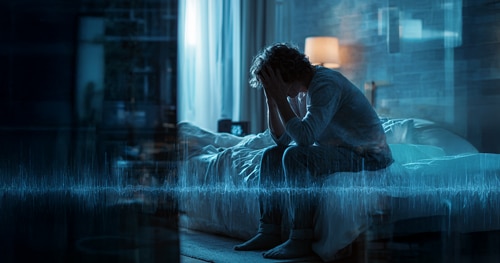
Story-at-a-Glance
- Night terrors and anxiety share a complex, bidirectional relationship where untreated anxiety can significantly increase episode frequency
- Research shows that children and adults with higher levels of anxiety, separation anxiety, and internalizing problems experience more frequent night terror episodes
- Unlike nightmares, night terrors occur during deep NREM sleep when the brain becomes stuck between sleep stages—and anxiety appears to disrupt this delicate transition
- Adults with night terrors often have co-occurring anxiety disorders, with studies showing strong associations with generalized anxiety, PTSD, and panic disorder
- Treatment approaches that address underlying anxiety—through therapy, stress reduction, and sleep hygiene—can reduce night terror frequency even when episodes don’t completely stop
When a 58-year-old man began experiencing violent night terrors several times per week, he struggled to understand what was happening to him. He’d wake his partner with screams, thrashing movements, and a look of absolute terror—yet remember nothing come morning. What made his case particularly intriguing was that he associated his disorder with persistent nightmares. He had constructed a dysfunctional explanation for his sleep disturbances. After proper diagnosis through sleep studies and targeted treatment that included addressing his anxiety levels, his sleep quality improved dramatically. The frequency of episodes barely changed, but his perception of them—and his anxiety about having them—transformed entirely.
This case highlights something sleep researchers have been documenting for years: the impact of untreated anxiety on night terror frequency is real, measurable, and often misunderstood.
What Makes Night Terrors Different from Nightmares
Before we explore anxiety’s role, it helps to understand what we’re actually dealing with. Night terrors (also called sleep terrors or pavor nocturnus) are not bad dreams. They’re classified as NREM parasomnias—disorders of arousal that happen during the deepest stages of non-rapid eye movement sleep, typically in the first third of the night.
During a night terror episode, someone might sit bolt upright, scream, thrash around, or even sleepwalk. Their eyes may be open, staring blankly. Their heart races, they sweat profusely, and they breathe rapidly. Yet they’re not actually awake—they’re trapped in a twilight state between deep sleep and consciousness. Most people experiencing night terrors have no memory of the episode the next morning.
Research published in the Journal of Clinical Sleep Medicine found that sleep terrors affect between 1% and 6.5% of children, with peak occurrence between ages 5 and 7. In adults, the prevalence drops to less than 1%—but when night terrors persist or develop in adulthood, anxiety disorders are frequently involved.
The Anxiety Connection: What the Research Actually Shows
Here’s where things get interesting. Multiple studies have established links between anxiety and night terror frequency, though the relationship isn’t always straightforward.
A longitudinal study tracking children from ages 12 months to 5 years found something striking: higher frequency of sleep terrors in early childhood was significantly associated with internalizing problems—a category that includes anxiety, depression, and somatic complaints. The frequency of sleep terrors remained relatively stable across early childhood (16.7-20.5%). However, children who experienced them more often were more likely to present clinically significant anxiety and depression symptoms by preschool age.
What’s the direction of causality here? Does anxiety cause more night terrors, or do night terrors cause more anxiety? Research suggests it works both ways, creating a vicious cycle.
Studies of adults with night terrors reveal even clearer patterns. Compared to sleepwalkers (who share similar genetic and developmental factors), adults with night terrors showed “a predominance of anxiety, depression, obsessive-compulsive tendencies, and phobicness.” They also had higher overall levels of psychopathology. Notably, the impact of untreated anxiety on night terror frequency appeared more pronounced than in childhood cases.
Dr. Alexander K.C. Leung, Clinical Professor of Pediatrics at the University of Calgary and author of over 2,200 scientific publications, has extensively reviewed the literature on sleep terrors. His work emphasizes that while developmental and genetic factors play significant roles in childhood night terrors, psychological factors—particularly anxiety—become more important when episodes persist into adulthood. They also become more important when episodes first emerge in adult years.

How Anxiety Disrupts the Sleep-Wake Transition
The mechanism behind anxiety’s effect on night terrors involves how our brains transition between sleep stages. Night terrors occur during arousals from stage 3 or 4 NREM sleep (delta sleep)—the deepest, most restorative sleep phases. Think of it as your brain getting stuck partway through shifting gears.
Anxiety keeps the nervous system on high alert. Even during sleep, an anxious brain maintains higher baseline arousal levels. Research indicates that sleep terrors happen with increased frequency in individuals experiencing emotional stress, separation anxiety in children, and conditions like generalized anxiety disorder, PTSD, and panic disorder in adults.
There’s a physiological domino effect at work: anxiety triggers stress hormones like cortisol, which affect sleep architecture. This makes the transitions between sleep stages less smooth, increasing the likelihood of partial arousals. When someone with untreated anxiety tries to shift from deep delta sleep to a lighter stage, their overstimulated nervous system can misfire—resulting in a night terror.
One fascinating observation: the impact of untreated anxiety on night terror frequency appears particularly strong when anxiety interferes with sleep quantity. Sleep deprivation itself increases delta sleep during the next sleep cycle (the body trying to catch up), which then creates more opportunities for night terrors to occur. Anxiety often causes insomnia, and insomnia can worsen anxiety—a feedback loop that amplifies night terror risk.
Real-World Examples: When Anxiety Meets Night Terrors
A published case study documented a 4-year-old boy whose parents noticed he would wake up once or twice weekly, standing somewhere in the house, crying and disoriented with rapid breathing and profuse sweating. When his parents tried to comfort him, he’d become upset. He would strike out and scream loudly for several minutes before spontaneously calming down. He had no memory of these episodes in the morning.
What made this case revealing was the treatment approach. Rather than immediately resorting to medication (which is rarely indicated for childhood night terrors), physicians chose a selective serotonin reuptake inhibitor (SSRI) typically used for anxiety and depression. After six weeks of treatment at 20mg daily of fluoxetine, the child showed good response. This suggested that addressing the underlying emotional and anxiety components could reduce the frequency and intensity of episodes.
Another case involved two adult women with night terrors, both experiencing high anxiety levels. The study noted that night terrors in adults are “highly associated with schizoid, borderline and dependent personality disorder, post-traumatic stress disorder, generalized anxiety disorder, and sleepwalking.” Both patients ultimately responded to treatment combining sleep education and anxiety management. In some cases, they also received medication targeting their underlying anxiety disorders.
These cases illustrate a key principle: when the impact of untreated anxiety on night terror frequency is addressed through proper anxiety treatment, many people see improvement—even if the night terrors don’t completely disappear.
The Broader Picture: Anxiety, Mental Health, and Sleep in 2024-2025
It’s worth stepping back to consider the context we’re living in. According to the American Psychiatric Association’s 2024 mental health poll, 43% of adults reported feeling more anxious than the previous year—up from 37% in 2023 and 32% in 2022. That’s a concerning upward trend.
The World Health Organization’s 2024 Mental Health Atlas revealed that depression and anxiety cost the global economy an estimated $1 trillion annually in lost productivity. Over a billion people worldwide are living with mental health conditions, yet services remain drastically underfunded and inaccessible for many.
What does this have to do with night terrors? Everything. When anxiety goes untreated on a societal scale, we create conditions that worsen sleep disorders across the board. This happens when people struggle to access mental health care, when stigma prevents help-seeking, and when economic pressures create chronic stress. Mental Health Awareness Month in May 2025 focuses on the interconnection between mental and physical health, with sleep quality playing a crucial role.
Interestingly, there’s a bit of good news buried in recent data: mental health among youth improved from 2023 to 2024, with major depressive episodes in 12-17 year-olds dropping from 18.1% to 15.4%. Whether this translates to reduced night terror frequency in young people remains to be seen, but it suggests that when we address mental health systematically, sleep can improve.
Save This Article for Later – Get the PDF Now

Why Anxiety Treatment Matters—Even When Terrors Don’t Stop
Here’s something that surprised me while researching this topic: successful anxiety treatment doesn’t always eliminate night terrors completely, yet patients still report dramatic improvements in their quality of life.
Remember that 58-year-old man from the opening? His case is instructive. After sleep education sessions that helped him understand the difference between nightmares and night terrors, along with treatment that included anxiety management, his episode frequency only marginally decreased. But his overall sleep quality improved and his anxiety reduced significantly. The researchers noted that “although the underlying cause of the night terrors remained untreated or partially treated, his perception about these disturbances was altered to the degree that his response improved.”
This speaks to something important: the impact of untreated anxiety on night terror frequency isn’t just about the number of episodes. It’s also about the distress those episodes cause, the fear of sleep itself, and the secondary anxiety about having another episode. When we address anxiety, we break that secondary cycle even if we don’t eliminate the primary parasomnia.
Practical Implications: What Can You Actually Do?
If you or someone you love experiences night terrors, and anxiety seems to be part of the picture, what are your options?
Start with sleep hygiene fundamentals. Research consistently shows that sleep deprivation can trigger night terrors by increasing delta sleep. Establishing regular sleep schedules, creating a calm bedtime routine, and ensuring adequate sleep duration can reduce episode frequency. Adults need 7-9 hours, children even more.
Address anxiety through appropriate channels. This might mean therapy—cognitive behavioral therapy has strong evidence for treating anxiety disorders. It could involve stress reduction techniques like meditation, progressive muscle relaxation, or breathing exercises. For some people, medication prescribed by a healthcare provider may be appropriate, though this is typically reserved for severe cases that don’t respond to other interventions.
Safety first. Night terrors can lead to physical injury. If episodes are frequent, consider practical safety measures: securing windows, using safety gates on stairs, removing sharp objects from the bedroom, even placing the mattress on the floor for children.
Track patterns. Keep a sleep diary noting when episodes occur, what happened during the day beforehand, stress levels, sleep duration, and any other relevant factors. Patterns often emerge that can guide treatment approaches.
There’s one approach worth mentioning specifically: scheduled awakenings. Some research supports waking someone 15-30 minutes before they typically have a night terror episode. This gently disrupts the deep sleep cycle and can prevent the partial arousal that triggers the episode. It’s not a permanent solution, but it can help during high-stress periods when the impact of untreated anxiety on night terror frequency is at its peak.
When to Seek Professional Help
Night terrors in childhood are usually benign and self-limiting—most kids outgrow them by adolescence. But certain red flags warrant professional evaluation:
- Episodes occurring more than twice per week
- Night terrors that first appear after age 12
- Episodes that persist into late adolescence or adulthood
- Signs of daytime impairment (excessive sleepiness, difficulty concentrating)
- Injuries resulting from episodes
- Co-occurring symptoms suggesting an underlying disorder
For adults, the presence of night terrors almost always warrants investigation, as they frequently signal underlying mental health conditions—particularly anxiety disorders or PTSD—that benefit from treatment.
A healthcare provider might recommend polysomnography (sleep study) if there’s any question about whether episodes are actually night terrors versus other conditions like seizures or sleep apnea. Video recording an episode at home can also provide valuable diagnostic information.
The Limitations of What We Know
I want to be honest about something: despite decades of research, we still don’t fully understand night terrors. The exact etiology remains unknown. We know genetic factors play a role (your risk is 10 times higher if a first-degree relative has them). We know developmental factors matter. We know various triggers—from fever to sleep deprivation to anxiety—increase frequency.
But the precise mechanisms? How anxiety specifically disrupts the arousal process? Why some anxious people get night terrors while others don’t? These questions don’t have complete answers yet.
What we do know with reasonable confidence is that the impact of untreated anxiety on night terror frequency is real, measurable in research studies, and clinically significant for many individuals. We know that addressing anxiety often helps, even when it doesn’t cure.
That’s not nothing.
A Personal Reflection on Sleep, Anxiety, and Hope
Having dealt with insomnia myself, I’ve come to appreciate how profoundly mental and emotional states affect sleep quality. The relationship between anxiety and night terrors is just one example of this broader truth: we cannot separate our minds from our bodies, our emotional health from our physical health, our daytime experiences from our nighttime rest.
There’s something almost poetic about how night terrors manifest—the brain caught between two states, unable to fully commit to either wakefulness or sleep. Isn’t that what anxiety feels like during the day too? Caught between the present moment and imagined futures, unable to fully settle into either?
The good news—and yes, there is good news—is that we’re living in an era of increasing mental health awareness. More people are talking about anxiety. More resources exist for treatment. The stigma, while not gone, is diminishing. Mental Health Awareness campaigns remind us that mental health journeys are unique, but the strength found within them is universal.
If anxiety is fueling your night terrors or those of someone you love, you’re not alone. Help exists. Understanding exists. And perhaps most importantly, hope exists.
What questions do you have about the relationship between anxiety and sleep disturbances? Have you or a family member experienced night terrors that seemed connected to stress or anxiety levels? Understanding these patterns in your own life is often the first step toward better sleep.
Want to explore how anxiety affects your sleep more broadly? Check out our article on Emotional Causes of Insomnia, which dives deep into the hidden triggers behind sleepless nights.

FAQ
Q: What exactly are night terrors, and how are they different from nightmares?
A: Night terrors are NREM (non-rapid eye movement) parasomnias that occur during deep sleep, typically in the first third of the night. Unlike nightmares (which happen during REM sleep and are remembered), night terrors involve partial arousals where the person appears terrified—screaming, thrashing, eyes open—but isn’t fully awake and usually has no memory of the episode the next morning.
Q: What does “the impact of untreated anxiety on night terror frequency” mean?
A: This refers to research showing that when anxiety disorders go without proper treatment, people experience night terror episodes more often. The relationship works both ways: anxiety can trigger more frequent episodes, and frequent episodes can increase anxiety about sleep, creating a cycle that worsens both conditions.
Q: What are internalizing problems?
A: Internalizing problems are emotional and behavioral difficulties directed inward rather than outward. This category includes anxiety, depression, withdrawal, and somatic complaints (physical symptoms stemming from emotional distress). Research shows children with higher frequencies of night terrors are more likely to have internalizing problems.
Q: What is NREM sleep?
A: NREM stands for Non-Rapid Eye Movement sleep. It’s divided into three stages (N1, N2, and N3), with N3 being the deepest sleep stage (also called delta sleep or slow-wave sleep). Night terrors occur during arousals from this deep stage, typically in stages 3 and 4 of the older classification system.
Q: What does “delta sleep” mean?
A: Delta sleep refers to the deepest stage of NREM sleep (stage N3), characterized by slow brain waves called delta waves. This is the most restorative sleep phase and occurs primarily in the first third of the night. Night terrors happen when someone partially arouses from delta sleep without fully waking up.
Q: What are SSRIs and why are they mentioned?
A: SSRIs (Selective Serotonin Reuptake Inhibitors) are a class of antidepressant medications commonly used to treat anxiety and depression. They’re mentioned because some case studies show that treating underlying anxiety with SSRIs can reduce night terror frequency, though medication is typically not the first-line treatment, especially in children.
Q: What does “parasomnia” mean?
A: Parasomnia is an umbrella term for abnormal behaviors, movements, emotions, perceptions, or dreams that occur during sleep or sleep-wake transitions. Night terrors are classified as NREM arousal parasomnias, along with sleepwalking and confusional arousals.
Q: What is polysomnography?
A: Polysomnography is an overnight sleep study that records brain waves, oxygen levels, heart rate, breathing, and eye and leg movements during sleep. It’s used to diagnose sleep disorders and can help distinguish night terrors from other conditions like seizures or sleep apnea.
Q: What does PTSD stand for?
A: PTSD stands for Post-Traumatic Stress Disorder, a mental health condition triggered by experiencing or witnessing traumatic events. Adults with PTSD have higher rates of night terrors compared to the general population, highlighting the connection between anxiety-related conditions and sleep disturbances.
Q: What is separation anxiety?
A: Separation anxiety is excessive fear or worry about being separated from attachment figures (usually parents in children). Research shows it’s one specific type of anxiety associated with increased night terror frequency in children, though the exact mechanisms aren’t fully understood.
Q: What does “autonomic hyperactivity” mean?
A: Autonomic hyperactivity refers to overactivation of the autonomic nervous system, which controls involuntary body functions. During night terrors, this manifests as rapid heartbeat, heavy sweating, rapid breathing, dilated pupils, and flushed face—the body’s “fight or flight” response activating during sleep.
Q: What is the difference between the frequency and severity of night terrors?
A: Frequency refers to how often episodes occur (daily, weekly, monthly), while severity relates to the intensity of symptoms, duration of episodes, risk of injury, and degree of daytime impairment. Treating anxiety may affect both frequency and severity, though research suggests it sometimes improves quality of life even when frequency doesn’t dramatically decrease.