What Foods Help You Sleep Better?
Story-at-a-Glance
- Dietary glycemic index and meal composition influence sleep architecture through mechanisms beyond simple “sleep foods.” High-GI diets increased insomnia risk by 16% in a landmark study of over 77,000 postmenopausal women
- The tryptophan-serotonin-melatonin pathway is more complex than previously understood, with over 95% of dietary tryptophan metabolized via alternative pathways rather than converting to sleep hormones
- Recent October 2025 research confirms that eating more fruits and vegetables during the day significantly improves sleep quality that same night, revealing a bidirectional relationship between nutrition and rest
- Quality of carbohydrates and fats matters more than quantity—complex carbohydrates with fiber and unsaturated fats consistently improve sleep outcomes while refined sugars and processed grains disrupt sleep architecture
- Emerging evidence suggests personalized nutrition strategies incorporating genetic factors, chronotype, and meal timing could revolutionize insomnia treatment as alternatives to pharmaceutical interventions
In October 2025, researchers at Columbia University and the University of Chicago published findings that eating more fruits and vegetables during the day significantly improved sleep quality that same night. This wasn’t dietary folklore—participants who met CDC recommendations for daily produce intake showed measurably less disrupted sleep. The discovery represents a shift in how scientists understand the relationship between what we eat and how we sleep.
The concept of a “balanced insomnia diet” extends far beyond the familiar advice to drink warm milk before bed. Emerging research reveals that nutritional factors modulate sleep architecture at multiple levels—from neurotransmitter synthesis to circadian rhythm regulation—creating opportunities for dietary interventions that may rival pharmacological treatments in effectiveness.
The Glycemic Index Revolution: When Blood Sugar Becomes a Sleep Saboteur
Perhaps no single dietary factor has emerged as more influential for sleep than glycemic index. In 2020, a landmark prospective study led by Dr. James Gangwisch at Columbia University followed 77,860 postmenopausal women from the Women’s Health Initiative. The findings were striking: women consuming diets with the highest glycemic index faced a 16% increased risk of developing insomnia over three years compared to those with the lowest GI diets.
But here’s where the story gets interesting. The mechanism isn’t what most people assume. When you consume high-GI foods like white bread, added sugars, or refined grains, your blood glucose spikes rapidly. Your pancreas responds by flooding your bloodstream with insulin, which can overshoot, causing blood sugar to plummet. This triggers the release of counter-regulatory hormones—adrenaline and cortisol—that function as biological alarm bells, jolting you awake hours after you’ve fallen asleep.
The Women’s Health Initiative study revealed another crucial insight: it wasn’t just about avoiding refined carbohydrates. Women who consumed more dietary fiber, vegetables, and whole fruits (not juice) showed significantly lower insomnia risk. The fiber in whole foods slows glucose absorption, preventing the dramatic spikes and crashes that sabotage sleep architecture.
Dr. Gangwisch’s research raises an important question that challenges conventional wisdom: if high-GI diets promote initial drowsiness by raising blood sugar, why do they ultimately disrupt sleep? The answer lies in understanding that sleep isn’t a simple on-off switch but rather a complex architectural process involving multiple sleep stages, each with distinct metabolic requirements.
Beyond Tryptophan: The Surprising Truth About Sleep-Promoting Amino Acids
For decades, the public has been told a simple story: eat turkey (or other tryptophan-rich foods), which converts to serotonin, which converts to melatonin, which makes you sleepy. Recent research reveals this narrative is incomplete—and perhaps misleading.
Studies show that over 95% of ingested tryptophan is catabolized in the liver via the kynurenine pathway, not converted to serotonin. Moreover, tryptophan must compete with other large neutral amino acids for transport across the blood-brain barrier. This is where carbohydrates play an unexpected role: consuming carbohydrates triggers insulin release, which drives competing amino acids into muscle tissue, effectively increasing the ratio of tryptophan available to the brain.
This explains a paradox that has puzzled sleep researchers: why does consuming protein alone sometimes fail to improve sleep, while protein combined with complex carbohydrates shows more consistent benefits? Dr. Marie-Pierre St-Onge, founding director of the Center of Excellence for Sleep and Circadian Research at Columbia University, has pioneered research in this area. Her work demonstrates that the timing and composition of meals influences sleep architecture through multiple mechanisms beyond simple neurotransmitter precursor availability.
Consider a 2025 randomized controlled trial involving 30 adults with self-reported insomnia. Participants received a multi-ingredient formula containing sleep-supporting compounds including magnesium, GABA, and ashwagandha. The intervention significantly improved difficulty falling asleep compared to placebo—but the researchers emphasized that success required addressing multiple biological pathways simultaneously, not just tryptophan supplementation.

The Mediterranean Model: When Dietary Patterns Trump Individual Nutrients
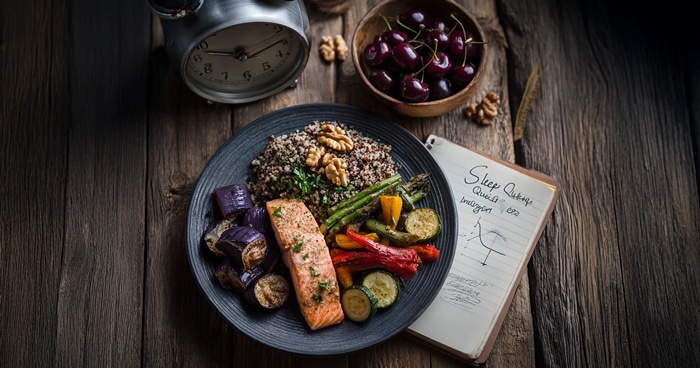
While isolating specific nutrients provides valuable mechanistic insights, mounting evidence suggests that overall dietary patterns may matter more for sleep than individual food components. The Mediterranean diet—rich in vegetables, fruits, whole grains, legumes, nuts, olive oil, and fish—has emerged as particularly promising.
A 2025 narrative review examining dietary protocols for improving sleep found that adherence to Mediterranean-style eating patterns correlated with better sleep quality across multiple studies. The mechanisms likely involve the diet’s anti-inflammatory properties, high antioxidant content, and favorable effects on gut microbiota composition.
The inflammatory connection warrants particular attention. Chronic low-grade inflammation disrupts normal sleep-wake regulation through effects on circulating cytokines, particularly interleukin-6 and C-reactive protein. Diets high in processed foods and saturated fats promote inflammation, while Mediterranean dietary patterns reduce inflammatory markers. This suggests that how to improve sleep with a balanced insomnia diet may involve targeting neuroinflammation as much as neurotransmitter synthesis.
Recent findings about the Nordic diet—another anti-inflammatory eating pattern—support this hypothesis. A 2022 study found that following a Nordic diet improved sleep quality, with effects mediated partly through reductions in inflammatory biomarkers.
The Magnesium Mystery: Why This Mineral Matters More Than You Think
Among individual nutrients, magnesium has garnered increasing attention for sleep support. A recent randomized controlled trial examined magnesium bisglycinate supplementation in healthy adults reporting poor sleep. The intervention resulted in significant improvements in sleep efficiency and reduced insomnia severity.
The mechanisms appear multifaceted. Magnesium acts as a natural N-methyl-D-aspartate (NMDA) receptor antagonist, which may promote relaxation and reduce neural excitation. Additionally, magnesium influences the GABAergic system—GABA being the brain’s primary inhibitory neurotransmitter. Some research suggests magnesium also modulates melatonin production and may reduce cortisol levels, though these effects require further investigation.
But here’s a sobering reality that often gets overlooked: magnesium’s effects on sleep may depend heavily on baseline magnesium status. Population studies indicate that many adults consume suboptimal amounts of magnesium through diet alone. This raises an important question: how to improve sleep with a balanced insomnia diet when dietary magnesium intake is already insufficient?
The answer may lie in targeted food choices rather than reflexive supplementation. Dark leafy greens, nuts, seeds, whole grains, and legumes provide not only magnesium but also other sleep-supporting compounds. The dietary magnesium intake from whole foods may offer benefits beyond the isolated mineral.
Meal Timing and Circadian Nutrition: The Fourth Dimension of Diet
Recent advances in chrononutrition—the study of how meal timing affects biological rhythms—are revolutionizing our understanding of nutrition and sleep. Research published in 2025 examined glycemic status and macronutrient distribution across different times of day. It found that meal timing influenced sleep outcomes independent of overall diet quality.
Dr. St-Onge’s laboratory has been at the forefront of this research. Her studies reveal that eating patterns—not just food composition—significantly impact circadian rhythm alignment and sleep architecture. Late-night eating, regardless of food type, can disrupt the body’s internal clock. Conversely, consistent meal timing helps reinforce circadian rhythms that support healthy sleep-wake cycles.
This brings us to a practical consideration that resonates with real-world experience: the 4 PM coffee that seemed innocuous might sabotage sleep not just through caffeine’s direct effects. It may also disrupt the circadian alignment of cortisol and melatonin rhythms. The timing and sequencing of nutritional interventions may be as important as the interventions themselves.
The Ultra-Processed Problem: Why Food Quality Trumps Calories
A large 2024 epidemiological study from the NutriNet-Santé cohort in France examined 38,570 participants. It found that ultra-processed food consumption associated with significantly higher odds of chronic insomnia. For every 10% increase in ultra-processed foods in the diet, insomnia odds increased by 6%.
This finding underscores an often-overlooked aspect of how to improve sleep with a balanced insomnia diet: the degree of food processing may matter as much as macronutrient composition. Ultra-processed foods often contain additives, emulsifiers, and other compounds that may affect gut microbiota composition, inflammatory status, and metabolic regulation—all factors that influence sleep quality.
The gut-brain-sleep axis has emerged as a critical research frontier. Studies show that gut microbiota produce neurotransmitter precursors, including tryptophan metabolites that influence melatonin synthesis. Diets high in fiber and fermented foods support beneficial gut bacteria, while ultra-processed diets promote dysbiosis that may compromise sleep quality through multiple mechanisms.
Save This Article for Later – Get the PDF Now

The Limitations We Must Acknowledge
Despite exciting advances, significant gaps remain in our understanding. Most interventional studies have been short-term, often lasting weeks rather than months. The bidirectional relationship between diet and sleep creates methodological challenges: does poor diet cause sleep disruption, or does insomnia drive unhealthy food choices?
Dr. St-Onge and her colleagues have noted that the beneficial effects of diet on sleep quality—typically 5 to 12 minutes improvement in sleep latency—might seem modest. Yet they emphasize these effect sizes are comparable to, or exceed, those achieved through many sleep-enhancing medications, with far fewer side effects.
Another consideration: much research has focused on specific populations, particularly postmenopausal women or individuals with existing sleep disorders. Whether findings generalize to younger adults, men, or healthy sleepers requires further investigation.
Personalization: The Future of Nutritional Sleep Medicine
Emerging research suggests the future of how to improve sleep with a balanced insomnia diet lies in personalization. Genetic variations in circadian rhythm genes (CLOCK, PER2, BMAL1) and nutrient metabolism genes influence individual responses to dietary interventions. Chronotype differences—whether you’re naturally a morning or evening person—modify how meal timing affects sleep.
This brings us to an important perspective that top sleep researchers emphasize: there likely isn’t a single “insomnia diet” that works for everyone. Rather, effective dietary strategies must consider individual factors including genetics, chronotype, metabolic status, gut microbiome composition, and lifestyle factors.
The December 2025 research highlighting sleep’s profound impact on life expectancy—with sleep emerging as a stronger predictor than diet or exercise—underscores the importance of optimizing all factors that influence sleep, including nutrition.
Practical Integration: Beyond Lists of “Sleep Foods”
Rather than focusing on individual “sleep foods,” evidence suggests approaching nutrition holistically:
Emphasize dietary patterns over individual nutrients—Mediterranean or Nordic diets rich in vegetables, fruits, whole grains, legumes, nuts, and fish provide multiple sleep-supporting compounds working synergistically.
Prioritize food quality by choosing minimally processed whole foods over ultra-processed alternatives. The degree of processing may influence sleep through effects on gut microbiota and inflammatory pathways.
Consider meal timing alongside meal composition, eating at consistent times and avoiding late-night food intake to support circadian rhythm alignment.
Focus on glycemic quality by choosing complex carbohydrates with fiber (whole grains, legumes, vegetables) over refined sugars and processed grains to prevent blood sugar volatility that disrupts sleep.
Ensure adequate micronutrient intake, particularly magnesium, from whole food sources rather than reflexively turning to supplementation.
The Path Forward
How to improve sleep with a balanced insomnia diet represents a maturing field transitioning from folk wisdom to mechanistic understanding. The evidence increasingly suggests that dietary modifications offer viable alternatives or complements to pharmacological interventions. This is particularly true for approaches emphasizing whole foods, managing glycemic load, supporting anti-inflammatory eating patterns, and aligning meal timing with circadian rhythms.
As research continues, we’re discovering that the question isn’t simply “what should I eat to sleep better?” but rather “how can I align my nutritional choices with my body’s biological rhythms to support the complex neurobiological processes that generate healthy sleep?”
What are your thoughts on the connection between diet and sleep? Have you noticed patterns in how certain foods or eating times affect your rest? Share your experiences in the comments below—your observations might resonate with others navigating their own journey toward better sleep.

FAQ
Q: What is glycemic index (GI) and why does it matter for sleep?
A: Glycemic index measures how quickly a food raises blood sugar levels on a scale from 1 to 100. High-GI foods (like white bread, added sugars, and refined grains) cause rapid blood sugar spikes followed by dramatic drops. These glucose fluctuations trigger the release of stress hormones like adrenaline and cortisol, which can wake you from sleep hours after you’ve fallen asleep. Low-GI foods (like whole grains, legumes, and most vegetables) cause gradual, sustained blood sugar increases that don’t trigger these disruptive hormone cascades.
Q: What is the tryptophan-serotonin-melatonin pathway?
A: This is the biochemical pathway through which the amino acid tryptophan (found in foods like turkey, milk, and eggs) is converted first to serotonin (a neurotransmitter) and then to melatonin (a hormone that regulates sleep-wake cycles). However, this pathway is much less efficient than commonly believed—over 95% of dietary tryptophan follows alternative metabolic pathways rather than converting to sleep hormones. This explains why simply eating tryptophan-rich foods doesn’t reliably improve sleep.
Q: What is sleep architecture?
A: Sleep architecture refers to the structure and pattern of sleep, including the cycling through different sleep stages throughout the night: light sleep (stages 1 and 2), deep sleep (stage 3, also called slow-wave sleep), and REM (rapid eye movement) sleep. Each stage has distinct brain wave patterns, metabolic requirements, and functions. Healthy sleep architecture involves cycling through these stages in appropriate proportions and sequences. Diet can influence which stages predominate and how efficiently you transition between them.
Q: What are GABAergic systems and why do they matter for sleep?
A: GABA (gamma-aminobutyric acid) is the brain’s primary inhibitory neurotransmitter—it reduces neural excitation and promotes calmness and sleep. GABAergic systems refer to the neural pathways and receptors that use GABA for signaling. Nutrients like magnesium influence GABAergic function, which is why they may promote relaxation and sleep. Some foods and supplements contain GABA directly, though its ability to cross the blood-brain barrier is debated.
Q: What is chrononutrition?
A: Chrononutrition is the study of how meal timing interacts with the body’s circadian rhythms (24-hour biological clocks). It examines when you eat, not just what you eat. Research shows that eating at consistent times helps reinforce healthy circadian rhythms, while late-night eating or erratic meal timing can disrupt the body’s internal clock and impair sleep quality—regardless of the foods consumed.
Q: What are ultra-processed foods and why do they affect sleep?
A: Ultra-processed foods are industrial formulations typically containing five or more ingredients, often including substances not used in home cooking (like hydrogenated oils, high-fructose corn syrup, emulsifiers, and artificial flavors). Examples include packaged snacks, sodas, instant noodles, and many convenience foods. These products often promote inflammation, alter gut microbiota composition, and may contain additives that disrupt metabolic regulation—all factors that can compromise sleep quality.
Q: What is the gut-brain-sleep axis?
A: This refers to the bidirectional communication pathways connecting the gastrointestinal tract, the gut microbiome (trillions of bacteria living in your intestines), the brain, and sleep regulation systems. Gut bacteria produce neurotransmitter precursors and metabolites that influence brain function and sleep. Conversely, sleep quality affects gut health. This explains why dietary factors that alter gut microbiota composition (like fiber intake, fermented foods, or ultra-processed foods) can indirectly influence sleep.
Q: What is the Mediterranean diet and why does it help sleep?
A: The Mediterranean diet is an eating pattern emphasizing vegetables, fruits, whole grains, legumes, nuts, olive oil, and fish, with moderate amounts of dairy and limited red meat. It’s associated with better sleep quality due to its high content of anti-inflammatory compounds, antioxidants, fiber, and omega-3 fatty acids. The diet supports healthy gut microbiota and reduces systemic inflammation—both factors that promote better sleep architecture.
Q: What is the kynurenine pathway?
A: The kynurenine pathway is the primary metabolic route for tryptophan breakdown, accounting for over 95% of dietary tryptophan metabolism. Instead of converting to serotonin and melatonin (the sleep-promoting pathway), most tryptophan is processed through this alternative pathway in the liver, producing compounds involved in immune function and cellular energy production. This is why eating tryptophan-rich foods doesn’t reliably increase melatonin levels or improve sleep.
Q: What are circadian rhythms and how does diet affect them?
A: Circadian rhythms are approximately 24-hour cycles in physiological processes, including sleep-wake patterns, hormone release, body temperature, and metabolism. These rhythms are primarily regulated by the brain’s suprachiasmatic nucleus but are influenced by external factors called “zeitgebers” (time givers)—including light exposure, meal timing, and physical activity. Eating at consistent times helps synchronize these rhythms, while irregular meal patterns or late-night eating can desynchronize them, leading to poor sleep quality.
Q: What does “postmenopausal women” mean and why are they studied in sleep research?
A: Postmenopausal women are those who have completed menopause (the natural end of menstrual cycles, typically occurring around age 50-52). This population is frequently studied in sleep research because they experience higher rates of insomnia due to hormonal changes, hot flashes, and other factors. However, this focus on postmenopausal women means findings may not automatically generalize to younger adults, men, or premenopausal women—a limitation researchers acknowledge.
Q: What is neuroinflammation and how does it affect sleep?
A: Neuroinflammation refers to inflammatory processes occurring in the brain and central nervous system. Chronic low-grade inflammation produces signaling molecules called cytokines (like interleukin-6 and C-reactive protein) that can disrupt normal sleep-wake regulation. Diets high in processed foods and saturated fats promote neuroinflammation, while anti-inflammatory dietary patterns (like Mediterranean eating) reduce it. This connection explains why dietary factors influencing inflammation can indirectly impact sleep quality.
Q: How much sleep improvement should I expect from dietary changes alone?
A: Research typically shows dietary interventions improve sleep latency (time to fall asleep) by 5-12 minutes and modestly enhance sleep efficiency and duration. While these effects might seem small, sleep researchers emphasize they’re comparable to or exceed improvements from many pharmaceutical sleep aids—with far fewer side effects. Additionally, dietary changes address root causes rather than just symptoms, potentially offering more sustainable long-term benefits. However, severe insomnia often requires comprehensive treatment including behavioral interventions, not diet alone.