The Anatomy of Stress Response: Why Your Sleep System Can’t Recover When Your Body Won’t Stand Down
Story-at-a-Glance
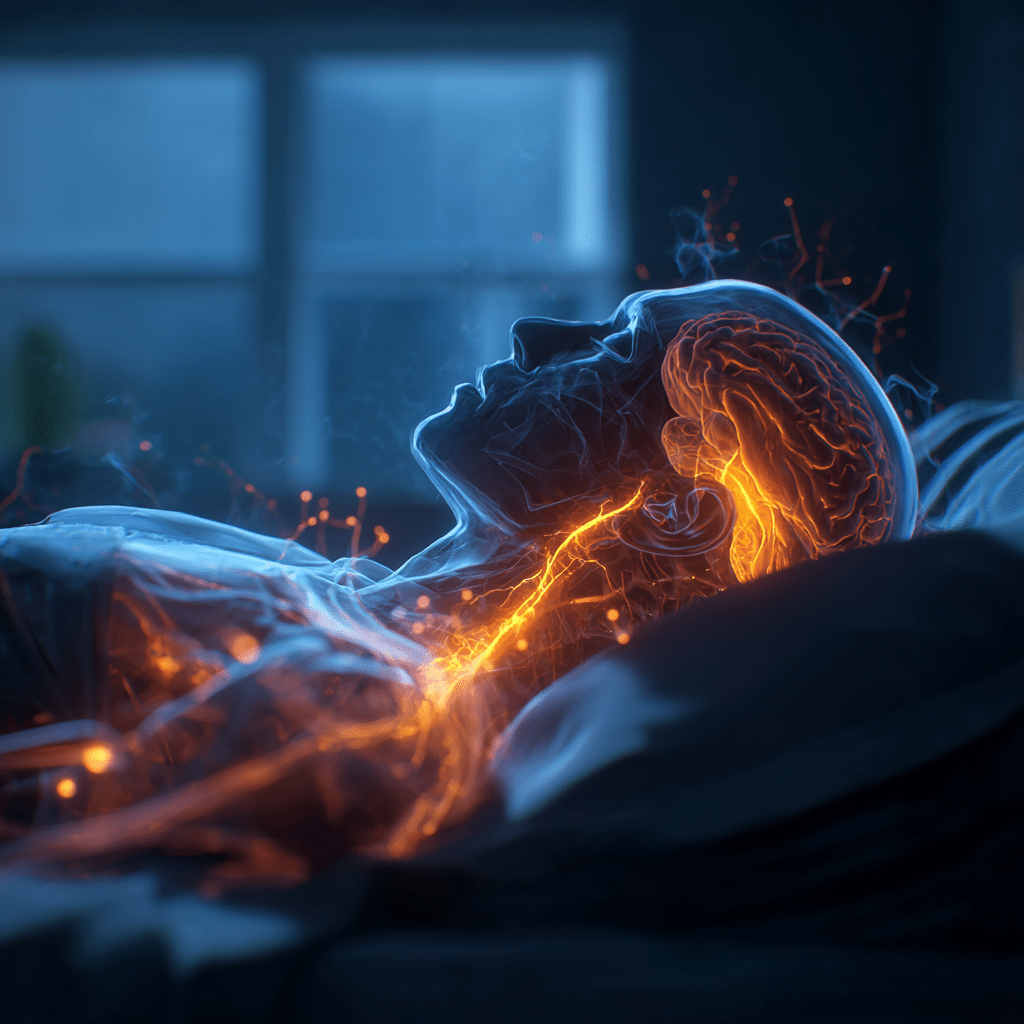
- The anatomy of stress response operates through the hypothalamic-pituitary-adrenal (HPA) axis, releasing cortisol to help you handle threats. But when this system stays activated at night, it systematically dismantles your ability to sleep
- Deep sleep normally inhibits the HPA axis, creating a powerful bidirectional relationship where poor sleep elevates cortisol, and elevated cortisol fragments sleep, establishing a self-perpetuating cycle
- Research tracking 34 patients with chronic insomnia revealed a direct correlation between insomnia severity and morning cortisol levels, with higher cortisol predicting worse sleep quality that very night
- Major population-wide stressors—from natural disasters to economic upheaval—have consistently triggered dramatic increases in clinical insomnia rates, demonstrating how external stressors translate directly into sleep disruption through this biological pathway
- Mindfulness meditation can reduce cortisol levels by 20-30% in at-risk populations, offering an evidence-based intervention that targets the anatomy of stress response at its neurological source
- Understanding your stress response anatomy reveals why standard sleep advice often fails—you can’t simply “relax” when your body’s alarm system has forgotten how to turn off
The phone call came at 2:47 AM. A patient—a 38-year-old emergency room nurse—described lying awake for the fourth consecutive night, heart racing, mind spinning through tomorrow’s shift despite bone-deep exhaustion. “My body feels wired,” she said, “even though I’m completely drained.” She had unknowingly described the anatomy of stress response with perfect precision: her hypothalamic-pituitary-adrenal axis, the command center of stress physiology, had forgotten how to stand down.
This wasn’t just in her head. Groundbreaking research from the University of Chicago, led by Dr. Eve Van Cauter, demonstrated that sleep loss triggers measurable elevations in evening cortisol—37% higher after just partial sleep deprivation. The quiescent period of cortisol secretion was delayed by at least an hour. Your stress response, in other words, has an anatomy as real as your heart or lungs—and when that anatomy malfunctions, sleep becomes nearly impossible.
The Architecture of Your Internal Alarm System
The anatomy of stress response begins in your brain, specifically in a cluster of neurons no bigger than an almond. When you encounter a stressor—whether it’s a looming deadline, financial worry, or the ambient anxiety of modern life—your hypothalamus releases corticotropin-releasing hormone (CRH). This chemical messenger travels to your pituitary gland, prompting it to secrete adrenocorticotropic hormone (ACTH) into your bloodstream. ACTH then signals your adrenal glands, perched atop your kidneys, to pump out cortisol—the hormone that mobilizes energy, sharpens attention, and prepares you for action.
Under normal circumstances, this cascade follows a predictable rhythm. Cortisol peaks about 45-60 minutes after you wake up in what’s called the “cortisol awakening response,” helping you transition from sleep to alertness. Throughout the day, levels gradually decline, reaching their nadir around midnight. Then, 2-3 hours after sleep onset, cortisol begins rising again, preparing you for the next day’s demands.
But here’s where the anatomy of stress response intersects devastatingly with sleep: deep sleep acts as a brake on the HPA axis. During slow-wave sleep—the most restorative phase—your brain actively inhibits cortisol secretion. Conversely, activation of the HPA axis or administration of glucocorticoids directly causes arousal and sleeplessness. (I’ve always found this relationship remarkably elegant in its cruelty: the very system designed to protect you from threats becomes the threat when it won’t disengage.)
Dr. Van Cauter’s research revealed something even more troubling: when sleep is restricted to four hours per night, cortisol levels don’t just remain elevated throughout the next day—they spike particularly high in the evening and early morning hours. This timing matters enormously. Elevated evening cortisol essentially tells your body that danger is imminent, preventing the transition into restorative sleep and setting up what researchers now recognize as a vicious cycle.
When Your Stress System Forgets the Off Switch
The consequences of this malfunctioning anatomy extend far beyond feeling tired. A comprehensive study followed participants for 15 days, measuring both cortisol levels and sleep quality using electroencephalography. The findings were stark: higher cortisol levels at bedtime predicted shorter sleep duration, poorer sleep quality, and longer time to fall asleep that same night. Additionally, individuals with shorter average sleep duration had significantly higher pre-bedtime cortisol and a flatter diurnal cortisol slope. This means their stress hormone never properly declined throughout the day.
Think about what this means mechanically. Your HPA axis is supposed to follow circadian rhythms, with the lowest cortisol concentrations occurring near midnight. But when sleep is chronically disrupted, this timing gets progressively delayed. You’re essentially asking your body to sleep while your internal alarm system is still blaring.
The Whitehall II study, tracking over 3,000 British civil servants for a decade, revealed how this dysfunction compounds over time. Participants reporting short sleep duration (5 hours or less) on three separate occasions showed a flatter diurnal cortisol pattern. Their morning peaks weren’t as high, and their evening troughs weren’t as low. Meanwhile, those with chronic insomnia symptoms demonstrated a steeper morning rise in cortisol. Both patterns represent dysregulation, suggesting different pathways by which the anatomy of stress response can go awry.

When Collective Stress Becomes a Sleep Epidemic
Sometimes, large-scale events create natural laboratories that reveal how stress physiology operates at the population level. Research following major earthquakes in Japan provides compelling evidence of this stress-sleep connection. After the 2011 Tōhoku earthquake, studies documented significant increases in insomnia complaints among affected populations, with rates remaining elevated for months after the initial disaster. Researchers found that individuals experiencing displacement, economic disruption, or loss showed particularly severe sleep disturbances—their HPA axes activated not by immediate physical danger, but by ongoing uncertainty, financial pressure, and disrupted social structures.
Similarly, the 2008 global financial crisis created widespread economic stress that manifested in measurably altered sleep patterns. Healthcare systems in multiple countries reported significant upticks in insomnia diagnoses during and after the recession period. A longitudinal study tracking workers who experienced job loss or financial instability found that 42% developed new-onset insomnia symptoms, with severity correlating directly with measures of financial stress and employment uncertainty. What’s instructive here isn’t just the prevalence but the mechanism: the anatomy of stress response—that HPA axis cascade from hypothalamus to cortisol—was being triggered not by physical danger but by economic insecurity and social disruption.
More recently, the accelerated shift to remote work and digital-first lifestyles has created a different kind of collective stressor. Research examining this transition found that disrupted work-life boundaries, increased screen time, and altered social rhythms all contribute to HPA axis dysregulation. A multi-country survey of remote workers found that 38% reported new or worsened sleep difficulties following major workplace restructuring, with particular problems among those reporting “always-on” work cultures and difficulty establishing clear boundaries between professional and personal time.
A study specifically examining morning cortisol in 34 patients with chronic insomnia provides perhaps the most direct evidence of this bidirectional relationship. Blood samples collected at 8:00 AM revealed a significant positive correlation between insomnia severity (measured by the Insomnia Severity Index) and cortisol levels (r = 0.37, p = 0.03). Higher cortisol after awakening corroborated the hypothesis of 24-hour hyperarousal—the anatomy of stress response had essentially become stuck in the “on” position.
Your body, it turns out, doesn’t distinguish between different types of threats when deciding whether to activate its stress response. Whether facing a natural disaster, economic crisis, or profound change in daily routines, the HPA axis responds with the same cortisol cascade—and when that stress becomes chronic, sleep deteriorates through identical physiological mechanisms.
Where Stress Anatomy Meets Sleep Architecture
The intersection of these systems becomes even more complex when we examine specific sleep stages. A fascinating pilot study from China used continuous overnight blood sampling to track cortisol, CRH, and copeptin levels at different time points: pre-sleep, during deep sleep, at 5 minutes of waking, at 30 minutes of waking, and at morning wake-up. In patients with chronic insomnia, cortisol levels were lowest during deep sleep and highest during long periods of nocturnal waking. The study found that nocturnal wakes were instantaneously accompanied by high levels of stress hormones, particularly cortisol.
This observation reveals something crucial about the anatomy of stress response: it’s not just that stress prevents sleep—it’s that the act of waking during the night immediately triggers cortisol release, which then makes it harder to return to sleep. Evening cortisol levels, measured while awake, correlated with the number of awakenings during the subsequent night in both insomniacs and good sleepers. If elevated HPA activity before sleep promotes sleep fragmentation, and sleep fragmentation triggers more cortisol release, you’ve got a self-perpetuating cycle that becomes progressively harder to break.
The Neurochemistry of Resilience
Not everyone responds identically to stress. A study examining familial risk for insomnia found something surprising: individuals with family histories of insomnia showed blunted cortisol responses to laboratory stressors, not elevated ones. When exposed to the Trier Social Stress Test, these at-risk individuals produced less cortisol than controls, yet reported more cognitive intrusion and less effective coping strategies.
This suggests the anatomy of stress response can malfunction in multiple directions. In some people, chronic stress leads to HPA axis hyperactivation—too much cortisol at inappropriate times. In others, the system becomes hyporesponsive, failing to mount adequate responses when needed but simultaneously showing increased amygdala activation and stress sensitivity. Both pathways lead to sleep disruption, just through different mechanisms.
The distinction matters because it suggests different intervention approaches. Additionally, this variability helps explain why your colleague might sleep soundly through the same stressors that leave you staring at the ceiling—the anatomy of stress response has individual differences as real as fingerprints.
Recalibrating the System: What Actually Works
Given this neurobiological reality, what interventions can meaningfully shift the anatomy of stress response back toward normal function? The evidence points to several research-backed approaches:
Mindfulness meditation appears particularly effective at recalibrating HPA axis function. A meta-analysis examining meditation interventions in at-risk populations found significant cortisol reductions. The effects were particularly strong in those with elevated baseline levels—exactly the population struggling with insomnia. In one study, medical students practicing mindfulness meditation for just four days showed significant reductions in serum cortisol levels.
The UC Davis Shamatha Project, tracking participants through an intensive three-month meditation retreat, documented both the mechanism and the effect. Those whose mindfulness scores increased showed corresponding decreases in salivary cortisol. The correlation existed at both individual and group levels—higher mindfulness consistently predicted lower cortisol. Research suggests meditation works by reducing rumination about the past and worry about the future, thought processes directly linked to cortisol release.
Other studies have found cortisol reductions ranging from 20-30% following mindfulness-based interventions, particularly in stressed populations. The effect appears dose-dependent: programs involving more than 20 hours of meditation practice showed stronger cortisol reductions than shorter interventions. (Though I’d note that even modest improvements in cortisol regulation can shift sleep patterns meaningfully—you don’t need perfect stress control to sleep better, just enough improvement to tip the balance.)
Sleep itself becomes therapeutic when you can achieve it, creating a positive feedback loop. Deep slow-wave sleep inhibits the HPA axis, reducing cortisol production and allowing the system to recalibrate. This is why sleep restriction paradoxically sometimes helps chronic insomnia—by building sufficient sleep pressure, it increases the likelihood of deep sleep, which then inhibits cortisol, which makes subsequent sleep easier to achieve and maintain.
Timing interventions to work with, rather than against, cortisol rhythms can also help. Since cortisol naturally rises in the early morning hours (2-3 AM), strategies that prevent early morning awakenings—such as cognitive behavioral therapy for insomnia (CBT-I) that includes stimulus control and sleep restriction—can prevent the awakening-cortisol spike that makes returning to sleep difficult.
Save This Article for Later – Get the PDF Now

The Path Forward: Understanding Your Stress Architecture
Here’s what understanding the anatomy of stress response should change about how you approach sleep difficulties: Stop thinking of insomnia as simply “not being able to sleep” and start recognizing it as a disorder of arousal regulation. Your HPA axis—that hypothalamus-pituitary-adrenal cascade—has become dysregulated, keeping cortisol elevated when it should be quiescent.
The research reviewed here, from Dr. Van Cauter’s metabolic studies to population-scale stress research, consistently points toward the same conclusion: chronic insomnia represents a state of 24-hour hyperarousal, not merely nighttime sleep loss. Addressing it requires interventions that target the anatomy of stress response directly—not just sleep hygiene (though that matters), but approaches that recalibrate your HPA axis function.
For some readers, this might mean exploring mindfulness practices that demonstrably lower cortisol. For others, it might mean working with healthcare providers on cognitive behavioral approaches that address the arousal perpetuating insomnia. For nearly everyone, it means recognizing that your body’s stress response system is performing exactly as designed—it’s just responding to the wrong threats at the wrong times. The goal isn’t to eliminate stress responses (you need them), but to restore their proper timing and intensity.
What aspects of your own stress response anatomy might benefit from recalibration? Have you noticed patterns—elevated evening alertness, difficulty winding down, early morning awakenings—that suggest your HPA axis might be stuck in overdrive? Understanding the anatomy of stress response won’t immediately fix your sleep, but it reframes the problem in ways that make effective solutions possible.
For those interested in exploring the broader relationship between stress systems and sleep, the article Understanding Stress and Sleep offers additional perspective on how these systems interact in daily life.

FAQ
Q: What is the anatomy of stress response?
A: The anatomy of stress response refers to the physical structures and biological pathways that your body uses to respond to stressors. The primary system is the hypothalamic-pituitary-adrenal (HPA) axis, which consists of three main components: the hypothalamus (a region in your brain), the pituitary gland (a pea-sized gland at the base of your brain), and the adrenal glands (situated atop your kidneys). When you encounter stress, your hypothalamus releases corticotropin-releasing hormone (CRH). This signals your pituitary to release adrenocorticotropic hormone (ACTH), which then tells your adrenal glands to produce cortisol—often called the “stress hormone.”
Q: What is the HPA axis and why does it matter for sleep?
A: The HPA axis (hypothalamic-pituitary-adrenal axis) is the command center of your stress response system. It matters critically for sleep because it operates in a bidirectional relationship with sleep cycles. Deep sleep normally inhibits HPA axis activity and suppresses cortisol production, while HPA axis activation and elevated cortisol directly cause arousal and sleep disruption. When this system becomes dysregulated—staying active when it should be quiet—insomnia often results. Research shows that chronic insomnia is associated with 24-hour activation of the HPA axis, with elevated cortisol levels throughout the day and night, not just during stress events.
Q: What is cortisol and how does it affect sleep?
A: Cortisol is a steroid hormone produced by your adrenal glands as the final product of HPA axis activation. It helps mobilize energy, increases alertness, and prepares your body for action. Cortisol follows a natural daily rhythm: it peaks shortly after waking (the “cortisol awakening response”), declines throughout the day, reaches its lowest point around midnight, then begins rising again 2-3 hours after sleep onset. When cortisol levels remain elevated in the evening—instead of declining to allow sleep—it prevents the transition into restorative sleep by keeping you in a state of physiological arousal. Studies show that higher pre-bedtime cortisol predicts shorter sleep duration, poorer sleep quality, and longer time to fall asleep that same night.
Q: What does “24-hour hyperarousal” mean in the context of insomnia?
A: “24-hour hyperarousal” refers to a state where your body’s arousal systems—particularly the HPA axis—remain activated throughout the entire day and night, rather than following normal rhythms. In chronic insomnia, this manifests as persistently elevated cortisol levels (not just at night but also during the day), increased heart rate variability, elevated metabolic rate, and heightened sympathetic nervous system activity. This means insomnia isn’t simply about not sleeping at night; it’s about your entire stress response system being stuck in “on” mode around the clock. This helps explain why people with chronic insomnia often feel both “tired and wired”—exhausted but unable to wind down.
Q: How do large-scale stressful events affect population sleep patterns, and what does this tell us about stress and sleep?
A: Large-scale stressful events—whether natural disasters, economic crises, or major societal transitions—create natural experiments demonstrating the direct relationship between collective stress and sleep disruption through HPA axis activation. Research following major earthquakes has documented significant increases in insomnia complaints among affected populations, with rates remaining elevated for months. Similarly, the 2008 financial crisis saw measurable upticks in insomnia diagnoses, with studies finding that 42% of workers experiencing job loss or financial instability developed new-onset insomnia symptoms. More recently, research on rapid workplace transitions found that 38% of workers reported new or worsened sleep difficulties. These events demonstrate that the anatomy of stress response doesn’t distinguish between different types of threats—whether facing natural disaster, economic uncertainty, or disrupted routines, the HPA axis responds with the same cortisol cascade that can disrupt sleep when stress becomes chronic.
Q: Can you really lower cortisol through meditation, and by how much?
A: Yes, research consistently shows that meditation and mindfulness practices can significantly reduce cortisol levels, particularly in people with elevated baseline cortisol or high stress. A meta-analysis of meditation interventions found “significant, medium-sized reductions” in cortisol for at-risk populations. Specific studies have documented cortisol reductions of 20-30% following mindfulness-based interventions. In one study, medical students practicing mindfulness meditation for just four days showed significant decreases in serum cortisol. The UC Davis Shamatha Project found that individuals whose mindfulness scores increased during a three-month retreat showed corresponding decreases in salivary cortisol, with the correlation holding at both individual and group levels. The mechanism appears to involve reducing rumination and worry—thought processes directly linked to cortisol release.
Q: Why do some people with insomnia show blunted cortisol responses instead of elevated cortisol?
A: Not everyone with insomnia shows the same pattern of HPA axis dysfunction. Research on familial risk for insomnia found that some individuals—particularly those with family histories of sleep problems—show blunted (reduced) cortisol responses to stressors rather than elevated levels. When exposed to laboratory stress tests, these individuals produced less cortisol than normal controls, yet simultaneously reported more cognitive intrusion, less effective coping strategies, and worse sleep. This suggests that chronic stress can dysregulate the HPA axis in multiple directions: some people develop hyperactive systems (too much cortisol at wrong times), while others develop hyporesponsive systems (inadequate cortisol responses but increased brain stress sensitivity, particularly in the amygdala). Both patterns can disrupt sleep, just through different mechanisms, which is why personalized approaches to treatment matter.
Q: What is the relationship between sleep stages and cortisol levels during the night?
A: Cortisol levels vary significantly across different sleep stages and states. Deep slow-wave sleep exerts the strongest inhibitory effect on the HPA axis, actively suppressing cortisol secretion. Conversely, awakenings—whether final awakening in the morning or brief arousals during the night—consistently trigger pulses of cortisol secretion. A study using continuous overnight blood sampling found that in insomnia patients, cortisol levels were lowest during deep sleep and highest during long periods of nocturnal waking. This creates a problematic feedback loop: elevated cortisol before sleep increases the likelihood of nocturnal awakenings, those awakenings trigger more cortisol release, and the elevated cortisol makes it harder to return to sleep—establishing a self-perpetuating cycle of sleep fragmentation.
Q: What does “quiescent period” of cortisol secretion mean?
A: The “quiescent period” refers to the time when cortisol secretion is at its lowest levels and most inactive, which normally occurs during the evening and first part of the night (roughly from evening until 2-3 hours after sleep onset). This quiet period is essential for allowing the transition into sleep. However, sleep loss disrupts this timing—studies show that even partial sleep deprivation delays the onset of the quiescent period by at least one hour and elevates cortisol levels during what should be the low point. When this happens, you’re essentially trying to sleep while your body’s stress hormone is still elevated instead of appropriately suppressed, making sleep initiation and maintenance much more difficult.
Q: How long does it take for cortisol patterns to improve once sleep improves?
A: The timeline for cortisol normalization varies depending on the intervention and individual factors. Research on sleep recovery shows that cortisol patterns can begin shifting relatively quickly—within days of improved sleep—though complete normalization may take weeks to months. In Dr. Van Cauter’s sleep debt studies, when participants transitioned from sleep restriction (4 hours) to sleep extension (12 hours), cortisol abnormalities returned to baseline during the recovery period, suggesting the relationship is relatively dynamic. However, in chronic insomnia with long-term HPA axis dysregulation, full recalibration typically requires sustained intervention (such as cognitive behavioral therapy for insomnia or consistent mindfulness practice) over several weeks to months. The bidirectional nature of the sleep-cortisol relationship means that improvements in either direction—better sleep or lower cortisol—can initiate a positive feedback loop.