The Hidden Cascade: How Behavioral Consequences of Chronic Stress in Adults Begin with Sleep Disruption
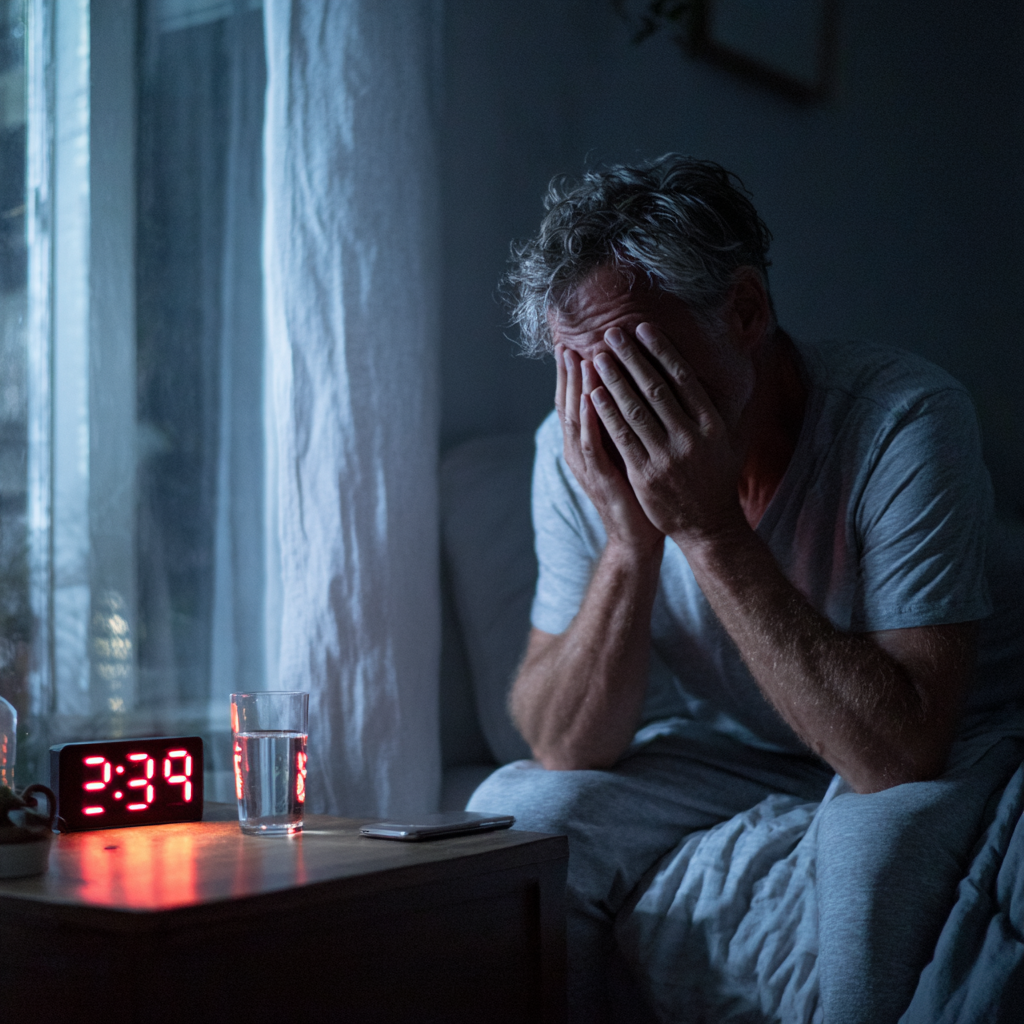
Story-at-a-Glance
- Chronic stress activates the HPA axis, leading to elevated cortisol levels that directly fragment sleep architecture and reduce restorative deep sleep
- Sleep disruption from chronic stress creates a bidirectional cycle where poor sleep heightens emotional reactivity, impairs decision-making, and increases interpersonal conflict
- The behavioral consequences of chronic stress in adults manifest through increased impulsivity, emotional dysregulation, and social withdrawal—all amplified by disrupted sleep patterns
- HPA axis dysfunction from prolonged stress flattens the normal cortisol rhythm, elevating evening cortisol when it should naturally decline, which perpetuates insomnia
- Research demonstrates that people experiencing chronic stress with poor sleep show 2.5 times higher rates of mental distress compared to well-rested individuals
- Addressing sleep quality may be one of the most effective entry points for interrupting the stress-behavior-sleep cycle
- Case studies reveal that stress-related insomnia often becomes self-perpetuating, with learned anxiety about sleep itself maintaining the disorder long after the original stressor resolves
When 40-year-old Puan Suraya, a schoolteacher, found herself unable to sleep for more than two years following a family property dispute, she experienced what researchers now recognize as a perfect storm. Chronic stress had hijacked her sleep system. That sleep disruption was, in turn, reshaping her behavior in ways she couldn’t control. She became tense and irritable, struggled to concentrate at work, and found herself withdrawing from social situations. The precipitating stressor had long since resolved, but the behavioral consequences of chronic stress in adults—amplified through disrupted sleep—had taken on a life of their own.
This pattern isn’t unique to Suraya. Research increasingly demonstrates that the behavioral consequences of chronic stress in adults don’t emerge from stress alone, but rather through stress’s disruption of sleep, which then cascades into emotional dysregulation, cognitive impairment, and altered social behavior.
The HPA Axis: Your Sleep System’s Most Dangerous Enemy
At the heart of how chronic stress dismantles sleep lies the hypothalamic-pituitary-adrenal (HPA) axis—your body’s primary stress response system. Under normal conditions, this system follows a precise rhythm. Cortisol, the HPA axis’s main hormone, peaks in the morning to help you wake, then gradually declines throughout the day, reaching its lowest point around midnight. Deep sleep has an inhibitory effect on the HPA axis, helping to maintain this healthy rhythm.
But chronic stress breaks this delicate balance. The HPA axis becomes hyperactive, producing elevated cortisol throughout the day. Critically, it fails to achieve the normal nighttime suppression. Studies show that people with chronic insomnia have significantly elevated 24-hour cortisol levels, with particularly pronounced elevations before bedtime when cortisol should be at its lowest.
This creates what Matthew Walker, Professor of Neuroscience and Psychology at UC Berkeley and Director of the Center for Human Sleep Science, has extensively documented. It’s a state of physiological hyperarousal that makes sleep nearly impossible. Walker’s research has shown that the amygdala—the brain’s emotional center—becomes 60% more reactive following sleep deprivation, while the prefrontal cortex that normally regulates emotional responses shows diminished function.
The mechanism works like this: When you’re under chronic stress, your hypothalamus continuously releases corticotropin-releasing hormone (CRH). This triggers your pituitary gland to release ACTH, which then stimulates your adrenal glands to produce cortisol. Normally, elevated cortisol would signal back to the hypothalamus to stop producing CRH, completing a negative feedback loop. But in chronic stress, this feedback system becomes dysregulated. The cortisol rhythm flattens, losing the sharp morning peak and gradual evening decline that characterize healthy sleep-wake cycles.
What’s particularly insidious is that this relationship runs both ways. Not only does stress disrupt sleep, but sleep disruption activates the HPA axis, creating elevated cortisol levels that further fragment sleep. It’s a vicious cycle that can persist long after the original stressor has resolved.

When Sleep Fragmentation Rewires Behavior
Here’s where the behavioral consequences of chronic stress in adults become unmistakable. Once sleep is disrupted, a cascade of behavioral changes follows—changes that look like personality shifts but are actually downstream effects of the brain operating on insufficient rest.
Research from the University of Pennsylvania found that even a single night of total sleep deprivation significantly increases negative emotional responses to mild stressors. Study participants who were sleep-deprived showed heightened stress and mood disturbances when exposed to low-stress situations that well-rested individuals handled easily. The researchers noted that “the unexpected finding that sleep loss was associated with increased negative affective responses to relatively mild cognitive performance stressors represents an important contribution to understanding the relationship between stress and sleep in real-world settings.”
The behavioral manifestations are wide-ranging. People experiencing sleep deprivation report increased impulsivity, frustration, and difficulty controlling negative emotions, which contributes to interpersonal conflicts. This isn’t just anecdotal—behavioral observations consistently document increased marital conflicts and negative social behaviors among sleep-deprived individuals.
Research examining chronic stress and insomnia in older adults has found that stress proliferation—the accumulation of multiple interrelated stressors—deteriorates self-management behaviors through what researchers call “behavioral maladaptation to chronic stress.” Studies reveal that self-health stress, family-health stress, and financial stress are commonly interrelated stressors, with research showing that approximately two-thirds of individuals experiencing chronic stress face multiple stressors simultaneously affecting their sleep. This pattern of stress accumulation appears particularly pronounced during periods of collective uncertainty and economic instability.
Dr. Elizabeth Blake Zakarin, an assistant professor of psychology at Columbia University and clinical psychologist at the Columbia University Clinic for Anxiety and Related Disorders, explains it simply: “Just like our electronics need to be charged, sleep may recharge or reset the brain to optimize functioning.” When chronic stress prevents that recharge, the brain’s ability to regulate emotions, make decisions, and interact effectively with others deteriorates measurably.
The Decision-Making Deficit: When Your Executive Function Goes Offline
One of the most profound behavioral consequences of chronic stress in adults is the impairment of executive functions. These are the cognitive processes that allow us to plan, focus attention, remember instructions, and manage multiple tasks. These functions depend heavily on the prefrontal cortex, which is exquisitely sensitive to sleep deprivation.
Studies demonstrate that chronic sleep restriction leads to significant daytime cognitive dysfunction, including reduced vigilant attention and working memory. As sleep restriction continues, these deficits accumulate to levels comparable to those found after severe acute total sleep deprivation. What makes this particularly relevant to the behavioral consequences of chronic stress in adults is that most people under chronic stress don’t experience total sleep deprivation. They experience chronic partial sleep restriction, getting 5-6 hours when they need 7-8.
The CDC reports that participants averaging 6 hours or less of sleep per night were about 2.5 times more likely to have frequent mental distress compared to those sleeping more than 6 hours. This mental distress manifests behaviorally as difficulty concentrating, poor decision-making, and what feels like mental exhaustion.
In real-world terms, this means that someone experiencing chronic stress might find themselves making uncharacteristically poor choices. They might snap at a colleague, forget important commitments, or struggle to prioritize tasks that would normally feel straightforward. These aren’t character flaws. They’re the predictable behavioral consequences of a brain operating with compromised prefrontal cortex function due to inadequate sleep.
Social Withdrawal: The Loneliness Amplification Loop
One of the more surprising behavioral consequences of chronic stress in adults is increased social isolation. Walker’s research has documented that sleep-deprived people feel lonelier and less inclined to engage with others, avoiding close contact in much the same way as people with social anxiety. Even more concerning, well-rested people tend to shun those who are sleep-deprived, creating what Walker describes as a “viral social contagion” of loneliness.
The mechanism appears to involve both the sleep-deprived person’s reduced capacity for social engagement and their altered social perception. When you’re sleep-deprived from chronic stress, your ability to accurately read social cues diminishes. Your threat detection system becomes hypersensitive, making neutral social situations feel more threatening or demanding than they actually are.
This social withdrawal then feeds back into the stress-sleep cycle. Reduced social connection is itself a significant stressor, and isolation eliminates one of our primary stress-buffering resources: supportive social relationships. The behavioral consequences of chronic stress in adults thus become self-perpetuating through this social isolation loop.
Save This Article for Later – Get the PDF Now

The Emotional Reactivity Trap
Perhaps the most immediately noticeable behavioral change from chronic stress-related sleep disruption is emotional reactivity. Research shows that sleep deprivation reduces activity in the prefrontal cortex while simultaneously increasing amygdala activation. This essentially removes the brakes while pressing harder on the emotional gas pedal.
In a 24-hour sleep deprivation study, researchers at Nova Southeastern University found widespread changes in healthy young adults, including alterations in inflammation markers, stress hormones, cognition, and emotion. The study demonstrated that acute sleep deprivation can influence neurobehavioral outcomes through altering both the inflammatory response and the neuroendocrine stress system, inducing symptoms such as anxiety and aggravating cognitive performance.
This heightened emotional reactivity manifests in everyday situations. A minor traffic delay might trigger disproportionate frustration, or a colleague’s neutral comment might be interpreted as criticism. These responses aren’t deliberate. They’re the behavioral consequences of chronic stress in adults whose sleep deprivation has fundamentally altered how their brain processes emotional information.
For Puan Suraya, this meant that as bedtime approached, she became “very tense and worries about the prospect of another sleepless night.” This anticipatory anxiety about sleep itself became a learned response, creating what researchers call psychophysiological insomnia. In this condition, the bedroom environment becomes a conditioned stimulus for arousal rather than sleep.
The Three-P Model: How Temporary Stress Becomes Chronic Insomnia
Understanding how behavioral consequences of chronic stress in adults take root requires examining what sleep researchers call the “3-P model” of insomnia: predisposing, precipitating, and perpetuating factors.
Predisposing factors are the characteristics that make someone more vulnerable to stress-related sleep disruption. Research on sleep reactivity has identified that certain individuals are predisposed to exaggerated sleep responses to stressors. In a prospective study of 1,449 good sleepers, individuals with high sleep reactivity were nearly 60% more likely to develop insomnia symptoms and twice as likely to develop chronic insomnia over two years compared to low-reactive sleepers.
Precipitating events are the stressors that trigger the initial sleep disruption—things like work stress, relationship difficulties, financial pressures, or health problems. These are often acute and time-limited.
Perpetuating factors are the behaviors and thought patterns that maintain sleep difficulty even after the original stressor has resolved. This is where the behavioral consequences of chronic stress in adults become most entrenched. Longitudinal research on insomnia has found that more than half of individuals with stress-induced insomnia demonstrate persistent symptoms with no significant improvement over extended periods. The predictors of persistent insomnia include increased sleep reactivity, sleep effort, cognitive arousal, depressive symptoms, and intolerance of uncertainty.
The tragedy is that according to this model, insomnia becomes independent of its origin over time. The stress that initially disrupted your sleep may have resolved months or even years ago, but the learned patterns of sleep anxiety, hyperarousal, and maladaptive sleep behaviors keep the insomnia—and its behavioral consequences—firmly in place.
Memory, Learning, and the Cognitive Price of Chronic Stress
While we’re examining behavioral consequences of chronic stress in adults, it’s worth noting that the cognitive impacts extend beyond mood and decision-making to fundamental processes like memory consolidation and learning.
Sleep research has established that memory consolidation—the process of converting short-term memories into long-term storage—occurs primarily during sleep. This happens particularly during REM sleep and deep slow-wave sleep. When chronic stress disrupts these sleep stages, the ability to form new memories and recall existing ones deteriorates.
This creates practical behavioral consequences. You might find yourself forgetting conversations, missing appointments, or struggling to learn new skills or information. These aren’t signs of cognitive decline. They’re the predictable result of stress-disrupted sleep preventing your brain from performing its essential memory consolidation work.
Breaking the Cycle: Why Sleep Might Be Your Best Entry Point
Here’s what gives me hope in writing about the behavioral consequences of chronic stress in adults. Unlike changing your stressors (which may be beyond your control), improving sleep is often an accessible intervention point.
Research on cognitive behavioral therapy for insomnia (CBT-I) demonstrates that treating insomnia can have beneficial effects on stress and mood. A study examining internet-based CBT for chronic stress found that the treatment’s benefits on perceived stress and exhaustion were mediated by reductions in insomnia severity. In other words, when you improve sleep, you often see improvements in stress levels and the behavioral consequences that follow.
What makes this particularly relevant is that CBT-I has been shown to help people overcome inaccurate or negative beliefs about sleep. The therapy emphasizes sleep restriction, getting out of bed on sleepless nights, proper sleep hygiene, coping skills, and relaxation techniques—all of which can interrupt the perpetuating factors that maintain stress-related insomnia.
Recent research on cognitive behavioral therapy for people suffering poor sleep during high-stress periods has shown promising results. Studies demonstrate that CBT-I, even when delivered remotely, can lead to significant improvements in sleep which, in turn, lead to measurable reductions in depression and anxiety symptoms. This research reinforces that targeted sleep interventions can break the stress-sleep-behavior cycle regardless of external circumstances.
The Inflammation Connection: Your Immune System in the Mix
There’s another dimension to behavioral consequences of chronic stress in adults that deserves attention: the inflammatory response. Research demonstrates that sleep deprivation can influence behavior through altering inflammatory markers. Pro-inflammatory cytokines like IL-6, TNF-α, and IL-1β show elevated levels following poor sleep.
These inflammatory changes don’t just affect physical health—they impact mood and behavior. Animal studies have found that chronic sleep deprivation induces elevated levels of inflammatory markers, leading to anxiety-like behavior and cognitive deficits. In humans, chronic stress combined with sleep disruption shows significantly elevated markers of inflammation including IL-6, TNF-α, and C-reactive protein.
This inflammatory component may help explain why the behavioral consequences of chronic stress in adults often include not just mood changes but also physical symptoms like increased pain sensitivity, reduced immune function, and slower healing.
Moving Forward: Practical Considerations
If you’re experiencing the behavioral consequences of chronic stress in adults—the irritability, social withdrawal, poor decision-making, or emotional reactivity—understanding the sleep connection offers a path forward. While I’m not a healthcare provider and can’t prescribe specific interventions, the research suggests some general principles worth considering:
First, recognize that your behavioral changes may not require character work so much as sleep work. When you snap at loved ones or struggle to concentrate, you’re likely experiencing the downstream effects of stress-disrupted sleep, not personal failings.
Second, consider whether addressing sleep quality might be more accessible than directly tackling all your stressors. While you can’t always control work deadlines, family obligations, or financial pressures, you can often influence your sleep environment, bedtime routines, and sleep-related behaviors.
Third, be aware that if stress-related insomnia has persisted for months or years, it may have developed its own momentum through learned associations and perpetuating behaviors—what happened to Puan Suraya. In such cases, you might benefit from working with a healthcare provider who specializes in evidence-based sleep interventions.
Finally, remember that the relationship between stress, sleep, and behavior runs in both directions. Just as chronic stress disrupts sleep which then amplifies behavioral consequences, improving sleep can reduce stress reactivity and help restore more balanced behavioral responses.
The Larger Picture: A Public Health Perspective
It’s worth stepping back to see how behavioral consequences of chronic stress in adults play out at a population level. According to the CDC, more than one in three U.S. adults don’t get enough sleep, and around a quarter of adults have chronic sleep disorders. More than 1 in 5 U.S. adults has a mental health condition.
These aren’t isolated statistics—they’re interconnected. People with insomnia are 10 times more likely to have depression and 17 times more likely to have anxiety than the general population. Research examining insomnia rates during periods of heightened collective stress has consistently shown sharp increases in clinical insomnia symptoms, with rates often doubling or tripling compared to baseline measurements during more stable periods.
What does this mean for you personally? It means that if you’re experiencing behavioral consequences of chronic stress in adults, you’re far from alone. It also means that societal factors—longer work hours, constant connectivity, economic uncertainty—are contributing to widespread sleep disruption. This manifests as changes in how millions of people think, feel, and behave.
A Final Thought: The Resilience in Understanding
There’s something oddly hopeful about understanding that many behavioral consequences of chronic stress in adults stem from disrupted sleep. It means that what feels like personality change or character weakness is often a reversible physiological state. Your brain on inadequate sleep genuinely functions differently than your brain on adequate sleep—but adequate sleep is achievable for many people.
Matthew Walker notes that for healthy people, “research shows that one night of recovery sleep brings systems back online and brings anxiety levels back to normal.” While chronic stress-related insomnia obviously requires more than one good night’s sleep to resolve, this points to the brain’s remarkable capacity to restore function when given the opportunity.
If you’re struggling with the behavioral consequences of chronic stress in adults—the short temper, the social withdrawal, the difficulty concentrating—consider starting with your sleep. Talk to your healthcare provider about your sleep patterns and stress levels. Explore whether evidence-based interventions like CBT-I might help. Track your own sleep-mood-behavior patterns to understand your personal triggers and recovery needs.
The connection between chronic stress, disrupted sleep, and altered behavior is well-established in research. What remains is translating that knowledge into your daily life—recognizing when your behavior is reflecting sleep deprivation rather than who you fundamentally are, and taking the steps within your control to give your brain the restorative sleep it needs to function well.
What would it mean for you to view your behavioral struggles not as personal failures but as signals that your sleep system needs support? How might that change your approach to self-care and stress management?

FAQ
Q: What are the behavioral consequences of chronic stress in adults?
A: The behavioral consequences of chronic stress in adults include increased emotional reactivity and irritability, impaired decision-making and cognitive function, social withdrawal and increased feelings of loneliness, difficulty controlling negative emotions, increased impulsivity, interpersonal conflicts and relationship difficulties, and reduced work or academic performance. These behavioral changes are often mediated through stress-induced sleep disruption, where chronic stress activates the HPA axis, disrupts sleep architecture, and the resulting sleep deprivation then amplifies emotional and cognitive difficulties.
Q: What is the HPA axis?
A: The HPA axis (hypothalamic-pituitary-adrenal axis) is your body’s primary stress response system. It’s a communication network between three organs: the hypothalamus in your brain, your pituitary gland, and your adrenal glands. When you experience stress, your hypothalamus releases corticotropin-releasing hormone (CRH), which signals your pituitary to release ACTH, which then triggers your adrenal glands to produce cortisol. Under normal conditions, elevated cortisol signals back to shut down this system. In chronic stress, this feedback loop becomes dysregulated, leading to persistently elevated cortisol that disrupts sleep.
Q: What is cortisol and how does it affect sleep?
A: Cortisol is a hormone produced by your adrenal glands as the end product of HPA axis activation. It’s often called the “stress hormone.” Under healthy conditions, cortisol follows a circadian rhythm: it peaks in the morning to help you wake up, gradually declines throughout the day, and reaches its lowest point around midnight during deep sleep. This rhythm is essential for healthy sleep-wake cycles. Chronic stress flattens this rhythm, causing elevated cortisol levels at night when they should be low, which makes it difficult to fall asleep and stay asleep.
Q: What does “sleep architecture” mean?
A: Sleep architecture refers to the structure and pattern of sleep cycles throughout the night. Normal sleep includes cycling through different stages: light sleep (stages 1 and 2), deep slow-wave sleep (stages 3 and 4), and REM (rapid eye movement) sleep. Each stage serves different restorative functions. Healthy sleep architecture involves spending appropriate amounts of time in each stage in the right sequence. Chronic stress disrupts this architecture, particularly reducing deep slow-wave sleep and fragmenting REM sleep, which are critical for physical recovery, emotional regulation, and memory consolidation.
Q: What is psychophysiological insomnia?
A: Psychophysiological insomnia, sometimes called “learned insomnia” or “behavioral insomnia,” is a condition where a person develops conditioned arousal responses to their bedroom and bedtime. It typically starts with a stressful life event that causes temporary sleep difficulty. Even after the original stressor resolves, the person has learned to associate their bedroom with wakefulness and anxiety rather than sleep. As bedtime approaches, they experience increased tension and worry about not being able to sleep, which creates arousal that makes sleep even more difficult. This creates a self-perpetuating cycle independent of the original cause.
Q: What is the 3-P model of insomnia?
A: The 3-P model explains how insomnia develops and persists through three factors: (1) Predisposing characteristics—inherited or acquired traits that make someone more susceptible to sleep problems, like high sleep reactivity or anxiety tendencies; (2) Precipitating events—acute stressors that trigger initial sleep disruption, such as work stress, relationship problems, or health issues; (3) Perpetuating factors—behaviors and thought patterns that maintain sleep difficulty after the original stressor is gone, like excessive worry about sleep, irregular sleep schedules, or spending too much time in bed awake. The model shows how acute stress-related insomnia can become chronic even when stress decreases.
Q: What is CBT-I?
A: CBT-I stands for Cognitive Behavioral Therapy for Insomnia. It’s an evidence-based, non-medication treatment approach recognized as the first-line treatment for chronic insomnia. CBT-I helps people overcome inaccurate or negative beliefs about sleep and change behaviors that maintain insomnia. Key components include sleep restriction (limiting time in bed to actual sleep time), stimulus control (associating bed only with sleep), cognitive therapy (addressing anxious thoughts about sleep), sleep hygiene education, and relaxation techniques. Research shows CBT-I can improve not just sleep but also stress levels and mood.
Q: What are inflammatory markers and how do they relate to stress and sleep?
A: Inflammatory markers are substances in your blood that indicate inflammation in your body. Key markers include cytokines like interleukin-6 (IL-6), tumor necrosis factor-alpha (TNF-α), interleukin-1β (IL-1β), and C-reactive protein (CRP). While inflammation is part of your immune system’s normal response to injury or infection, chronic stress and sleep deprivation can cause persistently elevated inflammatory markers. This matters because elevated inflammation doesn’t just affect physical health—it’s associated with increased anxiety-like behavior, cognitive deficits, and depressive symptoms. The relationship is bidirectional: stress and poor sleep increase inflammation, and inflammation can worsen sleep quality and stress responses.
Q: What is sleep reactivity?
A: Sleep reactivity is a trait-like characteristic describing how vulnerable your sleep system is to disruption by stressors. People with high sleep reactivity experience pronounced sleep disturbance when facing stressful events, while those with low sleep reactivity maintain relatively stable sleep despite stress. Sleep reactivity appears to be partly genetic and can be measured with questionnaires like the FIRST (Ford Insomnia Response to Stress Test). Research shows that individuals with high sleep reactivity are nearly 60% more likely to develop insomnia symptoms and twice as likely to develop chronic insomnia over time compared to those with low reactivity.
Q: What is REM sleep and why does it matter?
A: REM stands for Rapid Eye Movement sleep, a stage characterized by rapid eye movements, mixed-frequency brain waves, vivid dreaming, and temporary muscle paralysis. REM sleep is crucial for emotional regulation, memory consolidation (especially for skills and emotional memories), and creative problem-solving. Chronic stress can reduce the amount of REM sleep and increase REM fragmentation. Research has shown that highly reactive sleepers exhibit decreased REM sleep and increased nocturnal arousals during REM in response to stress, which have been proposed as physiological markers of chronic insomnia.
Q: How long does it take for sleep to improve stress symptoms?
A: The timeline varies by individual and depends on factors like the severity and duration of sleep problems, underlying stressors, and intervention methods. Research shows that for acute sleep deprivation in otherwise healthy people, one night of recovery sleep can bring anxiety levels back to normal. However, for chronic stress-related insomnia that has developed perpetuating factors, improvement typically requires weeks to months of consistent intervention, such as CBT-I, which usually runs 6-8 weeks. Studies on CBT-I for chronic stress show that as insomnia severity decreases, stress levels and mood symptoms often improve in parallel, suggesting a relatively tight coupling between sleep improvement and stress reduction.
Q: Can improving sleep really change behavior if the original stressors remain?
A: Yes, research demonstrates that improving sleep can significantly improve behavioral and emotional functioning even when external stressors continue. Studies show that treating insomnia with CBT-I leads to measurable improvements in stress levels, mood, and emotional regulation, even when life circumstances haven’t changed. The mechanism appears to be that adequate sleep restores the brain’s capacity to regulate emotions (through improved prefrontal cortex function) and reduces stress system activation (through HPA axis normalization). While addressing the underlying stressors is ideal, improving sleep provides the brain with the physiological foundation it needs to cope more effectively with ongoing challenges.