How Stress Alters Brain Anatomy and Function: The Hidden Saboteur of Your Sleep
Story-at-a-Glance
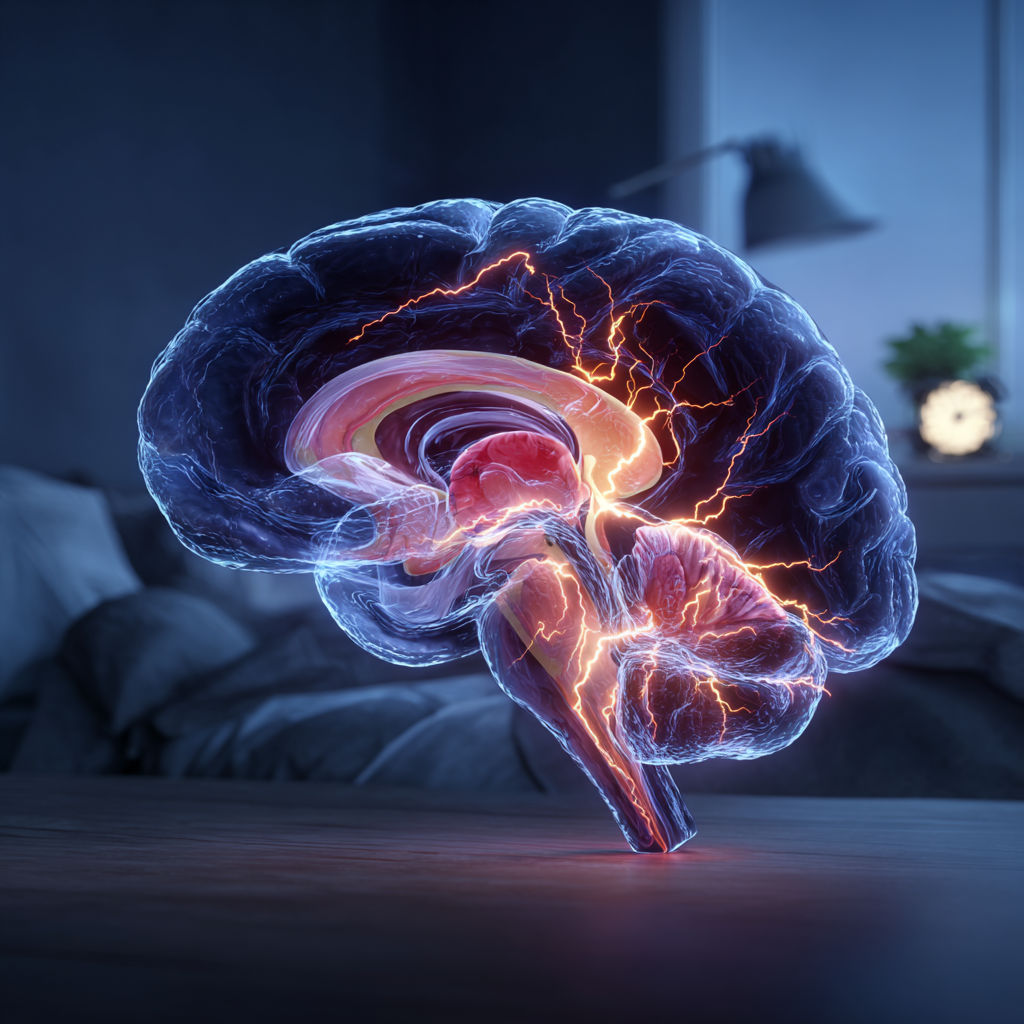
• Chronic stress literally reshapes your brain’s architecture, causing dendrite shrinkage in the prefrontal cortex while strengthening fear-based circuits in the amygdala, creating a brain wired for hypervigilance and poor sleep
• The stress-sleep cycle creates a vicious neurobiological loop where elevated cortisol disrupts sleep architecture, and sleep loss further dysregulates the hypothalamic-pituitary-adrenal axis, perpetuating insomnia
• Your hippocampus—crucial for memory and sleep regulation—physically atrophies under chronic stress, with studies showing measurable volume loss that correlates directly with sleep disturbances and cognitive decline
• Stress triggers neuroinflammation and alters neurotransmitter balance, disrupting GABA function and increasing excitatory glutamate activity, making your brain chemically primed for wakefulness rather than rest
• The locus coeruleus, your brain’s alarm system, becomes hypersensitive to stress, preventing the consolidated noradrenaline silencing required during REM sleep for emotional processing and memory consolidation
• Recent neuroimaging reveals stress-induced white matter changes that disrupt communication between sleep-regulating brain regions, fundamentally altering the neural networks responsible for healthy sleep-wake cycles
A fascinating case emerged from the research of Dr. Elizabeth Blake Zakarin at Columbia University’s Clinic for Anxiety and Related Disorders, where she observed how medical students under academic pressure experienced profound sleep disruption during exam periods. These students didn’t realize that their chronic academic stress wasn’t just keeping them mentally wired. It was literally rewiring their brains, demonstrating exactly how stress alters brain anatomy and function. Research shows that in people vulnerable to developing insomnia, chronic stress can alter brain circuits regulating emotion and arousal. This happens rather than affecting circuits involved in circadian and homeostatic sleep regulation. The result creates a neurobiological foundation for persistent sleep disorders.
Dr. Zakarin’s experience mirrors that of millions grappling with how stress alters brain anatomy and function. This particularly applies to ways that sabotage sleep. Such relationships between stress and insomnia aren’t just psychological—they’re profoundly neurobiological. They involve measurable changes to brain structure and chemistry that can persist long after the initial stressor has passed.
The Architectural Assault: How Stress Rebuilds Your Brain
When we think about stress affecting our brains, we often imagine temporary changes—racing thoughts, difficulty focusing, feeling overwhelmed. Yet emerging neuroscience reveals something far more dramatic: chronic stress literally remodels brain architecture.
Chronic stress causes remodeling of dendrites and synaptic connections in many brain regions. This includes not only hippocampus but also amygdala and medial prefrontal and orbitofrontal cortex. Think of dendrites as the brain’s communication branches. When stress chronically bathes these structures in cortisol, they begin to wither and retract. This fundamentally alters how different brain regions communicate.
The changes aren’t random. Chronic stress has the ability to flip a switch in stem cells. This turns them into a type of cell that inhibits connections to the prefrontal cortex, which would improve learning and memory. Instead, it lays down durable scaffolding linked to anxiety, depression, and post-traumatic stress disorder. Your brain, in essence, begins constructing neural highways that favor hypervigilance over rest.
Stanford neuroscientist Dr. Robert Sapolsky, whose groundbreaking work spans decades of stress research, has documented these changes extensively. According to Dr. Sapolsky, chronic stress can trigger the activation of genes for inflammatory proteins. It also drives premature brain aging, creating a cascade of neurobiological changes that predispose the brain to sleeplessness.

The Prefrontal Cortex: Your Sleep Executive Under Siege
The prefrontal cortex serves as your brain’s CEO—making executive decisions, regulating emotions, and maintaining working memory. It’s also crucial for sleep initiation and maintenance. Yet this evolutionarily advanced brain region has a vulnerability: it’s exquisitely sensitive to stress.
Even quite mild acute uncontrollable stress can cause a rapid and dramatic loss of prefrontal cognitive abilities. More prolonged stress exposure causes architectural changes in prefrontal dendrites. These architectural changes aren’t merely functional—they’re structural, involving the physical shrinkage of dendritic branches that connect prefrontal neurons.
Research examining patients with chronic insomnia reveals the consequences. Studies show significant positive correlations between insomnia severity and morning cortisol levels. Higher cortisol is associated with greater sleep disturbances. The very stress hormone designed to wake us up becomes chronically elevated, creating a biochemical environment hostile to sleep initiation.
Consider what this means practically: your brain’s sleep-regulating regions are literally losing their structural integrity under chronic stress. Simultaneously, they’re being bathed in wake-promoting hormones.
It’s like trying to sleep in a house where the electrical system has been rewired to keep the lights blazing.
The Hippocampal Shrinkage: Memory, Stress, and Sleep Intertwined
Perhaps no brain region illustrates how stress alters brain anatomy and function more dramatically than the hippocampus. This seahorse-shaped structure, nestled deep in the temporal lobe, serves triple duty. It forms new memories, regulates the stress response, and contributes to sleep architecture.
Chronic stress can lead to atrophy of the hippocampus similar to that seen in depression. Chronic stress paradigms in animals recapitulate many of the core behavioral characteristics of depression and are responsive to antidepressant treatment. Yet here’s the critical insight: hippocampal atrophy doesn’t just affect memory—it fundamentally disrupts sleep regulation.
The mechanism involves a cruel irony. The hippocampus contains high concentrations of cortisol receptors, designed to help shut down the stress response once danger passes. But chronic stress overwhelms this system. The glucocorticoid hypothesis proposes that sustained elevation of adrenal hormones causes detrimental effects. The hippocampus is densely concentrated with receptors for corticosteroids and consequently susceptible to heightened cortisol action.
Dr. Matthew Walker’s team at UC Berkeley has documented how this plays out in real patients. Sleep deprivation triggers anxiety as well as altered brain activity patterns in healthy adults. Research reveals that sleep loss can also cause anxiety, suggesting a vicious cycle. When your hippocampus shrinks under chronic stress, it becomes less capable of both processing emotional memories. It also becomes less capable of regulating the very stress response creating the problem.
Save This Article for Later – Get the PDF Now

The Amygdala Amplification: Your Overactive Alarm System
While stress shrinks the prefrontal cortex and hippocampus, it has the opposite effect on the amygdala—your brain’s alarm system. Chronic stress causes dendritic extension in the amygdala. This essentially grows more elaborate fear-processing circuitry.
This creates what researchers call hypervigilance—a state where your brain becomes hypersensitive to potential threats. The amygdala, the brain’s emotional center, is 60 percent more reactive after sleep deprivation. This happens due to a dampening down of prefrontal cortex function. The very brain region responsible for calming your amygdala (the prefrontal cortex) becomes less effective. Meanwhile, the amygdala itself becomes more reactive.
The result? Your brain develops an architectural bias toward wakefulness and threat detection. Even minor stressors—a work email, a household noise, a wandering thought—can trigger amygdala activation. This floods your system with alertness-promoting chemicals.
The Neurochemical Chaos: When Stress Hijacks Sleep Chemistry
How stress alters brain anatomy and function extends beyond structural changes to profound shifts in brain chemistry. The delicate balance of neurotransmitters that promote sleep becomes disrupted. This creates a neurochemical environment that actively opposes rest.
GABA disruption represents one of the most critical changes. GABA serves as your brain’s primary “brake pedal”—the inhibitory neurotransmitter that calms neural activity and promotes sleep. Chronic stress affects GABA neurotransmitter function and the hypothalamic-pituitary-adrenal (HPA) axis that controls our stress response. This essentially disables your brain’s natural sleep-promoting mechanisms.
Meanwhile, glutamate activity increases. Chronic stress can lead to excessive glutamate release, resulting in excitotoxicity and neuronal damage. This particularly affects the hippocampus and prefrontal cortex. Glutamate serves as the brain’s primary “accelerator”—the excitatory neurotransmitter that promotes wakefulness and alertness.
The neurochemical picture becomes clear: stress simultaneously breaks your brain’s sleep-promoting systems. At the same time, it amplifies wake-promoting systems. It’s like having a car where the brakes stop working while the accelerator gets stuck.
The Locus Coeruleus: Ground Zero for the Stress-Sleep Disruption
Recent research has identified a specific brain region that may be the key player in how stress alters brain anatomy and function to disrupt sleep: the locus coeruleus. This small brainstem nucleus, no bigger than a sesame seed, produces most of your brain’s norepinephrine (noradrenaline) and serves as a central alarm system.
A testable model proposes that in people with a vulnerability to develop insomnia, the locus coeruleus is more sensitive to the salience network. It also receives more input from this network. Under normal conditions, the locus coeruleus quiets during REM sleep, allowing for crucial emotional processing and memory consolidation. But chronic stress hypersensitizes this system.
In sound sleepers, consolidated locus coeruleus silencing during REM sleep entails a unique neuromodulatory context. This allows synaptic plasticity in the limbic brain circuits that are activated in this sleep stage. However, the restless REM sleep that is typical of insomnia prohibits a consolidated noradrenaline time-out. This alters synaptic plasticity in limbic circuits.
This represents a fundamental insight: chronic stress doesn’t just make you feel anxious about sleep. It prevents your brain from achieving the neurochemical state necessary for restorative sleep to occur.
The White Matter Revolution: Stress Rewires Neural Highways
Cutting-edge neuroimaging techniques have revealed another dimension of how stress alters brain anatomy and function. This involves changes to white matter—the brain’s communication cables. Chronic stress and elevated levels of cortisol can generate more overproduction of myelin-producing cells. They also create fewer neurons than normal.
While myelin normally speeds neural communication, excessive stress-induced myelination can create problems. This excessive sheathing may have evolved to bolster the connection between the amygdala and hippocampus. This would improve fight-or-flight responses during extended periods of threat or attack. In essence, your brain begins laying down neural superhighways that favor fear-based processing over sleep-promoting circuits.
Insomnia has been linked with lower integrity of white matter fibers. These fibers connect subcortical nuclei and the prefrontal cortex. These findings suggest that chronic stress doesn’t just affect individual brain regions. It disrupts the very communication networks that coordinate healthy sleep-wake cycles.
The Clinical Reality: Case Studies in Stress-Induced Sleep Disruption
The neurobiological mechanisms underlying how stress alters brain anatomy and function manifest clinically in predictable patterns. A clinical study of chronic insomnia patients found that nocturnal wakes were instantaneously accompanied by high cortisol levels. Deep sleep was accompanied by the lowest levels of stress-related hormones, supporting the hypothesis of increased nocturnal pulse-release of cortisol.
Consider the research findings from Dr. Matthew Walker’s sleep laboratory at UC Berkeley. Polysomnographic studies of chronic insomnia patients revealed classic stress-related sleep disruption: frequent arousals, reduced slow-wave sleep, and fragmented REM sleep. In chronic insomnia patients, the level of cortisol was the lowest at deep sleep. It was the highest at long-time waking during sleep, with cortisol levels significantly higher at morning waking-up relative to deep-sleep and pre-sleep.
What makes these research findings particularly compelling is their consistency across different populations. Studies examining familial risk for insomnia found abnormal cortisol responses to stress. This occurred even in individuals without current sleep problems but with parental history of insomnia. This suggests that stress-related brain changes may create vulnerability that can be triggered by life circumstances.
The Inflammatory Connection: When Stress Ignites the Brain
The relationship between how stress alters brain anatomy and function extends to neuroinflammation—immune activation within the brain that can persist long after the initial stressor. Sleep disturbances, particularly insomnia, may favor a state of allostatic overload impairing brain neuroplasticity and stress immune pathways, hence contributing to mental disorders.
Neuroinflammation disrupts sleep through multiple mechanisms:
- Activating microglia (brain immune cells) that release wake-promoting cytokines
- Disrupting the blood-brain barrier, allowing peripheral inflammation to affect sleep centers
- Interfering with neurotransmitter synthesis and function
- Promoting oxidative stress that damages sleep-regulating neurons
Chronic stress has been tied to elevated levels of inflammation in the brain, with inflammation recognized as one of the hallmarks of aging—physiological characteristics associated with aging. This suggests that stress-induced sleep disruption may accelerate brain aging through inflammatory pathways.
The Neuroplasticity Paradox: When Brain Adaptability Works Against You
One of the most fascinating aspects of how stress alters brain anatomy and function involves neuroplasticity—the brain’s ability to rewire itself. Normally, neuroplasticity represents hope for recovery and adaptation. But chronic stress can hijack this very adaptability, creating maladaptive changes that perpetuate sleep problems.
Chronic stress disrupts neuroplasticity, a fundamental mechanism of neuronal adaptation, while antidepressant treatment produces opposing effects and can enhance neuroplasticity. The brain essentially adapts to chronic stress by becoming more efficient at maintaining vigilance and less capable of achieving rest.
Key neuroplasticity changes include:
- Reduced synaptic plasticity in sleep-promoting regions
- Enhanced synaptic strength in wake-promoting circuits
- Altered gene expression that favors stress responsiveness over recovery
- Epigenetic changes that can persist even after stress resolution
Chronic exposure to uncontrollable stress causes loss of spines and dendrites in the prefrontal cortex, with exposure to acute uncontrollable stress driving high levels of catecholamine release that rapidly weakens synaptic connectivity to reduce persistent firing.
Breaking the Cycle: Neuroplasticity as Hope for Recovery
Despite the sobering reality of how stress alters brain anatomy and function, the same neuroplasticity that creates problems offers hope for solutions. The brain’s capacity for change works both ways—maladaptive stress-induced changes can potentially be reversed through targeted interventions.
The dendritic changes in the prefrontal cortex gradually reverse when the stress abates, suggesting that structural brain changes from chronic stress aren’t necessarily permanent. However, this recovery requires more than just stress reduction—it typically needs active intervention to reestablish healthy sleep patterns.
Research on cognitive behavioral therapy for insomnia (CBT-I) shows promise. Cognitive behavioral therapy for insomnia being the treatment with important new evidence of efficacy for insomnia, psychopathology, and indices of disrupted neuroplasticity. This suggests that psychological interventions can literally help rewire the brain toward healthier sleep patterns.
The key insight? Recovery from stress-induced sleep disruption often requires addressing both the stress response system and the sleep regulatory mechanisms simultaneously. Simply managing stress may not be enough if the brain has already adapted to chronic hypervigilance.
As we’ve seen with remarkable consistency across multiple research studies, understanding how stress alters brain anatomy and function provides crucial insights for anyone struggling with sleep difficulties. Your insomnia isn’t just “in your head” in the psychological sense—it may be physically encoded in your brain’s structure and chemistry.
The silver lining lies in neuroplasticity itself. Just as your brain adapted to chronic stress by rewiring toward vigilance, it can adapt to healthier conditions by rewiring toward rest. But this process requires understanding the neurobiological foundations of stress-induced sleep disruption and addressing them with appropriately targeted interventions.
For those dealing with stress-related sleep issues like bruxism, recognizing these brain-based connections can guide more effective treatment approaches that address the neurological roots rather than just the symptoms.
The journey from a stress-altered brain back to healthy sleep architecture is possible—but it begins with understanding exactly what chronic stress has done to your neural sleep systems and why your brain might be fighting rest even when your body desperately craves it.

FAQ
Q: How quickly can chronic stress begin altering brain anatomy and sleep patterns? A: Research shows that structural brain changes can begin within weeks of chronic stress exposure. However, the timeline varies by individual. Some people may notice sleep disruption within days of a major stressor, while the underlying neuroanatomical changes typically develop over weeks to months. The prefrontal cortex appears particularly vulnerable, with dendritic retraction detectable relatively quickly under sustained stress conditions.
Q: Is the relationship between stress and insomnia bidirectional? A: Absolutely. Chronic stress alters brain anatomy and function in ways that promote insomnia, but sleep deprivation also dysregulates the stress response system, creating higher cortisol levels and increased stress sensitivity. This creates a vicious cycle where poor sleep makes you more vulnerable to stress, and stress makes sleep more difficult to achieve.
Q: What does “neuroplasticity” mean in the context of stress and sleep? A: Neuroplasticity refers to the brain’s ability to reorganize and form new neural connections throughout your lifetime. Think of it like your brain’s ability to rewire itself based on experiences. In stress-related sleep disorders, this normally beneficial process becomes maladaptive—the brain essentially “learns” to be hypervigilant and resist sleep. However, the same neuroplasticity can be harnessed for recovery through targeted interventions that help rewire the brain toward healthier sleep patterns.
Q: What are dendrites and why do they matter for sleep? A: Dendrites are branch-like extensions of brain cells (neurons) that receive signals from other neurons—think of them as the “receiving antennas” of brain cells. When chronic stress causes dendrites to shrink and retract, it disrupts communication between brain regions important for sleep. This is particularly problematic in areas like the prefrontal cortex, which helps regulate sleep and calm the mind.
Q: What is cortisol and how does it affect sleep? A: Cortisol is your body’s main stress hormone, produced by the adrenal glands above your kidneys. Normally, cortisol follows a healthy daily rhythm—high in the morning to help you wake up, then gradually declining throughout the day to allow sleep. Chronic stress disrupts this pattern, keeping cortisol elevated at night when it should be low, making it very difficult to fall asleep and stay asleep.
Q: What is the HPA axis? A: HPA stands for hypothalamic-pituitary-adrenal axis—a complex system involving your brain and adrenal glands that controls your stress response. Think of it as your body’s stress control center. The hypothalamus (in your brain) detects stress, signals the pituitary gland (also in your brain), which then tells your adrenal glands to release cortisol. When this system becomes overactive due to chronic stress, it disrupts sleep.
Q: What are neurotransmitters and how do they relate to sleep? A: Neurotransmitters are chemical messengers that brain cells use to communicate with each other. For sleep, the most important ones are GABA (which acts like your brain’s “brake pedal,” promoting calm and sleep) and glutamate (which acts like an “accelerator,” promoting alertness). Chronic stress disrupts this balance, reducing calming GABA while increasing alertness-promoting glutamate.
Q: What is the locus coeruleus and why is it important for sleep? A: The locus coeruleus is a small brainstem nucleus (about the size of a sesame seed) that produces most of your brain’s norepinephrine (also called noradrenaline), a chemical that promotes alertness and acts as your brain’s alarm system. During healthy sleep, especially REM sleep, this region quiets down, allowing for emotional processing and memory consolidation. Chronic stress makes the locus coeruleus hypersensitive, preventing the quieting necessary for restorative sleep.
Q: What is REM sleep and why does stress disrupt it? A: REM stands for Rapid Eye Movement sleep, the stage when most vivid dreaming occurs and your brain processes emotions and memories from the day. During healthy REM sleep, your brain’s alarm system (locus coeruleus) should be quiet, allowing for crucial emotional processing. Stress prevents this quieting, leading to restless REM sleep that can’t provide the emotional reset your brain needs.
Q: What does “hypervigilance” mean in terms of sleep? A: Hypervigilance is a state where your brain becomes excessively alert and sensitive to potential threats, even minor ones. It’s like having a smoke detector that’s so sensitive it goes off when you make toast. Chronic stress can wire your brain into this hypervigilant state, making it scan for dangers even when you’re trying to sleep, keeping you awake and alert when you should be resting.
Q: What is white matter and how does stress affect it? A: White matter consists of the brain’s “communication cables”—bundles of nerve fibers covered in a fatty substance called myelin that speed up communication between different brain regions. Chronic stress can cause excessive myelin production, creating stronger connections between fear-processing areas (like the amygdala) while weakening connections to sleep-promoting areas (like the prefrontal cortex).
Q: What is CBT-I? A: CBT-I stands for Cognitive Behavioral Therapy for Insomnia. It’s a non-medication treatment that helps retrain both your thoughts and behaviors around sleep. Unlike sleeping pills, CBT-I actually helps rewire your brain’s approach to sleep by addressing the mental patterns and habits that maintain insomnia, making it particularly effective for stress-related sleep problems.
Q: Can the structural brain changes from chronic stress be reversed? A: Research suggests that many stress-induced brain changes are reversible, particularly dendritic atrophy in the prefrontal cortex and hippocampus. However, reversal typically requires both stress reduction and active interventions to retrain sleep systems. The brain doesn’t automatically “forget” its stress adaptations—it often needs help learning new, healthier patterns.
Q: Why does my brain seem “wired” for wakefulness even when I’m exhausted? A: Chronic stress literally rewires your brain’s architecture to favor alertness over rest. This includes shrinking sleep-promoting regions like the prefrontal cortex while enhancing wake-promoting areas like the amygdala. Your locus coeruleus (the brain’s alarm system) becomes hypersensitive, and neurotransmitter balance shifts toward excitation rather than inhibition. Your brain has essentially adapted to treat rest as dangerous.
Q: How does stress-induced insomnia differ from other types of sleep problems? A: Stress-induced insomnia involves specific neurobiological changes including elevated cortisol, altered brain structure, and disrupted neurotransmitter balance. Unlike situational sleep difficulties that resolve when circumstances improve, stress-induced insomnia often persists because the brain has physically adapted to hypervigilance. This type typically requires interventions that address both the stress response system and the sleep regulatory mechanisms.