Understanding the Impact of Stress on ADHD Symptoms: Breaking the Vicious Sleep Cycle
Story-at-a-Glance
• Stress and ADHD create a bidirectional relationship where stress worsens ADHD symptoms while ADHD traits increase vulnerability to stress, particularly affecting sleep patterns
• “Sleep reactivity” emerges as a crucial factor – individuals with ADHD show heightened tendency to develop insomnia when stressed, with recent research showing this predicts severity of sleep problems
• The stress paradox in ADHD reveals that while chronic stress impairs focus, brief acute stress may temporarily enhance attention in some individuals through dopamine activation
• Neurobiological mechanisms involve disrupted cortisol rhythms, with ADHD individuals showing lower morning cortisol but higher evening levels, contributing to delayed sleep patterns
• 75% of people with ADHD experience sleep problems, creating a cascade where poor sleep amplifies stress sensitivity and worsens next-day ADHD symptoms
• Evidence-based interventions target the cycle through bright light therapy, strategic melatonin timing, stress management techniques, and sleep hygiene specifically adapted for ADHD brains
The Night-and-Day Reality of Living with ADHD
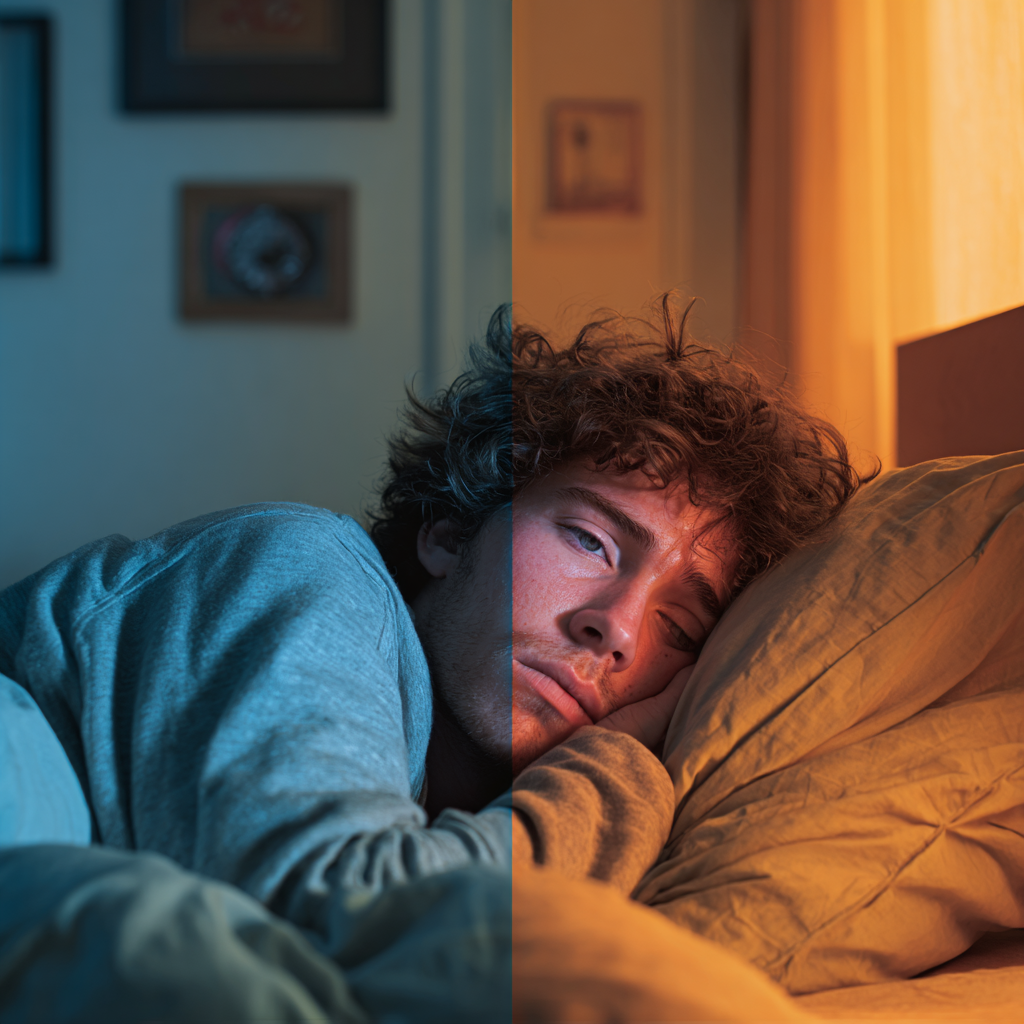
Picture this: Your mind races as your head hits the pillow at 11 PM, replaying the day’s forgotten tasks and tomorrow’s looming deadlines. By 3 AM, you finally drift off, only to wake feeling groggy and unfocused. The cycle begins anew. And if you have ADHD, this scenario might feel painfully familiar.
Recent groundbreaking research published in January 2025 has identified a critical missing piece in understanding the impact of stress on ADHD symptoms: “sleep reactivity”. This is the tendency to experience insomnia triggered by stress. This discovery is reshaping how we comprehend the impact of stress on ADHD symptoms, revealing that the relationship between stress, sleep, and attention isn’t just connected. It’s interconnected in ways that create either destructive cycles or, with the right interventions, pathways to healing.
What makes this research particularly compelling is its revelation of a paradox that top sleep researchers are only beginning to unpack. We’ve long known that stress generally worsens ADHD symptoms. But emerging evidence suggests that certain types of acute stress might actually improve focus in some individuals with ADHD. (At least temporarily.) As noted by Dr. Desiree Murray, a leading ADHD researcher at the University of North Carolina, “There are times and situations when stress is very motivating. That might be studying for an exam or finishing a project for work on a deadline.”
The Science Behind Stress, Sleep, and ADHD
Understanding the impact of stress on ADHD symptoms requires examining what’s happening in the brain. Our relationship isn’t merely psychological. It’s rooted in fundamental neurobiological processes that govern sleep-wake cycles, stress responses, and attention systems.
The Cortisol Connection
Adults with ADHD show a distinctive cortisol pattern that creates significant challenges:
- Lower morning cortisol levels – making wake-up difficult and morning alertness elusive
- Higher evening cortisol levels – contributing to delayed sleep and nighttime restlessness
- Disrupted stress responses – leading to feeling overwhelmed by everyday situations
- Reversed natural rhythm – creating what researchers call “perverse sleep”
This reversed cortisol rhythm fundamentally alters how people with ADHD experience their days and nights.
The stress response system in ADHD appears fundamentally different. Some individuals showing blunted cortisol responses to stress while paradoxically experiencing higher subjective stress. This disconnect helps explain why someone with ADHD might feel overwhelmed by everyday situations that don’t seem particularly stressful to others. All the while, they may not show the typical biological markers of stress.
The Neurotransmitter Web
Stress directly impacts neurotransmitter systems. In particular, it impacts those involving dopamine and norepinephrine – the very same neurotransmitters already dysregulated in ADHD. When stress depletes these crucial brain chemicals, the result is devastating. Existing ADHD symptoms intensify while the brain’s capacity to manage stress diminishes.
Additionally, GABA plays a crucial role in the ability to “switch off” and surrender to sleep. Individuals with ADHD typically have less available GABA, which can make surrendering to sleep difficult. When stress further reduces GABA activity, the racing thoughts and physical restlessness that characterize ADHD become even more pronounced at bedtime.
The Sleep Reactivity Revolution
One of the most significant advances in understanding the impact of stress on ADHD symptoms has emerged through research into “sleep reactivity.” Recently studied, this phenomenon refers to the tendency to experience insomnia triggered by stress. It represents the extent to which individuals are prone to developing insomnia in response to stressful situations.
Dr. Reut Gruber, a leading pediatric sleep expert and director of the Attention, Behaviour and Sleep Laboratory at McGill University, has been at the forefront of this research. Her work investigates the association between sleep and ADHD. She’s focused in particular on how sleep improvement can enhance academic performance and mental health. Gruber’s research has revealed that sleep problems aren’t just a side effect of ADHD – they may be a core feature that requires targeted intervention.
Findings from the 2025 study on sleep reactivity in ADHD adults revealed startling results. Higher sleep reactivity, increased ADHD symptoms, and being female were the strongest predictors of insomnia severity in adults with ADHD. Women with ADHD may therefore be particularly vulnerable to stress-induced sleep problems, creating a cascade of worsening symptoms.
Real-World Impact: Clinical Observations from Family Studies
Research documented in the Journal of Clinical Sleep Medicine reveals the lived reality of families dealing with ADHD and sleep problems. Parents described significant stress around bedtimes, with anxiety and rumination prolonging sleep-onset latency. Notably, they observed that a particularly poor night’s sleep heightened their child’s ADHD symptoms the next day.
Findings showed that all parents had experienced disrupted sleep at some stage in their child’s life, leading to psychological and functional impairments.
Particularly illuminating is how these clinical observations demonstrate the intergenerational impact of stress on ADHD symptoms. Parents’ potential ADHD diagnosis was not evaluated in the study, though ADHD has a strong genetic component. While one parent mentioned their diagnosis, it is very likely that other parents in this study would have ADHD. This would strongly impact not only their responses to sleep-time difficulties but also their own ability to sleep. This creates a family-wide cycle: Parental ADHD traits make consistent bedtime routines more challenging while children’s sleep problems increase family stress levels.
The Paradox: When Stress Actually Helps
Here’s where the story gets fascinating – and where top researchers are challenging conventional wisdom about stress and ADHD. Recent neurobiological research has found that stressed females showed attentional recovery by the end of testing. This suggests there may be sex differences in the effects of acute versus chronic stress on attention.
Professor Sandra Kooij, founder and chair of the European Network Adult ADHD, has been investigating this paradox. Kooij explains that there’s emerging evidence suggesting “ADHD and sleeplessness are 2 sides of the same physiological and mental coin.” Her work suggests that understanding this relationship could revolutionize how we approach treatment.
The paradox works like this: while chronic stress depletes the dopamine and norepinephrine that people with ADHD desperately need for focus, acute stress can temporarily boost these same neurotransmitters. This might explain why some individuals with ADHD perform better under tight deadlines or in high-pressure situations. Conversely, prolonged stressful periods leave them exhausted and unable to concentrate.
The Circadian Revolution
Around 75% of children and adults with ADHD also have sleep problems. However, groundbreaking research now proposes that much of ADHD may actually be a problem associated with lack of regular circadian sleep. This represents a fundamental shift in thinking. It’s a shift from viewing sleep problems as a consequence of ADHD, to considering them as a potential root cause of many symptoms.
Evidence supporting this theory is compelling. ADHD-related sleep problems may be a side effect of impaired arousal, alertness, and regulation circuits in the brain. Researchers note that a smaller pineal gland, irregularities in the body’s internal clock, and delayed melatonin release may contribute to circadian rhythm sleep disorders in people with ADHD.

Breaking the Cycle: Evidence-Based Interventions
Fortunately, understanding these interconnected systems has led to targeted interventions that can break the stress-sleep-ADHD cycle. Promising approaches work on multiple levels simultaneously.
Light Therapy: Resetting the Internal Clock
Clinical trials have shown that 30 minutes of morning bright light therapy (10,000 lux) can advance circadian rhythms. They can also reduce ADHD symptoms, with phase advances correlating significantly with decreased ADHD symptom scores. This intervention works by resetting the delayed internal clock that characterizes many people with ADHD.
Benefits include:
• Advancing sleep timing by nearly an hour in just two weeks
• Reducing ADHD symptoms particularly hyperactive-impulsive behaviors
• Improving morning alertness by working with natural cortisol patterns
• Non-pharmaceutical approach that complements existing treatments
Strategic Melatonin Timing
Research has demonstrated that properly timed melatonin can advance circadian rhythms and enhance total time asleep in children with ADHD. In one landmark study of 105 medication-free children with ADHD, sleep onset advanced by 26.9 minutes with melatonin compared to a delay of 10.5 minutes with placebo. The key is precision timing. Melatonin must be taken approximately three hours before the individual’s natural dim light melatonin onset, not at an arbitrary bedtime.
Stress-Specific Sleep Interventions
Given that sleep reactivity predicts insomnia severity in adults with ADHD, identifying and treating high sleep reactivity has become crucial for preventing sleep problems. This involves teaching individuals to recognize their stress-sleep patterns. They must also implement targeted interventions before insomnia becomes entrenched.
Most effective approaches combine stress management with sleep hygiene tailored specifically for ADHD brains. For people with ADHD, talking with a trusted confidant, keeping a worry journal, or using relaxation techniques such as guided imagery may help make bedtime less stressful.
The Ripple Effects: Beyond Sleep
Impact of stress on ADHD symptoms through sleep disruption extends far beyond nighttime hours. Preliminary research shows that primary caregivers of children with both ADHD and sleep problems are more likely to be depressed, anxious, stressed, and late to work. Sleep-stress cycles in ADHD create family-wide effects that can perpetuate the problem across generations.
Academic and Professional Consequences
Research has shown that even moderate sleep restriction leads to detectable negative impacts on neurobehavioral functioning in children with ADHD. This pushes them from subclinical to clinical levels of impairment. For adults, this translates to decreased work performance, relationship difficulties, and increased risk of accidents.
The Gender Factor
Recent findings reveal that being female significantly predicts insomnia severity in adults with ADHD. Gender differences may relate to hormonal fluctuations, higher rates of anxiety in women with ADHD, or greater sensitivity to stress-induced sleep disruption. Professor Kooij has begun investigating these connections through her innovative Head Heart Hormones (H3) Network. It examines the intersection of ADHD, cardiovascular health, and hormonal changes in women.
Current Developments and Future Directions
Research is moving rapidly, with investigators increasingly viewing ADHD as what some call a “24-hour disorder” rather than something that affects only daytime functioning. As noted in recent research directions, “the ability to subcategorize patients with ADHD based on their sleep phenotype may help shed light on areas where current data are conflicting.”
One intriguing development involves examining ADHD through the lens of evolutionary biology. Some researchers theorize that many ADHD traits – including the tendency toward evening alertness and stress-responsive attention – may have been adaptive in ancestral environments where vigilance during night hours provided survival advantages.
This perspective doesn’t diminish the challenges of living with ADHD in modern society. Rather, it suggests that we might benefit from working with these tendencies rather than against them.
Technology and Personalized Medicine
Development of cost-effective assessment tools for sleep reactivity now allows us to identify individuals at risk of future insomnia. This thereby guides early interventions toward vulnerable populations to prevent chronic sleep problems. This represents a shift from reactive to preventive care in ADHD management.
Wearable technology is also revolutionizing how we track and understand individual patterns. Traditional sleep studies capture only one or two nights in artificial laboratory settings. Continuous monitoring, conversely, reveals the night-to-night variability that’s characteristic of ADHD sleep patterns.
Practical Strategies for Breaking the Cycle
For individuals living with ADHD, understanding the stress-sleep connection opens doors to more effective management strategies. The key is addressing both the biological and behavioral aspects of the cycle.
Timing Is Everything
Rather than fighting against natural circadian tendencies, successful interventions work with them. Strategies might include:
• Morning light exposure within the first hour of waking, even on cloudy days
• Strategic caffeine timing – avoiding stimulants (including ADHD medications when possible) within 6-8 hours of intended bedtime
• “Worry time” scheduling – dedicating 15 minutes earlier in the day to process stressors rather than letting them intrude at bedtime
The ADHD Sleep Environment
Creating a bedroom environment that accommodates ADHD traits can be crucial. Key considerations include:
• Sensory accommodations – some individuals with ADHD sleep better with white noise or weighted blankets, while others need complete silence
• Technology boundaries – implemented gradually, since the dopamine-seeking ADHD brain often resists abrupt changes
• Temperature regulation – maintaining a cool environment to support natural cortisol patterns
As sleep research has shown, for some with ADHD, nighttime presents the perfect opportunity to hyperfocus on projects, as there are fewer distractions. Unfortunately, this makes it difficult to settle down for sleep and can lead to a dysregulated sleep-wake schedule.
Stress Inoculation Techniques
Given the role of sleep reactivity in ADHD, building resilience to stress-induced sleep disruption becomes essential. Effective approaches include:
• Graduated stress exposure during daytime hours to build tolerance
• Cognitive behavioral techniques specifically adapted for ADHD, focusing on shorter, more engaging exercises
• Mindfulness practices that accommodate the ADHD tendency toward mind-wandering rather than fighting it
Understanding the impact of stress on ADHD symptoms also means recognizing that emotional triggers play a crucial role in sleep disruption. For deeper insights into how emotions affect sleep, exploring emotional causes of insomnia can provide valuable strategies for managing stress-related sleep problems.
What This Means for Treatment Approaches
Emerging understanding of stress-sleep-ADHD interactions is leading clinicians to adopt more holistic approaches. As noted in recent clinical guidelines, “clinicians should not expect untreated adults with ADHD to reliably fill out serial sleep diaries”. This is due to the core deficits that often interfere with such tasks. Consequently, this has prompted the development of briefer, more ADHD-friendly assessment tools.
Timing Medications Strategically
Some people with ADHD report that taking their medication about an hour after waking up improves levels of alertness throughout the day. It also reduces evening sleep interference. This approach works with natural cortisol rhythms rather than against them.
Collaborative Care Models
Complexity of stress-sleep-ADHD interactions often requires multidisciplinary approaches. Sleep specialists, psychiatrists, and behavioral therapists are increasingly working together to address all aspects of the cycle simultaneously. For those seeking comprehensive guidance on optimizing sleep health, GreatSleep.blog offers valuable resources on sleep improvement strategies.
Are we perhaps looking at this backwards? Rather than viewing sleep problems as something that happens to people with ADHD, what if we considered optimizing sleep as a primary intervention for managing ADHD symptoms? This reframe could revolutionize treatment approaches.
Looking Forward: The Research Horizon
Our field stands at an exciting crossroads. Recent research emphasizes moving “from correlation to causation” and “conceptualizing ADHD as a 24-hour disorder.” This shift promises more targeted, effective interventions.
Biomarker Development
Professor Kooij and her team are working to confirm the physical-mental relationship between ADHD and circadian disruption by finding biomarkers. These include vitamin D levels, blood glucose, cortisol levels, 24-hour blood pressure, and heart rate variability. These objective measures could help personalize treatment approaches and track intervention success.
Precision Medicine Applications
Future treatments may involve:
• Genetic testing for variations in circadian rhythm genes to predict optimal light therapy timing
• Personalized melatonin dosing based on individual dim light melatonin onset measurements
• Stress reactivity profiling to identify high-risk individuals before sleep problems become chronic
The ultimate goal isn’t just better sleep – it’s breaking the cycle that keeps people with ADHD trapped between stress and exhaustion. By understanding how these systems interact, we can move beyond managing symptoms to addressing root causes. The impact of stress on ADHD symptoms isn’t just about willpower or better time management. It’s about recognizing that sleep, stress, and attention form an intricate biological network that requires sophisticated, personalized approaches to heal.
Research is pointing us toward a future where ADHD treatment looks very different – one where optimizing sleep and managing stress aren’t add-ons to medication but essential components of comprehensive care. For the millions of people navigating life with ADHD, this shift couldn’t come soon enough. Ultimately, understanding the impact of stress on ADHD symptoms through sleep disruption offers hope for more effective, personalized interventions that address root causes rather than just managing symptoms.

FAQ
Q: What is sleep reactivity and why is it important for people with ADHD?
A: Sleep reactivity refers to how easily your sleep gets disrupted when you’re stressed. Think of it as your sleep system’s sensitivity level. People with high sleep reactivity will toss and turn all night after a stressful day, while those with low sleep reactivity can sleep through almost anything. Recent research shows that adults with ADHD tend to have much higher sleep reactivity than those without ADHD, meaning they’re more likely to develop insomnia when stressed. This matters because poor sleep then worsens ADHD symptoms the next day, creating a cycle.
Q: How does cortisol affect sleep in people with ADHD differently than in others?
A: Cortisol is often called the “stress hormone,” but it also plays a crucial role in our natural wake-sleep cycle. In healthy individuals, cortisol peaks in the morning to help with waking up, then gradually decreases throughout the day. People with ADHD often have this pattern reversed – lower cortisol in the morning (making it hard to wake up and feel alert) and higher cortisol in the evening (making it difficult to wind down for sleep). This disrupted cortisol rhythm contributes to the delayed sleep patterns common in ADHD.
Q: Can stress ever be helpful for ADHD symptoms?
A: Surprisingly, yes – but only certain types of stress. Brief, acute stress (like a deadline or an important presentation) can temporarily boost dopamine and norepinephrine, which are the neurotransmitters that help with focus and attention. This is why some people with ADHD work best under pressure or do their best work at the last minute. However, chronic, ongoing stress has the opposite effect, depleting these same neurotransmitters and making ADHD symptoms much worse.
Q: What’s the difference between regular insomnia and ADHD-related sleep problems?
A: While anyone can experience insomnia, ADHD-related sleep problems have some unique characteristics. People with ADHD often describe “racing thoughts” that make it impossible to quiet their mind at bedtime, even when their body feels tired. They may also experience bursts of energy in the evening when others are winding down, or find it easier to focus late at night when there are fewer distractions. Additionally, their sleep problems are more likely to be triggered by stress and may be accompanied by physical restlessness or periodic limb movements.
Q: How does poor sleep specifically worsen ADHD symptoms?
A: Sleep deprivation affects the prefrontal cortex – the same brain region involved in ADHD symptoms like attention, impulse control, and executive functioning. When you’re sleep-deprived, these already-challenging areas become even more impaired. Research shows that children with ADHD who are sleep-deprived can go from having manageable, subclinical symptoms to meeting full criteria for ADHD diagnosis. In practical terms, this means worse focus, increased impulsivity, more emotional reactivity, and greater difficulty with organization and time management.
Q: What is bright light therapy and how does it help with ADHD?
A: Bright light therapy involves exposure to very bright light (typically 10,000 lux) for about 30 minutes each morning. This helps reset your internal biological clock by signaling to your brain that it’s time to be awake and alert. For people with ADHD who often have delayed circadian rhythms, morning light therapy can advance their sleep-wake cycle, making it easier to fall asleep at a reasonable hour and wake up feeling more rested. Studies show this can also directly improve ADHD symptoms, not just sleep.
Q: Are there specific stress management techniques that work better for ADHD?
A: Yes, stress management for ADHD often needs to be adapted to accommodate ADHD traits. Traditional meditation might be challenging due to difficulty sitting still or maintaining focus, so movement-based practices like walking meditation or yoga might work better. Brief, frequent stress-relief sessions (5-10 minutes) may be more effective than longer sessions. Techniques that engage multiple senses, like progressive muscle relaxation or breathing exercises with counting, can help maintain attention. The key is finding approaches that work with ADHD traits rather than against them.
Q: What is GABA and why is it important for sleep in ADHD?
A: GABA (gamma-aminobutyric acid) is a brain chemical (neurotransmitter) that helps calm down brain activity – think of it as your brain’s “brake pedal.” When GABA is working properly, it helps you feel relaxed and makes it easier to transition from being awake to falling asleep. People with ADHD typically have less available GABA, which helps explain why their brains have trouble “switching off” at bedtime, leading to racing thoughts and difficulty settling down to sleep.
Q: What are neurotransmitters and how do they relate to ADHD and stress?
A: Neurotransmitters are chemical messengers that brain cells use to communicate with each other. The main ones involved in ADHD are dopamine (helps with motivation, focus, and reward processing), norepinephrine (involved in alertness and attention), and GABA (promotes calm and relaxation). In ADHD, these neurotransmitters don’t work at optimal levels. When stress further disrupts these chemicals, it creates a “double hit” that worsens ADHD symptoms and makes sleep more difficult.
Q: What is the HPA axis and how does it affect ADHD?
A: HPA stands for hypothalamic-pituitary-adrenal axis – it’s basically your body’s main stress response system. Think of it as a communication network between your brain and your adrenal glands (small organs above your kidneys). When you encounter stress, this system triggers the release of cortisol. In people with ADHD, this system often doesn’t work the same way as in others, which can affect both stress responses and sleep-wake cycles.
Q: What is dim light melatonin onset (DLMO) and why does it matter?
A: DLMO is the scientific term for when your body naturally starts producing melatonin in the evening as light levels decrease. Melatonin is your body’s natural “sleep hormone” that signals it’s time to prepare for rest. In people with ADHD, DLMO often occurs much later than in others, which is why they tend to be “night owls.” Measuring DLMO helps researchers understand someone’s internal biological clock and determine the best timing for treatments like melatonin supplements or light therapy.
Q: What does “circadian rhythm” mean in practical terms?
A: Your circadian rhythm is your body’s internal 24-hour clock that regulates when you feel sleepy and when you feel alert. It’s influenced by light, temperature, and other environmental cues. In people with ADHD, this internal clock often runs “late” compared to societal expectations – they naturally want to go to bed later and wake up later. When this conflicts with school or work schedules, it creates chronic sleep deprivation and stress.
Q: Should people with ADHD avoid all stress?
A: No, that wouldn’t be realistic or necessarily beneficial. The goal is learning to distinguish between helpful stress (challenges that motivate and energize you) and harmful stress (chronic overwhelm that depletes your resources). Some stress can actually improve performance in people with ADHD by providing the stimulation their brains need. The focus should be on managing chronic stress, building resilience to stress-induced sleep disruption, and creating recovery periods between stressful events.
Q: How can families support better sleep when ADHD and stress are involved?
A: Families can help by understanding that bedtime resistance in ADHD often isn’t defiance – it’s a neurobiological challenge. Creating predictable, calming bedtime routines helps reduce stress around sleep time. Parents should also be aware that their own stress levels affect the family’s sleep environment, so managing parental stress is crucial. Additionally, families can work together on consistent sleep schedules and creating a home environment that supports healthy circadian rhythms for everyone.
