The Impact of Sleep Deprivation on Sleepwalking Arousal: Understanding the Vicious Cycle That Keeps You Wandering
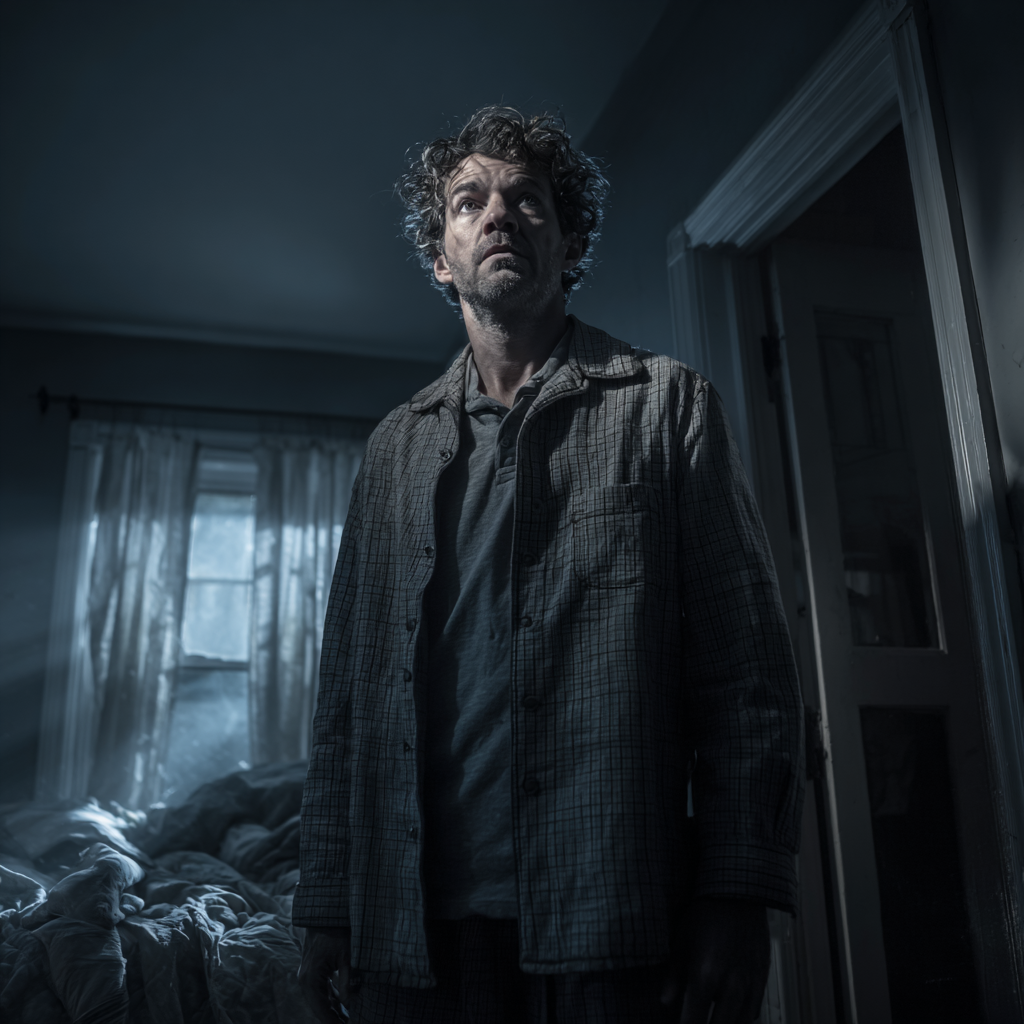
Story-at-a-Glance
• Sleep deprivation nearly doubles the frequency of sleepwalking episodes, with research showing an increase from 48% to 63% of patients experiencing lab-based episodes after 25 hours of sleep loss
• The relationship between sleepwalking and sleep deprivation operates as a bidirectional feedback loop—sleepwalkers experience fragmented deep sleep every night, which perpetuates more episodes
• Younger age and higher home episode frequency predict stronger responses to sleep deprivation, making prevention strategies crucial for chronic sleepwalkers
• Sleep deprivation triggers more complex and potentially dangerous sleepwalking behaviors, with documented cases including falls from windows and serious injuries requiring hospitalization
• Addressing sleep debt through consistent sleep schedules and treating underlying sleep disorders represents the most effective intervention for breaking the sleepwalking cycle
One patient’s story stands out in Dr. Yves Dauvilliers’s research at the Sleep Disorders Center in Montpellier, France. A sleepwalker jumped from a third-floor window during an episode. He sustained multiple fractures and serious head trauma. Another spent months hospitalized after falling down stairs while asleep.
These weren’t isolated incidents of bad luck. They were the culmination of what happens when the impact of sleep deprivation on sleepwalking arousal creates a perfect storm of vulnerability.
We tend to think of sleepwalking as a quirky inconvenience, perhaps even fodder for amusing morning-after stories. But emerging research reveals something far more concerning. Sleep deprivation doesn’t just increase your chances of wandering at night. It fundamentally alters your brain’s ability to maintain stable deep sleep, creating a self-perpetuating cycle that can have serious consequences.
The Science Behind the Numbers: How Sleep Loss Triggers Nocturnal Wandering
When Antonio Zadra and his team at the University of Montreal’s Center for Advanced Research in Sleep Medicine conducted one of the largest studies on sleep deprivation and sleepwalking, they uncovered something remarkable. In a 2024 study published in Sleep Medicine, they examined 124 adult sleepwalkers using video-polysomnography—both at baseline and after 25 hours of sleep deprivation.
The results were striking: sleep deprivation nearly doubled the number of somnambulistic episodes recorded in the laboratory. Even more telling, while only 2% of patients experienced a sleepwalking event exclusively at baseline, 17% had episodes only during recovery sleep following deprivation.
This wasn’t coincidence. The research team discovered that the impact of sleep deprivation on sleepwalking arousal stems from how exhaustion disrupts the brain’s most fundamental rest architecture.

Professor Zadra, whose research has garnered over 6,500 citations in the field of sleep medicine, explains that sleepwalking occurs when specific brain regions remain “stuck” in deep sleep while others partially wake up. Think of it as your motor cortex saying “let’s go” while your consciousness is still offline.
Sleep deprivation makes this dissociated state far more likely to occur. Why? Because it creates what researchers call “increased homeostatic sleep pressure”—your brain’s desperate need for deep, restorative rest.
But here’s where it gets interesting, and perhaps a bit unsettling.
Save This Article for Later – Get the PDF Now

The Bidirectional Trap: When Poor Sleep Feeds More Episodes
Most discussions about the impact of sleep deprivation on sleepwalking arousal focus on one direction: lack of sleep triggers episodes. Yet groundbreaking research reveals we’ve been looking at only half the picture.
Dr. Dauvilliers’s extensive clinical work with over 100 adult sleepwalkers showed that these individuals experience fragmented deep slow-wave sleep every single night—whether or not they actually sleepwalk.
Their sleep architecture is fundamentally different. “What we’ve found,” notes research from the University of Montreal team, “is that sleepwalkers suffer from a dysfunction of the mechanisms responsible for sustaining stable slow-wave sleep.”
Their deep sleep is interrupted by numerous micro-arousals lasting 3 to 10 seconds. This makes their rest less restorative even on nights without visible episodes.
This creates what sleep scientists now recognize as a positive feedback loop. Sleep deprivation increases episodes. Episodes fragment sleep quality. Poor sleep quality creates more vulnerability to deprivation’s effects. Round and round it goes.
Consider this sobering statistic from Dauvilliers’s research: 22.8% of sleepwalkers in his study experienced nightly episodes, while 43.5% had weekly occurrences. More concerning, 58% had a history of violent sleep-related behaviors, with 17% experiencing injuries requiring medical care.
These weren’t people who occasionally wandered to the bathroom. They were individuals caught in a cycle where chronic sleep disruption and sleepwalking reinforced each other relentlessly.
The implications extend beyond nighttime wandering. Study participants showed significantly higher rates of daytime sleepiness, fatigue, insomnia symptoms, and mood disturbances compared to controls. Their quality of life suffered measurably.
As Dauvilliers emphasizes, “What would usually be considered a benign condition, adult sleepwalking is a potentially serious condition and the consequences and dangers of sleepwalking episodes should not be ignored.”
Who’s Most Vulnerable? Age, Frequency, and Predicting Your Risk
Not everyone responds equally to sleep deprivation’s impact on sleepwalking arousal. Zadra’s research identified two key predictors of who will experience the strongest reaction to sleep loss: younger age and higher home episode frequency.
Younger adults showed more dramatic increases in sleepwalking episodes following deprivation. This finding challenges the common assumption that sleepwalking is primarily a childhood disorder that people “grow out of.” While prevalence does decrease from childhood to adulthood—with current rates estimated at 1.5% of adults annually versus 5.0% of children—those who continue experiencing episodes into adulthood often face more complex and potentially dangerous behaviors.
Additionally, if you already sleepwalk frequently at home, sleep deprivation acts as a more potent trigger. Think of it as a vulnerability multiplier. Someone with weekly episodes might see them escalate to nightly occurrences when sleep-deprived, while someone with rare episodes might experience only a slight increase in frequency.
Genetics play a substantial role too. Studies show that 80% of sleepwalkers have a family history of the condition, and the concordance is five times higher in identical twins compared to fraternal twins. If one parent has a history of sleepwalking, their child faces a 47% chance of experiencing it themselves—jumping to 61% if both parents are affected. If one parent has a history of sleepwalking, their child faces a 47% chance of experiencing it themselves—jumping to 61% if both parents are affected. There’s even evidence of a specific gene mutation, HLA-DQB1*05, associated with higher risk in certain populations.
But even if you carry genetic susceptibility, you’re not destined for episodes. The impact of sleep deprivation on sleepwalking arousal operates as a trigger in predisposed individuals—meaning prevention strategies can make a meaningful difference.
When Sleep Deprivation Makes Sleepwalking Dangerous
Here’s something that keeps sleep specialists up at night (pun regrettably intended): complex and violent behaviors are significantly more likely when sleepwalkers are severely sleep-deprived.
The Cleveland Clinic notes that going more than 24 hours without sleep particularly increases the likelihood of elaborate, goal-directed activities during episodes.
A Swiss emergency department study reviewing 620,000 admissions over 15 years found 11 trauma cases directly associated with sleepwalking. While this seems reassuringly rare, the injuries themselves were sobering: multiple fractures, head trauma, and cases requiring hospitalization for orthopedic injuries. Four patients (36.4%) needed hospital admission for further treatment.
Critically, only 18.2% had a known history of sleepwalking before their injury—meaning most people don’t realize they’re at risk until something serious happens.
Dr. Dauvilliers’s case series documented the full spectrum of sleep deprivation’s impact: bruises, nosebleeds, fractures, and the previously mentioned third-floor window jump. One participant was hospitalized for months following a stairway fall that resulted in lower limb and back fractures. Others reported head contusions from striking furniture, broken walls, or jumping down stairs.
The mechanism behind increased danger relates to how profoundly sleep deprivation affects consciousness during episodes. When you’re moderately rested, sleepwalking typically involves simpler behaviors—sitting up, walking to the bathroom, perhaps rearranging some items.
But when you’re exhausted, your brain’s partial arousal state becomes more unstable and unpredictable. Some individuals have been documented driving cars, cooking elaborate meals, or engaging in complex sequences of actions—all while remaining fundamentally asleep.
This is where understanding the sleep cycles of adults with sleepwalking becomes essential for anyone managing this condition.
The Stress Connection: How Daily Life Amplifies Nighttime Vulnerability
Dauvilliers’s research revealed that 59% of sleepwalkers reported specific triggering factors for their episodes, with the impact of sleep deprivation on sleepwalking arousal ranked prominently alongside stressful events (52%), strong positive emotions (41.8%), and intense physical activity (5.1%).
What’s fascinating—and somewhat counterintuitive—is that positive emotions can trigger episodes just as readily as negative stress. Your brain doesn’t distinguish between “good” and “bad” arousal when it comes to disrupting sleep architecture.
That promotion celebration or exciting first date might leave you just as vulnerable to nighttime wandering as work deadlines or relationship conflicts.
The common thread? All these factors promote increased slow-wave sleep and what researchers call “NREM sleep instability.” Your exhausted brain craves deep rest so intensely that it plunges into slow-wave sleep more aggressively—but without the stability needed to maintain it properly.
The result is those problematic micro-arousals that set the stage for sleepwalking episodes.
Interestingly, while alcohol is often cited as a trigger, controlled laboratory studies have never confirmed this empirically. Sleep deprivation remains the only trigger that’s been experimentally verified to provoke episodes in up to 90% of diagnosed sleepwalkers under laboratory conditions.
Breaking the Cycle: Evidence-Based Strategies That Actually Work
Given the bidirectional nature of the problem, addressing the impact of sleep deprivation on sleepwalking arousal requires a multi-pronged approach. The good news? Research shows that targeting sleep debt directly can dramatically reduce episode frequency.
Sleep Extension and Debt Reduction
The single most effective intervention involves what sleep specialists call “sleep extension ad-lib”—essentially, allowing yourself to sleep as much as needed for a sustained period. Clinical recommendations suggest a minimum two-week period of getting adequate rest to “unload homeostatic sleep pressure.”
For most adults, this means prioritizing 7-8 hours of quality sleep nightly, though individual needs vary. If you’ve been chronically sleep-deprived, you may need several weeks of extended sleep (9-10 hours) to fully recover. Think of it as paying down sleep debt—it doesn’t happen overnight.
Treating Comorbid Sleep Disorders
Here’s something remarkable: In one study examining 60 sleepwalkers with obstructive sleep apnea, treatment of the sleep apnea resulted in complete resolution of sleepwalking in all adequately treated cases. All of them.
This underscores how other sleep disorders can perpetuate the cycle. Restless legs syndrome, periodic limb movements, and sleep-disordered breathing all fragment sleep in ways that increase vulnerability. Addressing these conditions doesn’t just improve overall sleep quality—it directly targets the mechanism driving sleepwalking episodes.
Anticipatory Awakenings
For those with predictable episode timing (often within the first 2-3 hours after falling asleep), a technique called scheduled or anticipatory awakening shows promise. This involves waking the person 15-30 minutes before a typical episode would occur, then allowing them to return to sleep.
The success rate is impressive, particularly in children, though adult data remains limited. The mechanism works by interrupting the vulnerable window when partial arousals from deep sleep are most likely to trigger wandering.
Cognitive Behavioral Approaches
While medication exists for severe cases (primarily benzodiazepines), behavioral interventions should be first-line treatment. Relaxation techniques, stress management, and hypnotherapy have shown particular promise. One small study found that sleepwalkers undergoing hypnotherapy were 42% more likely to be episode-free after 18 months.
Cognitive behavioral therapy for insomnia (CBT-I) addresses the sleep fragmentation that perpetuates episodes, while stress reduction techniques tackle a primary trigger. The beauty of these approaches lies in their lack of side effects and their ability to provide long-term improvement rather than temporary suppression.
Safety First
Until episodes are under control, environmental modifications remain crucial:
- Remove sharp objects and potential tripping hazards from bedrooms
- Install safety gates at stairways
- Lock windows and doors
- Consider door alarms to alert household members
- Sleep on ground floors when possible
- Avoid top bunks
These precautions aren’t paranoia—they’re evidence-based harm reduction for a condition that sends people to emergency departments with fractures and head trauma.
The Future of Understanding: Where Research Goes Next
As our understanding of the impact of sleep deprivation on sleepwalking arousal deepens, new questions emerge. Research from the University of Montreal’s sleep lab has revealed surprising findings about autonomic nervous system activity during sleepwalkers’ deep sleep—specifically, an elevated “rest and digest” response coupled with a lower “fight or flight” response.
This counterintuitive discovery challenges previous assumptions and opens new treatment possibilities. If pharmaceutical agents can modulate autonomic effects, we might develop more targeted interventions.
But as lead researcher Zadra cautions, “Whether and how this atypical activity is involved in the occurrence of actual sleepwalking episodes remains to be determined.”
Brain imaging studies using SPECT scans during post-deprivation slow-wave sleep show reduced regional cerebral blood flow in multiple frontal regions of sleepwalkers’ brains—both during sleep and wakefulness. This suggests that sleepwalking isn’t merely a nighttime phenomenon but reflects fundamental differences in brain function that persist throughout the day.
The Bottom Line: Sleep Debt Isn’t Just About Daytime Fatigue
For the millions dealing with sleepwalking, the message from research is clear: the impact of sleep deprivation on sleepwalking arousal operates through a vicious cycle that won’t resolve without deliberate intervention. Your brain needs consistent, adequate, high-quality sleep—not just to prevent nighttime wandering, but to restore the stable sleep architecture that makes such episodes less likely in the first place.
This isn’t about achieving perfect sleep every single night. (That’s an unrealistic goal that ironically creates more stress.) Rather, it’s about recognizing sleep deprivation as a modifiable risk factor and prioritizing rest with the same seriousness you’d apply to managing any other health condition.
Because sleepwalking isn’t always benign. It’s not always outgrown. And for the percentage of adults who experience regular episodes—particularly those with a history of injuries or near-misses—understanding this bidirectional relationship between sleep quality and episode frequency can be literally life-saving.
The question isn’t whether you can afford to prioritize sleep. Given what we now know about the impact of sleep deprivation on sleepwalking arousal, the real question is whether you can afford not to.

FAQ
Q: How exactly does sleep deprivation trigger sleepwalking episodes?
A: Sleep deprivation increases what researchers call “homeostatic sleep pressure”—your brain’s desperate need for deep, restorative sleep. When you’re exhausted, your brain plunges more aggressively into slow-wave sleep (the deepest stage), but this intensity creates instability. The excessive pressure makes it more likely that some brain regions will partially arouse while others remain in deep sleep, creating the dissociated state that characterizes sleepwalking. Research shows this can nearly double the frequency of episodes compared to baseline.
Q: What do you mean by a “bidirectional relationship” between sleepwalking and sleep quality?
A: The bidirectional relationship means sleepwalking and poor sleep quality feed into each other in a self-perpetuating cycle. Sleep deprivation triggers more sleepwalking episodes (direction one), but sleepwalkers also experience fragmented deep sleep every night—even when they don’t visibly sleepwalk—which creates chronic sleep disruption (direction two). This fragmentation makes them more vulnerable to the effects of any additional sleep loss, creating a feedback loop that can be difficult to break without intervention.
Q: Is sleepwalking actually dangerous, or is that overblown?
A: While many sleepwalking episodes are benign, the condition carries real injury risk. Research from comprehensive case studies shows that 58% of adult sleepwalkers have a history of violent sleep-related behaviors, and 17% experienced at least one injury requiring medical care. Documented injuries include fractures, head trauma, falls from windows, and stairway falls requiring hospitalization. The risk increases substantially with sleep deprivation, as exhausted sleepwalkers tend to perform more complex and potentially dangerous activities while asleep.
Q: What’s the single most effective thing I can do to reduce sleepwalking episodes?
A: Address your sleep debt through consistent, adequate sleep—typically 7-8 hours nightly, though you may need more initially if you’re chronically sleep-deprived. Clinical recommendations suggest at least two weeks of “sleep extension ad-lib” (sleeping as much as needed) to reduce what researchers call homeostatic sleep pressure. This single intervention has been shown to dramatically reduce episode frequency because it directly targets the mechanism that makes sleepwalking more likely.
Q: Can treating other sleep disorders help with sleepwalking?
A: Absolutely, and sometimes dramatically so. In one remarkable study of 60 sleepwalkers, 53 were found to also have obstructive sleep apnea—and all adequately treated cases experienced complete resolution of their sleepwalking. Other conditions like restless legs syndrome and periodic limb movements also fragment sleep in ways that increase sleepwalking vulnerability. Addressing these comorbid disorders doesn’t just improve overall sleep—it directly reduces episode frequency by stabilizing your sleep architecture.
Q: Does sleepwalking mean I have a psychiatric disorder?
A: No. Sleepwalking is not usually associated with underlying psychiatric or psychological problems—it’s simply a sleep disorder involving dissociated brain activity during deep sleep. However, stress, anxiety, and certain life events can serve as triggers for episodes in people predisposed to sleepwalking. About 80% of sleepwalkers have a family history of the condition, suggesting a strong genetic component rather than a psychological cause.
Q: I’ve heard you shouldn’t wake a sleepwalker—is that true?
A: This is a persistent myth. Waking a sleepwalker isn’t harmful, though they may experience momentary confusion or disorientation. The real danger lies in not intervening if they’re in a situation where they could injure themselves. Sleep experts recommend gently guiding sleepwalkers back to bed rather than trying to fully wake them, but if someone is about to walk out a door or down stairs, waking them is safer than allowing the episode to continue. The priority is always preventing injury.
Q: What’s “homeostatic sleep pressure” and why does it matter for sleepwalking?
A: Homeostatic sleep pressure is your brain’s accumulated need for sleep—essentially, how “sleep hungry” you are. The longer you stay awake and the more sleep-deprived you become, the higher this pressure builds. When pressure is excessive due to sleep deprivation, your brain compensates by plunging more deeply and aggressively into slow-wave sleep. This intensity, while attempting to be restorative, actually creates instability that makes the partial arousals characteristic of sleepwalking more likely to occur. Managing homeostatic sleep pressure through consistent adequate sleep is therefore key to reducing episodes.