When Your Brain Pays the Price: The Link Between Insomnia Symptoms and Reduced Cognitive Function
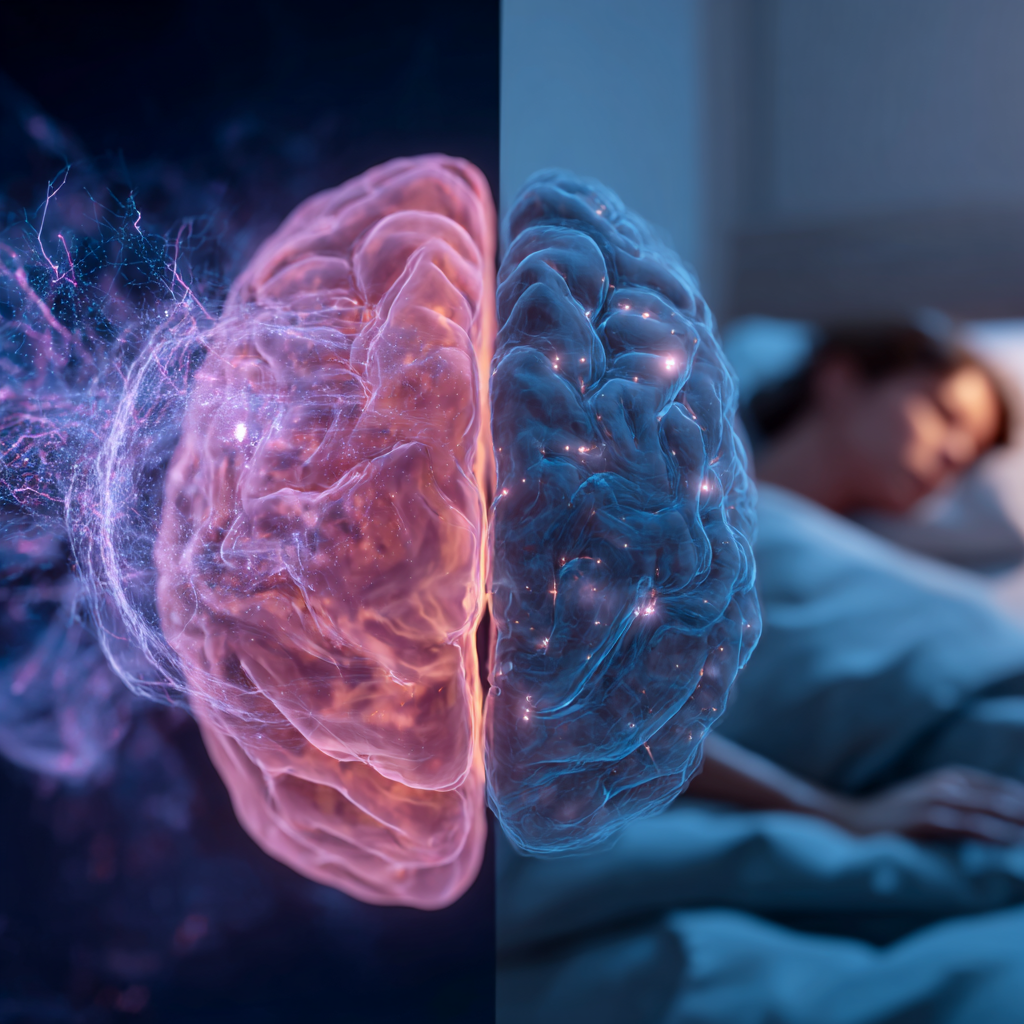
Story-at-a-Glance
- People with chronic insomnia show small to moderate impairments across multiple cognitive domains, including working memory (manipulation tasks showing effects of g = -0.52), episodic memory (g = -0.29), and executive function problem-solving (g = -0.39)
- Brain imaging reveals that insomnia disrupts key neural circuits: the hippocampus shows abnormal connectivity with the prefrontal cortex, GABA levels drop by nearly 30%, and glucose metabolism fails to decline properly from waking to sleep states
- The cognitive toll isn’t uniform—insomnia with short sleep duration shows different brain patterns than insomnia with normal sleep duration, suggesting distinct underlying mechanisms and potentially different treatment approaches
- Recent research from the Mayo Clinic Study of Aging found that chronic insomnia accelerates cognitive decline equivalent to 3.5 additional years of aging and increases dementia risk by 40%
- Neurotransmitter disruptions—particularly reduced GABA and altered adenosine signaling—create a hyperarousal state that prevents both restorative sleep and optimal daytime cognitive performance
- The relationship appears bidirectional: poor sleep damages cognitive function, while cognitive impairments can worsen sleep quality, creating a self-perpetuating cycle
- N3 (slow-wave) sleep, crucial for prefrontal cortex restoration and memory consolidation, shows reduced duration in insomnia patients, directly correlating with executive function deficits
When Dr. Diego Z. Carvalho, a neurologist and sleep medicine physician at the Mayo Clinic, published his team’s longitudinal study in September 2025, the findings sent ripples through the sleep medicine community. Over 5.6 years, they’d tracked 2,750 cognitively healthy older adults and discovered something unsettling. Chronic insomnia wasn’t just stealing sleep—it was stealing cognitive years. People with persistent sleep difficulties showed brain aging patterns and cognitive decline equivalent to being 3.5 years older. They had a 40% higher risk of developing mild cognitive impairment or dementia.
The study exemplifies what researchers have been piecing together for years: the link between insomnia symptoms and reduced cognitive function isn’t a simple story of tiredness affecting performance. It’s a complex neurobiological phenomenon involving disrupted brain circuits, altered neurotransmitter systems, and structural changes in regions critical for memory and executive function.
The Cognitive Domains Under Siege
Perhaps the most comprehensive picture comes from meta-analyses that have synthesized decades of research. In a 2019 meta-analysis examining 48 studies with over 4,500 participants, researchers found that insomnia was associated with poorer overall cognitive performance (Hedge’s g = -0.24). Drilling down into specific domains revealed a more nuanced picture.
Working memory takes a particularly hard hit. Tasks requiring manipulation of information—the mental gymnastics of holding and transforming data in real-time—showed effect sizes of g = -0.52, representing moderate impairment. Think of working memory as your brain’s whiteboard. In people with insomnia, that whiteboard becomes smudged and harder to use. The capacity component (simply holding information) showed smaller but still significant deficits at g = -0.30.
Episodic memory, our ability to recall specific events and experiences, demonstrated impairments with an effect size of g = -0.29. This isn’t surprising given what we know about sleep’s role in memory consolidation. During sleep, particularly during slow-wave and REM stages, the hippocampus replays newly acquired information. This allows it to be transferred to longer-term cortical storage. When sleep is disrupted, this overnight filing system struggles.
Executive function—that umbrella term covering planning, problem-solving, cognitive flexibility, and inhibitory control—shows a mixed picture. Problem-solving abilities are notably affected (g = -0.39), while some studies find preserved performance on tasks of cognitive flexibility and verbal fluency. This inconsistency has fueled debate about whether the link between insomnia symptoms and reduced cognitive function varies by insomnia subtype.
When Sleep Architecture Fragments: The N3 Story
Recent clinical observations have zeroed in on a crucial sleep stage: N3, also known as slow-wave sleep. In a 2025 study of 99 older adults with insomnia, researchers at Hangzhou Seventh People’s Hospital found something striking. Those with insomnia combined with anxiety showed significantly reduced N3 duration and N3 percentage compared to those with insomnia alone.
The correlation analysis revealed what many sleep researchers suspected: executive function was positively correlated with both N3 duration and N3 percentage. Memory function showed a negative correlation with wake time after sleep onset (WASO). In other words, the less deep sleep you get and the more you wake during the night, the worse your cognitive performance becomes the next day. The effects may persist long-term.
N3 sleep isn’t just “deep sleep” in a subjective sense. During these stages, the brain exhibits synchronized slow oscillations. These appear crucial for synaptic homeostasis, memory consolidation, and metabolic restoration. The prefrontal cortex—the brain’s executive control center—seems particularly dependent on N3 sleep for recovery. When N3 is disrupted or shortened, prefrontal-dependent functions like planning, working memory, and cognitive flexibility suffer.

The Neurobiology: A Brain That Won’t Power Down
To understand the link between insomnia symptoms and reduced cognitive function, we need to peer into the brain itself. Neuroimaging studies have revealed a consistent pattern: people with insomnia show a failure of normal sleep-related brain deactivation.
In landmark research using PET imaging, scientists found that patients with insomnia exhibited smaller declines in glucose metabolism from wakefulness to sleep in wake-promoting regions. These included the ascending reticular activating system, hypothalamus, and thalamus. More tellingly, areas associated with cognition and emotion also failed to “power down” properly. These included the amygdala, hippocampus, insular cortex, anterior cingulate cortex, and medial prefrontal cortex.
This suggests that the insomnia brain remains in a state of hyperarousal even during sleep. It’s like trying to run intensive cognitive tasks on a computer that’s supposed to be in sleep mode. The system overheats, maintenance routines don’t run properly, and performance degrades.
The hippocampus emerges as a key player. Multiple studies have found abnormal functional connectivity between the hippocampus and prefrontal cortex in people with insomnia. In one study, researchers discovered that stronger connectivity between the bilateral hippocampus and the left middle frontal gyrus correlated with worse insomnia severity. It also correlated with poorer subjective sleep efficiency. This circuit characteristically activates with maladaptive rumination—the racing thoughts that plague insomniacs—and normally deactivates during sleep. When it stays active, both sleep and cognitive function suffer.
The GABA Gap and Other Neurochemical Disruptions
One of the most intriguing neurochemical findings involves gamma-aminobutyric acid (GABA), the brain’s primary inhibitory neurotransmitter. Using magnetic resonance spectroscopy, researchers found that people with primary insomnia had GABA levels nearly 30% lower than good sleepers. These measurements were taken across multiple brain regions including the basal ganglia, thalamus, and cortical areas.
Given that GABA’s job is to inhibit neural activity—essentially telling overactive brain circuits to quiet down—a 30% reduction is substantial. It means the brain’s brake system is compromised. This helps explain the hyperarousal seen in insomnia and likely contributes directly to cognitive impairments. After all, good cognitive performance isn’t just about activating the right circuits. It’s also about inhibiting irrelevant information and preventing interference.
The adenosine system presents another piece of the puzzle. Adenosine accumulates during wakefulness and promotes sleep pressure. Recent advances in monitoring adenosine dynamics have revealed that its accumulation and clearance patterns may differ in people prone to insomnia. When this system malfunctions, the result is both difficulty sleeping and impaired daytime cognitive restoration—adenosine doesn’t just make you sleepy; it also plays roles in synaptic plasticity and cognitive processes.
Not All Insomnia Is Created Equal: Phenotype Matters
One reason research has sometimes shown inconsistent findings about cognitive impairment in insomnia relates to an emerging recognition: insomnia isn’t a single disorder. Two phenotypes have received particular attention.
Insomnia with short sleep duration (SSDI) involves both subjective complaints and objectively measured reduced sleep time. Insomnia with normal sleep duration (NSDI)—sometimes called paradoxical insomnia or sleep state misperception—involves complaints of poor sleep despite relatively normal objective measurements.
In a 2021 study of 902 young adults from the Raine Study, researchers found distinct cognitive signatures for each phenotype. The SSDI group showed more inconsistency in executive function (specifically shifting tasks) and greater N1 sleep percentage. The NSDI group demonstrated less consistent working memory reaction times, despite no objective sleep problems.
This suggests different underlying mechanisms. SSDI appears more directly related to sleep loss itself—the brain isn’t getting enough offline time. NSDI might reflect other pathophysiology, possibly involving misperception of sleep states or micro-arousals not captured by standard polysomnography. The cognitive impact differs accordingly, though both groups show impairments compared to good sleepers.
Save This Article for Later – Get the PDF Now

The Cultural Context: Sleep Anxiety in 2025
The link between insomnia symptoms and reduced cognitive function is playing out against a concerning backdrop. A 2025 report from the Global Wellness Institute identified “sleep anxiety” as one of the year’s top wellness challenges. Forty percent of Gen Z adults experience it at least three times per week.
Sleep anxiety—excessive worry about sleep quality or the inability to fall asleep—creates a vicious cycle. Concerns about cognitive performance due to poor sleep increase stress and arousal. This further impairs sleep. Worsening sleep degrades cognitive function. The cognitive decline then increases anxiety about sleep. The phenomenon has intensified in our hyperconnected era, where economic uncertainty, digital dependency, and the lingering effects of pandemic-era disruptions converge.
Interestingly, the rise of sleep-tracking devices has added complexity. While some users find data helpful, others develop “orthosomnia”—an obsessive pursuit of perfect sleep metrics that paradoxically worsens sleep anxiety. As one recent analysis noted, constant monitoring can exacerbate stress rather than relieve it.
Case Studies: When Cognitive Decline Meets Chronic Insomnia
The Mayo Clinic study provides perhaps the most sobering clinical picture. Among the 2,750 cognitively unimpaired participants (average age 70), those diagnosed with chronic insomnia showed faster declines across multiple cognitive domains over the 5.6-year follow-up period. When researchers examined participants who reported reduced sleep duration (sleeping less than usual), the findings were particularly striking. These individuals had cognitive test scores at baseline comparable to being four years older than their actual age.
Brain imaging told the same story. Participants with chronic insomnia and reduced sleep showed more white matter hyperintensities—brain changes linked to cerebrovascular disease. They also showed greater amyloid accumulation, a hallmark of Alzheimer’s disease. For those carrying the APOE ε4 gene variant (a known genetic risk factor for Alzheimer’s), the combination of insomnia and reduced sleep led to even steeper cognitive declines.
Another 2024 clinical observation from China’s geriatric population found that insomnia patients with co-occurring anxiety had significantly lower MoCA (Montreal Cognitive Assessment) scores than those with insomnia alone. Their total cognitive scores and memory subscores were both impaired. Polysomnography monitoring revealed the mechanism. Longer wake time after sleep onset and reduced N3 sleep correlated directly with worse cognitive performance.
The Mechanisms: Putting the Pieces Together
So how exactly does poor sleep translate into cognitive dysfunction? Several mechanisms appear to operate simultaneously:
Synaptic homeostasis disruption. During waking hours, synapses—the connections between neurons—strengthen through learning and experience. During sleep, particularly slow-wave sleep, a process of synaptic downscaling occurs. This preserves important connections while pruning unnecessary ones. This “synaptic homeostasis” maintains the brain’s ability to learn new information. Chronic insomnia disrupts this process, leading to saturated synapses that can’t efficiently encode new memories.
Memory consolidation failure. The hippocampus acts as a temporary storage facility for new memories. During sleep, it “replays” these memories to the cortex for long-term storage. When sleep is fragmented or insufficient, this transfer process becomes impaired. Information either isn’t consolidated properly or gets lost entirely.
Impaired glymphatic clearance. The brain has a waste-clearance system called the glymphatic system. It becomes much more active during sleep. It clears metabolic waste products, including beta-amyloid proteins that accumulate in Alzheimer’s disease. Chronic sleep disruption impairs this clearance, potentially explaining the link between insomnia and increased dementia risk.
Prefrontal cortex hypometabolism. While subcortical arousal regions stay hyperactive in insomnia, the prefrontal cortex—crucial for executive functions—shows reduced metabolic activity during wakefulness. This “inefficient sleep” fails to restore prefrontal function, creating daytime cognitive fog.
Inflammatory cascade activation. Sleep loss triggers inflammatory processes, with elevated cytokines that affect neural function. Chronic inflammation has known cognitive impacts and may contribute to neurodegeneration over time.
The Bidirectional Relationship: A Vicious Cycle
Here’s where things get particularly challenging: the link between insomnia symptoms and reduced cognitive function runs in both directions. A 2024 scoping review of 36 studies noted this bidirectionality explicitly. Insomnia may increase the risk of cognitive decline through the mechanisms described above. But cognitive decline can also contribute to the onset of insomnia, further diminishing sleep quality. (This bidirectional relationship echoes what we see in how sleep deprivation worsens existing mental health conditions—a vicious cycle where each problem feeds the other.) This creates what researchers call a bidirectional crisis between sleep deprivation and mental health.
How might cognitive impairment worsen sleep? Several pathways exist. Cognitive decline can affect the suprachiasmatic nucleus, the brain’s master circadian clock. This leads to irregular sleep-wake patterns. It can impair judgment about sleep hygiene practices. It can increase anxiety about cognitive performance, creating the sleep anxiety loop. And neurodegenerative processes may directly damage sleep-regulatory brain regions.
This bidirectional relationship explains why some interventions show promise. Treating insomnia may slow cognitive decline. Meanwhile, addressing cognitive factors (through cognitive behavioral therapy for insomnia, for instance) can improve sleep.
What Top Sleep Researchers Are Saying
Beyond Dr. Carvalho’s work, sleep research is advancing on multiple fronts. Recent presentations at the SLEEP 2025 conference highlighted how sleep disruption may exacerbate tau pathology in animal models, how REM sleep-specific apnea differentially affects spatial memory, and how sleep architecture relates to cognitive health in diverse populations.
The research community is also grappling with methodological challenges. As a recent review noted, approximately 44% of studies examining insomnia and cognition have failed to use diagnostic criteria when categorizing insomnia, and cognitive measures vary widely. This lack of standardization complicates efforts to draw firm conclusions and develop targeted treatments.
Still, the weight of evidence is clear. Multiple meta-analyses, longitudinal studies, and neuroimaging investigations converge on the same message: chronic insomnia is not benign. It exacts a cognitive toll that accumulates over time.
The Treatment Implications
If the link between insomnia symptoms and reduced cognitive function is well-established, what can be done? The answer isn’t simply “sleep more”—if it were that easy, people with insomnia would already be doing it.
Cognitive Behavioral Therapy for Insomnia (CBT-I) has emerged as the gold-standard treatment. Research shows it not only improves sleep but also cognitive outcomes. A 2024 meta-analysis of randomized controlled trials found that non-pharmacological interventions (primarily CBT-I) significantly enhanced cognitive function. Notable improvements appeared in memory, attention, and daily living activities based on self-reported measures.
The effectiveness of CBT-I makes neurobiological sense. By addressing maladaptive thoughts about sleep, reducing hyperarousal, and reestablishing healthy sleep-wake rhythms, it helps restore normal brain function. Unlike medications that may produce sleep but don’t necessarily restore its restorative quality, CBT-I targets the underlying mechanisms.
Other approaches show promise too. Light therapy, particularly morning bright light exposure, can help strengthen circadian rhythms. Mindfulness-based interventions may reduce the cognitive and emotional arousal that perpetuates insomnia. Emerging research into novel pharmacological targets offers hope. These include orexin receptor antagonists that reduce wakefulness drive without the dependency issues of traditional sedatives.
Looking Forward: The Importance of Early Intervention
Perhaps the most important takeaway from Dr. Carvalho’s research and related studies is this: we can’t afford to dismiss insomnia as a minor inconvenience. When someone consistently struggles with sleep over months or years, they’re not just dealing with next-day tiredness. They’re potentially setting themselves on a trajectory toward accelerated cognitive aging and increased dementia risk.
This reality calls for several shifts. Clinicians need to take insomnia complaints seriously, particularly in middle-aged and older adults. The period before obvious cognitive decline appears may be a critical window for intervention. Patients need to understand that persistent sleep problems warrant professional help, not just acceptance or self-medication.
And we need more research into mechanisms. Why do some people with insomnia show dramatic cognitive impairments while others remain relatively preserved? Can we identify biomarkers that predict who’s at highest risk? What interventions most effectively break the bidirectional cycle between sleep and cognitive dysfunction?
A Personal Reflection on Uncertainty
Having reviewed this research extensively, I find myself both enlightened and humbled. The evidence for the link between insomnia symptoms and reduced cognitive function is robust. The cognitive impairments are real. The brain changes are measurable. The long-term risks are concerning.
Yet significant uncertainties remain. The exact magnitude of risk for any individual is hard to predict. The specific mechanisms by which sleep loss translates to cognitive decline continue to be debated. The question of reversibility remains partially unanswered. Can early treatment reverse cognitive damage, or only slow its progression?
What we do know is that sleep isn’t optional. It’s as fundamental to brain health as nutrition is to physical health. When sleep goes awry for extended periods, the brain pays a price. The encouraging news is that effective treatments exist. Seeking help for chronic insomnia isn’t an overreaction—it’s a cognitively prudent decision.
For those struggling with persistent sleep difficulties, the message is clear. This isn’t just about feeling tired. Your cognitive future may depend on addressing it now. For healthcare providers, the takeaway is equally important. Insomnia deserves the same clinical attention as any other condition that threatens long-term brain health.
After all, in the battle between sleep and wakefulness, your cognitive function hangs in the balance.

FAQ
Q: What is the link between insomnia symptoms and reduced cognitive function?
A: The link between insomnia symptoms and reduced cognitive function refers to the well-documented association between chronic sleep difficulties and impairments across multiple cognitive domains. Research shows that people with insomnia demonstrate small to moderate deficits in working memory (particularly manipulation tasks), episodic memory, executive function, and complex attention. These impairments stem from neurobiological changes. These include disrupted hippocampal-prefrontal connectivity, reduced GABA levels, impaired memory consolidation during sleep, and chronic hyperarousal of wake-promoting brain regions. The relationship is bidirectional. Poor sleep damages cognitive function while cognitive decline can worsen sleep quality.
Q: What is GABA and why is it important for sleep and cognition?
A: GABA (gamma-aminobutyric acid) is the brain’s primary inhibitory neurotransmitter. Its job is to reduce neuronal excitability by inhibiting nerve transmission. Think of it as the brain’s brake pedal. Research has found that people with primary insomnia have GABA levels nearly 30% lower than good sleepers. This reduction impairs both the ability to “turn off” wake-promoting brain circuits (contributing to insomnia) and the ability to filter out irrelevant information during cognitive tasks (contributing to cognitive impairments).
Q: What are N3 sleep and slow-wave sleep?
A: N3 sleep, also called slow-wave sleep (SWS) or deep non-REM sleep, is the deepest stage of non-rapid eye movement sleep. It’s characterized by slow, synchronized brain waves and is crucial for physical restoration, memory consolidation, and synaptic homeostasis. During N3 sleep, the prefrontal cortex—responsible for executive functions like planning, working memory, and cognitive flexibility—undergoes crucial metabolic recovery. People with insomnia often show reduced N3 duration, which directly correlates with impaired executive function and memory performance.
Q: What is the hippocampus and what does it do?
A: The hippocampus is a seahorse-shaped structure deep in the brain that plays crucial roles in learning, memory formation, and spatial navigation. It acts as a temporary storage facility for new memories, encoding experiences during wakefulness and replaying them during sleep to transfer them to the cortex for long-term storage. The hippocampus is particularly vulnerable to sleep loss. In insomnia, abnormal connectivity between the hippocampus and prefrontal cortex has been documented, contributing to memory and cognitive impairments.
Q: What is working memory?
A: Working memory is the cognitive system responsible for temporarily holding and manipulating information needed for complex tasks. Think of it as your brain’s mental workspace or whiteboard. It allows you to hold a phone number in mind while dialing, do mental arithmetic, or follow multi-step instructions. Working memory has two components: capacity (how much information you can hold) and manipulation (how well you can work with that information). Research shows insomnia particularly affects manipulation tasks, with effect sizes of g = -0.52 indicating moderate impairment.
Q: What is episodic memory?
A: Episodic memory is your memory for specific events and experiences—the “what,” “where,” and “when” of your personal past. It’s what allows you to remember your last birthday party, yesterday’s lunch, or your first day of school. Episodic memory relies heavily on the hippocampus and is particularly dependent on sleep for consolidation. Studies show people with insomnia have episodic memory impairments with an effect size around g = -0.29.
Q: What are executive functions?
A: Executive functions are high-level cognitive processes that help you plan, make decisions, solve problems, control impulses, and flexibly adapt your behavior. They include abilities like working memory, inhibitory control (stopping yourself from doing something automatic), and cognitive flexibility (adapting to new rules or demands). The prefrontal cortex is the brain’s executive control center. Executive functions are particularly vulnerable to sleep loss because the prefrontal cortex requires adequate sleep for restoration.
Q: What is the prefrontal cortex?
A: The prefrontal cortex is the frontmost part of the frontal lobes, located just behind your forehead. It’s the brain’s “CEO,” responsible for executive functions, working memory, planning, decision-making, personality expression, and moderating social behavior. Neuroimaging studies show that while subcortical arousal regions stay hyperactive in insomnia, the prefrontal cortex actually shows reduced metabolic activity during wakefulness—a pattern called hypometabolism. This helps explain why people with insomnia often report “brain fog” and difficulty with executive tasks.
Q: What is cognitive flexibility?
A: Cognitive flexibility is the mental ability to switch between thinking about different concepts or to think about multiple concepts simultaneously. It allows you to adapt your thinking when rules change or when you need to see things from a different perspective. Cognitive flexibility is one component of executive function. Interestingly, it’s one of the cognitive domains that shows more preserved performance in people with insomnia, with many studies finding no significant impairment.
Q: What is hyperarousal?
A: Hyperarousal in the context of insomnia refers to a state of increased physiological and cognitive activation. It’s characterized by a racing mind, heightened alertness, elevated heart rate and cortisol levels, and increased brain metabolic activity—even during times when the brain should be “powering down” for sleep. Brain imaging studies show that people with insomnia fail to show the normal reduction in activity in wake-promoting regions when transitioning from wakefulness to sleep. This chronic hyperarousal both prevents restorative sleep and impairs daytime cognitive function.
Q: What is polysomnography (PSG)?
A: Polysomnography, often called a sleep study, is the comprehensive measurement of physiological changes during sleep. It typically includes monitoring brain waves (EEG), eye movements, muscle activity, heart rhythm, breathing, and blood oxygen levels. PSG is the gold standard for diagnosing many sleep disorders and objectively measuring sleep architecture—the cycling through different sleep stages. In insomnia research, PSG helps distinguish between insomnia with objectively short sleep duration and insomnia with normal sleep duration despite subjective complaints.
Q: What is the glymphatic system?
A: The glymphatic system is the brain’s waste clearance system, discovered relatively recently. It uses cerebrospinal fluid to flush out metabolic waste products from the brain, including beta-amyloid proteins that accumulate in Alzheimer’s disease. The glymphatic system becomes significantly more active during sleep, particularly during slow-wave sleep. Chronic sleep disruption impairs this clearance process, potentially contributing to the increased dementia risk seen in people with chronic insomnia.
Q: What is cognitive behavioral therapy for insomnia (CBT-I)?
A: Cognitive Behavioral Therapy for Insomnia (CBT-I) is a structured program that helps people overcome insomnia without medication. It combines cognitive therapy (addressing unhelpful thoughts and beliefs about sleep) with behavioral strategies (including sleep restriction, stimulus control, and relaxation techniques). CBT-I is considered the gold-standard treatment for chronic insomnia and has been shown to improve not only sleep but also cognitive outcomes including memory, attention, and daily functioning. Unlike sleeping pills, CBT-I addresses the underlying mechanisms maintaining insomnia.
Q: What is sleep anxiety or orthosomnia?
A: Sleep anxiety is excessive worry about sleep quality or the inability to fall asleep. Orthosomnia is a related phenomenon where people become obsessively focused on achieving “perfect” sleep, often driven by sleep tracker data. Both create vicious cycles: anxiety about sleep increases physiological arousal, which makes sleep more difficult, which increases anxiety. Current surveys show 40% of Gen Z adults experience sleep anxiety at least three times weekly, a trend intensified by digital dependency, economic uncertainty, and constant connectivity.
Q: What is the APOE ε4 gene?
A: The APOE ε4 gene variant is the strongest known genetic risk factor for late-onset Alzheimer’s disease. People who carry one copy of this variant have about three times the risk of developing Alzheimer’s compared to non-carriers; those with two copies have an even higher risk. Recent research on insomnia and cognition found that people with both chronic insomnia and the APOE ε4 variant showed steeper declines in memory and thinking skills, suggesting a synergistic effect between genetic vulnerability and sleep disruption.
Q: What are white matter hyperintensities?
A: White matter hyperintensities (WMH) are bright spots that appear on brain MRI scans, indicating areas where small vessel disease has damaged brain tissue. They’re associated with cerebrovascular disease, cognitive decline, and increased stroke risk. The Mayo Clinic study found that people with chronic insomnia who reported reduced sleep duration had more white matter hyperintensities, suggesting that chronic poor sleep contributes to vascular brain damage over time.