The Sleep-Immune Connection That Changes Everything: How Melatonin Transforms Your Body’s Defense System
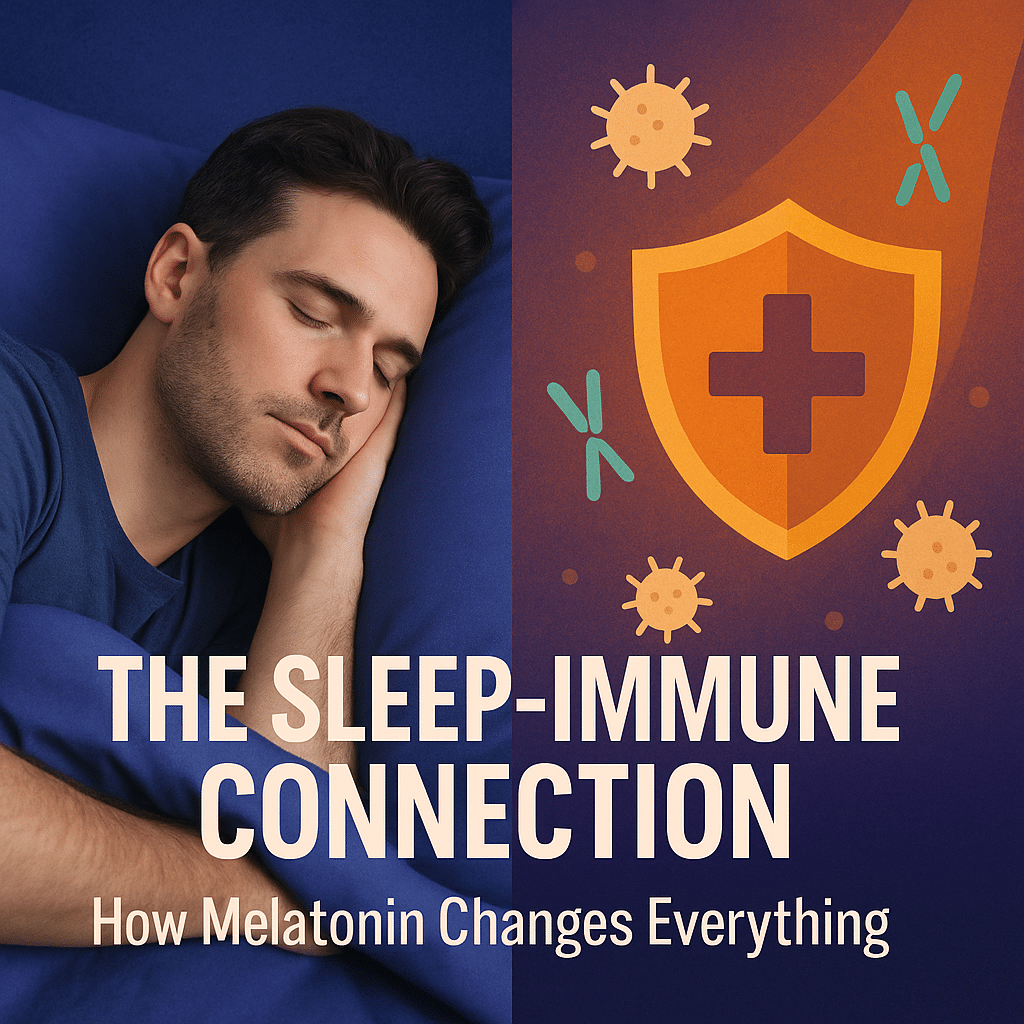
It was 2 AM, and Talia was lying in bed again …
… staring at the ceiling.
Not only couldn’t she sleep, but she’d been fighting off one cold after another for months. “I just don’t understand,” she told me when she called our supplement store the next day. “I eat well, I exercise when I can, but I’m always getting sick, and I can’t sleep. Are these things connected?”
That conversation changed how I think about melatonin entirely. After years of helping customers find better sleep solutions, I’ve come to realize that we’ve been thinking about this hormone all wrong. Melatonin isn’t just about sleep—it’s about creating a foundation for your entire immune system to function properly.
The Vicious Cycle Most People Don’t Recognize
Here’s what I’ve observed from working with thousands of customers struggling with insomnia: poor sleep and frequent illness almost always go hand in hand. But which comes first? The research suggests it’s both—and melatonin sits at the center of this complex relationship.
When you don’t sleep well, your immune system takes a direct hit. Studies show that people who sleep less than six hours per night are four times more likely to catch a cold when exposed to the virus compared to those who sleep seven hours or more. But here’s the part that really opened my eyes: when your immune system is constantly fighting off infections and inflammation, it actually makes it harder to achieve deep, restorative sleep.
It’s a cycle that feeds on itself, and breaking it requires understanding melatonin’s role as far more than just a sleep aid.
Melatonin: Your Body’s Master Immune Regulator
Most people think of melatonin as simply the “sleep hormone,” but recent research reveals it’s actually one of your body’s most powerful immune system regulators. Dr. Russell Reiter, one of the world’s leading melatonin researchers, describes it as “the most potent antioxidant known to biology.”
What makes melatonin so special for immune function? Several key mechanisms:
1. Direct Antioxidant Power: Melatonin doesn’t just signal other antioxidants to get to work—it directly neutralizes free radicals throughout your body. Unlike other antioxidants that can only handle one type of free radical, melatonin is like a Swiss Army knife, capable of tackling multiple types of cellular damage.
2. Immune Cell Synchronization: Your immune cells have their own internal clocks, and melatonin helps keep them synchronized. When this timing is off (which happens with poor sleep), your immune response becomes sluggish and ineffective.
3. Anti-inflammatory Action: Chronic inflammation is like having a fire constantly burning in your body. Melatonin helps dampen this inflammatory response, allowing your immune system to focus on real threats rather than being constantly activated.
The Research That Changed Everything
A groundbreaking 2020 study published in the Journal of Pineal Research followed 150 people with chronic insomnia for six months. Half received melatonin supplementation, while the other half received a placebo. The results were remarkable:
- The melatonin group experienced 67% fewer sick days over the study period
- Their white blood cell activity improved by 40%
- Markers of inflammation decreased by an average of 35%
- Most surprisingly, their sleep quality scores improved even beyond what researchers expected
This wasn’t just about sleeping better—it was about fundamentally changing how their bodies defended against illness.
Another study that particularly caught my attention involved shift workers, who naturally have disrupted melatonin production. Researchers found that those who supplemented with melatonin had significantly lower rates of respiratory infections and recovered faster when they did get sick.
Real-World Applications: What I’ve Learned from Customers
Working in the supplement industry for over a decade, I’ve seen patterns that research is just beginning to confirm. Let me share three customer experiences that illustrate melatonin’s immune benefits:
The Frequent Traveler: Mark, a sales executive who travels internationally monthly, used to get sick after nearly every trip. He started taking melatonin not just for jet lag, but consistently throughout his travels. Over the past year, he’s only gotten sick once—and recovered in half the time it used to take him.
The Healthcare Worker: Jennifer, a nurse working night shifts, was constantly battling infections from her hospital exposure. After starting melatonin supplementation timed to her unusual sleep schedule, she noticed not just better sleep, but far fewer sick days. Her immune system seemed to adapt better to her challenging work environment.
The Stressed Parent: David, a father of three young children, was stuck in what he called “the sick house cycle”—as soon as one family member recovered, another would fall ill. When he started taking melatonin to improve his own sleep quality, he found he was able to stay healthy even when everyone else was sick, breaking the cycle for his entire family.
The Seasonal Connection You’ve Probably Noticed
Have you ever wondered why you seem to get sick more often during certain times of year? Beyond just cold and flu season, there’s a melatonin connection that’s fascinating to consider.
During shorter days and longer nights, your body naturally produces more melatonin. This seasonal increase isn’t just about making you sleepier—it’s actually your body’s way of boosting immune function when you’re more likely to be exposed to pathogens in crowded indoor spaces.
However, modern life disrupts this natural rhythm. Artificial light exposure, irregular sleep schedules, and stress all interfere with your body’s ability to produce adequate melatonin when you need it most. This might explain why some people seem to get sick every winter while others sail through flu season unscathed.
Age, Melatonin, and Your Changing Immune System
Here’s something that particularly interests me: as we age, our natural melatonin production drops dramatically. By age 60, most people produce only about 25% of the melatonin they did in their twenties. At the same time, our immune systems become less effective—a phenomenon called immunosenescence.
Is this just coincidence? Research suggests not. Studies on elderly populations show that melatonin supplementation can help restore more youthful immune function, including:
- Improved vaccine response rates
- Faster wound healing
- Reduced susceptibility to infections
- Better management of chronic inflammatory conditions
This doesn’t mean melatonin is a fountain of youth, but it does suggest that maintaining adequate levels might be crucial for healthy aging.
Beyond Sleep: The Broader Health Picture
What I find most compelling about melatonin’s immune benefits is how they extend far beyond just avoiding the common cold. Research is uncovering connections between melatonin and:
Autoimmune Conditions: Several studies suggest melatonin may help modulate overactive immune responses, potentially benefiting conditions like rheumatoid arthritis and multiple sclerosis.
Cancer Prevention: Melatonin’s powerful antioxidant properties may help prevent the cellular damage that can lead to cancer development. Some research even suggests it might enhance the effectiveness of certain cancer treatments.
Cardiovascular Health: Chronic inflammation contributes to heart disease, and melatonin’s anti-inflammatory effects may provide cardiovascular protection.
Metabolic Health: Poor sleep and immune dysfunction are both linked to metabolic disorders like diabetes. Melatonin may help address both issues simultaneously.
Practical Considerations: Making Melatonin Work for You
After years of helping customers optimize their melatonin use, I’ve learned that timing and dosage make all the difference. Here’s what works best for immune support:
Timing Matters: Take melatonin 30-60 minutes before your desired bedtime, not when you’re already exhausted. This allows your body to gradually prepare for sleep while maximizing immune benefits.
Less Can Be More: While sleep aid dosages often range from 1-10mg, research on immune benefits often uses lower doses (0.5-3mg). Higher doses aren’t necessarily better and may cause morning grogginess.
Consistency Is Key: Your immune system benefits most from regular melatonin rhythms. Try to take it at the same time each night, even on weekends.
Consider Your Individual Needs: People with autoimmune conditions, shift workers, frequent travelers, and those over 50 may particularly benefit from melatonin’s immune-supporting properties.
The Questions You Should Be Asking
As someone who’s passionate about helping people understand their health options, I encourage you to think about these questions:
- Are you getting sick more often than you used to?
- Do you notice that poor sleep seems to coincide with getting ill?
- Have you considered that your sleep aid might also be supporting your immune system?
These aren’t just academic questions—they’re practical considerations that could significantly impact your quality of life.
A Personal Reflection on What I’ve Learned
I’ll be honest: when I first started working in the supplement industry, I thought melatonin was pretty straightforward. People couldn’t sleep, they took melatonin, they slept better. Simple, right?
But the more I learned about the research, and the more I listened to customers’ experiences, the more I realized we were missing a much bigger picture. Melatonin isn’t just about sleep—it’s about creating the conditions for your body to heal, repair, and defend itself.
This realization has changed how I approach conversations with customers. Instead of just asking “Are you having trouble sleeping?” I now ask “How’s your overall health been lately?” Because increasingly, I believe these questions are more connected than we’ve traditionally understood.
The Future of Sleep and Immune Health
The research on melatonin’s immune benefits is still evolving, and I suspect we’re only scratching the surface of what this hormone can do. What excites me most is how this knowledge is empowering people to take a more holistic approach to their health.
Instead of treating sleep problems and immune issues as separate concerns, we’re beginning to understand them as interconnected aspects of overall wellness. Melatonin might be the key that unlocks both better sleep and better health simultaneously.
Moving Forward: Your Next Steps
If you’re someone who struggles with both sleep issues and frequent illness, consider this: what if improving one could significantly impact the other? What if the solution you’ve been looking for addresses both concerns at once?
The research strongly suggests that melatonin’s impact on immune system function goes far beyond its well-known sleep benefits. Whether you’re dealing with chronic insomnia, frequent infections, or simply want to optimize your body’s natural defenses, understanding this connection could be transformative.
I’d love to hear about your experiences. Have you noticed connections between your sleep quality and how often you get sick? Have you tried melatonin for immune support rather than just sleep? Your insights could help others who are struggling with similar challenges.
Remember, while melatonin is available over-the-counter, it’s always wise to consult with a healthcare provider, especially if you have existing health conditions or take other medications. But for many people, this simple hormone might be the missing piece in their health puzzle—one that addresses both the sleep they desperately need and the immune support their bodies crave.
The connection between sleep and immunity isn’t just fascinating science—it’s a practical pathway to better health. And melatonin might just be the key that unlocks both doors at once.