When Your Body Speaks What Your Mind Can’t Process: Understanding Night Terrors and Anxiety
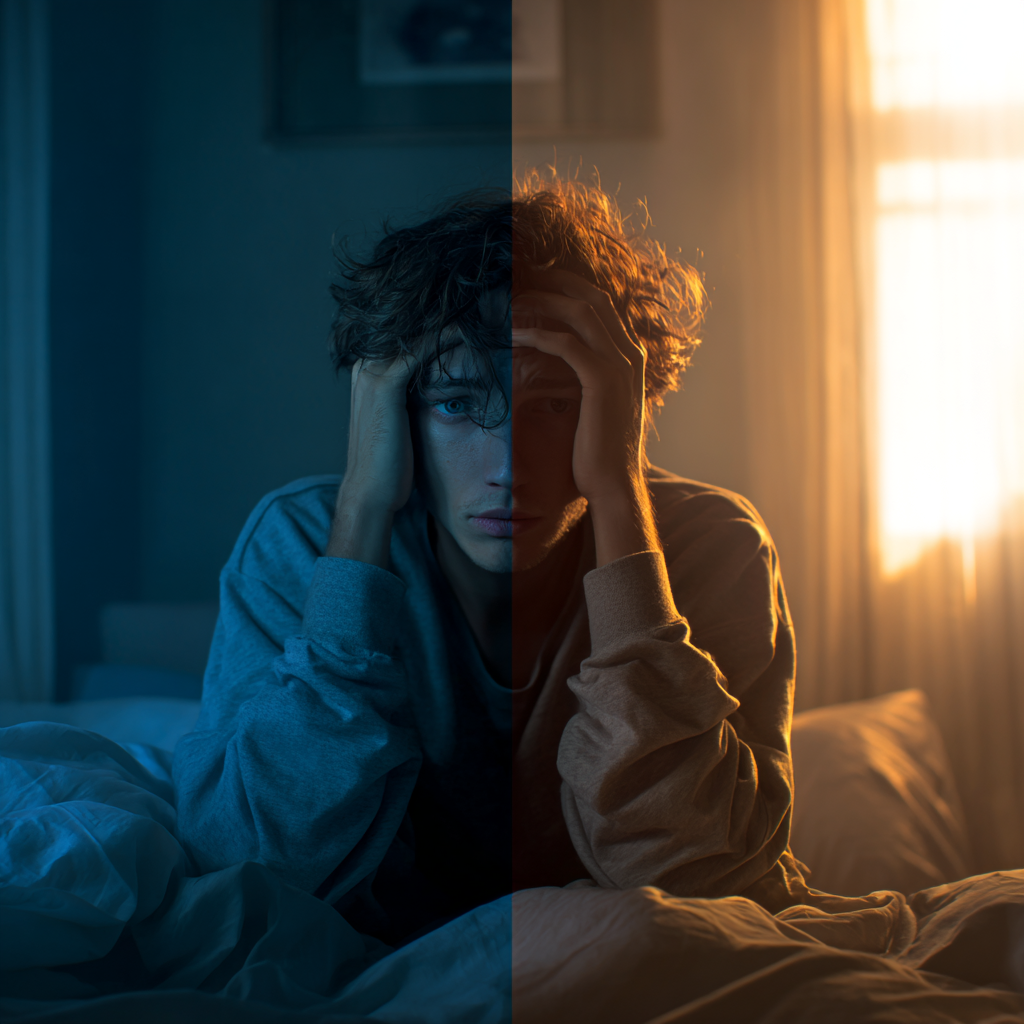
Story-at-a-Glance
- Night terrors and anxiety form a bidirectional relationship—anxiety can trigger night terrors, while experiencing night terrors generates anticipatory anxiety about sleep itself
- Unlike nightmares that occur during REM sleep, night terrors emerge from deep NREM sleep when the brain is caught between consciousness states, often manifesting unprocessed emotional stress
- Research shows children with frequent night terrors in early childhood have significantly higher rates of anxiety symptoms by ages 4-5, suggesting these episodes may be early warning signs of emotional processing difficulties
- Adults who develop night terrors often have underlying anxiety disorders or PTSD, with up to 70% of PTSD patients experiencing trauma-related sleep disturbances
- Cognitive behavioral approaches and imagery rehearsal therapy show promise in breaking the cycle, though treatment requires addressing both the sleep disruption and underlying anxiety simultaneously
- Understanding night terrors as a psychophysiological phenomenon—where the body physically expresses what the conscious mind cannot access—offers a more effective framework for treatment than viewing them as separate conditions
A mother watches her 6-year-old son bolt upright at 11 PM, eyes wide open but unseeing. He’s screaming with such terror that she instinctively rushes to comfort him, but he pushes her away, inconsolable, his heart racing. Within ten minutes, he’s back asleep, and by morning, he remembers nothing. Meanwhile, across town, a 42-year-old veteran sits awake at 2 AM after his third episode this week, his sheets drenched in sweat, terrified to fall back asleep. His partner has moved to the guest room.
These scenes play out in homes every night, yet most people fundamentally misunderstand what’s happening. Night terrors aren’t just “bad dreams” or simple sleep disruptions—they represent something far more revealing about the relationship between our emotional lives and our sleep architecture.
The Hidden Language of Sleep
Here’s what makes night terrors and anxiety such a compelling puzzle: they speak to each other in ways that most people—and many clinicians—miss entirely.
Night terrors emerge during deep non-REM sleep, typically in the first third of the night when the brain transitions between sleep stages. Unlike nightmares, which we experience during REM sleep and often remember, night terrors work differently. They occur when consciousness gets stuck between sleeping and waking. The person appears awake—eyes open, sometimes even standing or moving. But they’re actually in a partial arousal state where the emotional centers of the brain have activated without the rational, memory-forming parts coming online.
This is where anxiety enters the picture in fascinating ways. Dr. Antonio Zadra, a prominent sleep researcher and Professor at the Université de Montréal who specializes in parasomnias, has spent decades investigating how our daytime emotional experiences influence nighttime sleep phenomena. His research reveals that night terrors aren’t random neurological glitches. They’re often the body’s way of processing emotional content that hasn’t been fully addressed during waking hours.
Think of it this way: anxiety creates a background hum of unresolved threat in your nervous system. During waking hours, your conscious mind can manage this through various coping mechanisms. But during deep sleep, when those conscious controls are offline, the amygdala (your brain’s threat detector) may suddenly activate in response to this unprocessed emotional material. The result? Your body physically expresses the fear your conscious mind has been containing.
When Children’s Terrors Predict Future Struggles
The relationship between night terrors and anxiety becomes particularly revealing when we examine childhood patterns. A significant longitudinal study published in the Journal of Clinical Sleep Medicine tracked children from infancy through preschool age, measuring the frequency of night terrors and later emotional difficulties. The findings were striking: children who experienced more frequent night terrors between ages 1-3 showed significantly higher rates of “internalizing problems” by ages 4-5. These problems primarily manifested as anxiety and depression symptoms.
What’s particularly interesting is that this relationship held even after researchers controlled for other factors. These included maternal depression, socioeconomic status, and total sleep duration. The night terrors themselves appeared to be marking something deeper—an early signal that a child’s emotional processing system was struggling.
But here’s where it gets more complex: we can’t simply say night terrors cause anxiety, because the research also shows that anxious children are more likely to experience night terrors. Children with separation anxiety, for instance, have notably higher rates of sleep terrors. It’s a bidirectional dance where each condition amplifies the other.

The Adult Experience: When Past Trauma Hijacks Present Sleep
While research shows varying childhood prevalence rates (from 1-6.5% to as high as 30-40% depending on study methodology), only about 2.2% of adults continue to have them—and when they do, the underlying causes are usually more concerning. Dr. Daniel Barone, a neurologist and sleep medicine expert at NewYork-Presbyterian/Weill Cornell Medical Center, emphasizes that adult night terrors often signal underlying mental health conditions.
The most common culprit? Anxiety disorders, particularly PTSD. Research reveals that up to 70% of adults with PTSD experience nightmares and other trauma-related sleep disturbances, including night terrors. For these individuals, the line between nightmares and night terrors can blur—trauma memories may intrude during both REM and NREM sleep, creating a sleep landscape where threat feels omnipresent.
Consider the case of a 58-year-old man documented in a clinical study published in the Journal of the Saudi Society for Respiratory and Sleep Medicine. He’d been experiencing night terrors for years. He had constructed his own explanation—he believed they were connected to persistent nightmares and that something was fundamentally wrong with his mind. The breakthrough came when clinicians used polysomnography and video recording to show him exactly what was happening during his episodes. Through sleep education sessions, they helped him reconceptualize his condition. Understanding the physiological and psychological dimensions differently led to marked improvement in his symptoms.
This case illustrates something crucial: how we think about night terrors and anxiety matters enormously. The man had developed a dysfunctional narrative about his condition that increased his anxiety about sleep. This, in turn, made the episodes worse. Sound familiar? It’s the same vicious cycle many people get trapped in.
The Vicious Cycle No One Talks About
Here’s what makes night terrors and anxiety such an insidious combination: they create a self-reinforcing loop that’s remarkably difficult to break without understanding the full picture.
It works like this: You experience a night terror. Even though you might not remember the episode itself, you wake up feeling unsettled or exhausted. If someone told you what happened, you may feel embarrassed and worried. This generates anticipatory anxiety about sleep. “Will it happen again tonight?” Your nervous system, already primed for threat detection due to underlying anxiety, now adds “sleep itself” to the list of things to worry about.
This anticipatory anxiety keeps your nervous system in a heightened state of arousal as you approach bedtime. You might delay going to sleep, engage in hypervigilance behaviors, or experience racing thoughts. This hyperarousal makes it more difficult to achieve the deep, stable NREM sleep where the brain should be doing its restorative work. Paradoxically, when you finally do fall into deep sleep after extended wakefulness, the “rebound effect” kicks in. You may spend even more time in the deepest stages of NREM sleep—exactly where night terrors occur.
Additionally, sleep deprivation itself fragments sleep architecture. It can increase the frequency of arousals from deep sleep, creating more opportunities for night terrors to occur. Meanwhile, the chronic sleep disruption exacerbates your daytime anxiety symptoms. You become more irritable, emotionally reactive, have difficulty concentrating, and experience heightened threat perception. You’re less equipped to manage the stressors that feed anxiety in the first place.
And so the cycle continues, each element reinforcing the others. Without intervention, this pattern can persist for years, progressively worsening quality of life and relationship functioning.
Save This Article for Later – Get the PDF Now

What’s Actually Happening in Your Brain
To understand how to break this cycle, it helps to grasp what’s occurring neurologically during night terrors and anxiety. Both conditions involve dysregulation of similar brain systems—particularly the amygdala (threat detection), hippocampus (memory processing), anterior cingulate cortex (emotional regulation), and insular cortex (body awareness).
Research shows that individuals with PTSD have faster heart rates even during sleep, indicating their fight-or-flight response never fully disengages. The same brain regions implicated in anxiety disorders are also the ones that malfunction during night terrors. During a night terror episode, brain imaging would show the amygdala and autonomic nervous system activated. Heart racing, breathing rapid, sweating—all while the prefrontal cortex (rational thought, conscious awareness) remains largely offline.
This explains why people experiencing night terrors appear terrified but can’t be consoled or even fully awakened. They’re caught in a state where the threat response has activated without the cognitive machinery needed to assess, process, or remember what’s happening. Dr. Warren Ng, a psychiatrist at New York Presbyterian, notes this is why night terrors tend to be more distressing for witnesses. The sufferer often has no memory of the event, while family members are left shaken by what they’ve observed.
Breaking Free: Treatment Approaches That Address Both Sides
Given that night terrors and anxiety form this integrated psychophysiological system, effective treatment must address both the sleep disruption and the emotional processing simultaneously. Here’s what research suggests works:
Cognitive Behavioral Approaches
While imagery rehearsal therapy (IRT) was originally developed for nightmares rather than night terrors, recent research has begun exploring its application for NREM parasomnias. The principle is compelling: if daytime mental activity can influence nighttime sleep experiences, then working with emotional content during waking hours might help. Specifically, addressing the physical sensations and threat responses associated with sleep terrors while awake could reduce their occurrence.
This isn’t about “rehearsing” a different terror (since people don’t remember the content anyway). Rather, it’s about addressing the underlying threat response system. Cognitive behavioral therapy for insomnia (CBT-I) has shown effectiveness in reducing anxiety-driven sleep problems, and some clinicians are adapting these approaches specifically for parasomnias.
For adults with PTSD-related night terrors, trauma-focused therapy appears essential. Addressing the root trauma through approaches like Eye Movement Desensitization and Reprocessing (EMDR) or prolonged exposure therapy can reduce overall PTSD symptoms, including sleep disturbances. Interestingly, some veterans in clinical studies found that as their nightmares decreased through treatment, their night terrors also became less frequent. This suggests these sleep phenomena share common neural substrates.
Sleep Architecture Stabilization
Many people don’t realize that when and how you sleep can be as important as how much you sleep. Since night terrors occur during transitions out of deep NREM sleep, anything that destabilizes sleep architecture increases risk.
Sleep deprivation is a major trigger. When you’re severely sleep-deprived, your brain compensates by pushing you into deeper NREM sleep more rapidly. This increases the intensity of slow-wave sleep and the likelihood of incomplete arousals. Maintaining a consistent sleep schedule, allowing sufficient sleep time, and avoiding alcohol (which fragments sleep architecture) all help stabilize the conditions that give rise to night terrors.
For children, parents can try “anticipatory awakening.” This involves gently waking the child 15-20 minutes before night terrors typically occur (they often follow predictable timing) and keeping them awake for a few minutes before letting them fall back asleep. This disrupts the deep sleep pattern without causing full arousal, often preventing the episode.
Addressing Underlying Anxiety
This might seem obvious, but it’s worth emphasizing: you cannot fully resolve night terrors without addressing the anxiety that fuels them (and that they fuel). This means working with a mental health professional to develop better anxiety management strategies, which might include:
- Stress reduction techniques practiced consistently, not just when symptoms are severe
- Identifying and modifying thought patterns that maintain hyperarousal
- Gradually working through avoided situations or memories that keep the threat response system activated
- In some cases, medication to help regulate the nervous system while other interventions take effect
What we’re learning from research on night terrors and anxiety is that they’re not really separate problems requiring separate solutions. They’re different expressions of the same dysregulated threat-response system, manifesting differently depending on sleep stage and level of consciousness.
A Different Way of Understanding What’s Happening
Perhaps the most helpful reframe is this: night terrors aren’t just sleep disruptions that cause anxiety. Nor are they simply anxiety symptoms that happen during sleep. They represent moments when your body is speaking what your conscious mind hasn’t been able to process or express.
Think about it—during waking hours, we have countless ways of managing and suppressing anxiety. We rationalize, distract ourselves, stay busy, use substances, and avoid triggering situations. These strategies may prevent immediate overwhelm. But they also mean that emotional content doesn’t get fully processed and integrated. It sits there, beneath conscious awareness, maintaining a state of elevated threat sensitivity in your nervous system.
During deep sleep, when conscious control is offline but the emotional brain is still monitoring for threats, this unprocessed material can trigger an arousal response. Your body essentially “speaks” through the night terror episode. It expresses through screaming, thrashing, panic, and racing heart what it couldn’t articulate or address during waking hours. The fact that you have no memory of the episode afterward (because the memory-forming parts of the brain weren’t online) doesn’t mean nothing important is happening. If anything, it suggests something so emotionally charged is occurring that your brain can’t integrate it into conscious narrative.
This perspective shifts how we approach treatment. Instead of just trying to suppress the night terrors or simply manage anxiety symptoms, we can ask deeper questions. What is this system trying to process? What threats—real or perceived—has this person’s nervous system not been able to fully work through? How can we help the conscious mind do the processing work that’s currently only happening through these frightening nocturnal episodes?
For many people, this reframe offers profound relief. Your night terrors aren’t a sign that you’re “broken” or that something random and terrible is happening to you. They’re actually your system’s attempt—however imperfect—to deal with emotional content that needs attention.
What You Can Do Starting Tonight
If you or someone you love is caught in the night terrors and anxiety cycle, here are practical steps that research supports:
For immediate symptom management:
- Establish absolute sleep consistency—same bedtime and wake time every day, including weekends
- Create a wind-down routine that signals to your nervous system that it’s safe to sleep
- Remove obvious triggers like caffeine after 2 PM, alcohol before bed, intense exercise within 3 hours of sleep
- Ensure the sleep environment is safe (no sharp objects nearby, clear path to exits) if episodes involve movement
For addressing the underlying system:
- Work with a mental health professional who understands both sleep disorders and anxiety
- Consider exploring your relationship with sleep and stress through mindfulness approaches
- Keep a log tracking not just when night terrors occur, but what stressors or emotional experiences preceded them—patterns often emerge
- For children, watch for signs of anxiety during the day and address them proactively rather than waiting for sleep problems to develop
For long-term resolution:
- Recognize that healing isn’t linear—there will be setbacks as you work through underlying issues
- Understand the bidirectional relationship between sleep quality and anxiety—improving one helps the other
- Be patient with the process—your nervous system learned these patterns over time and needs time to unlearn them
Perhaps most importantly, shift how you think about what’s happening. Night terrors aren’t your enemy—they’re a signal, an invitation to pay attention to emotional content that needs processing. When you can view them this way, they lose some of their power to generate fear, and that shift alone can begin breaking the cycle.

FAQ Section
Q: What exactly are night terrors?
A: Night terrors (also called sleep terrors) are episodes of intense fear, panic, screaming, or thrashing that occur during non-rapid eye movement (NREM) sleep, typically in the first third of the night. Unlike nightmares, people experiencing night terrors are not fully conscious, appear awake but are difficult or impossible to wake or console, and usually have no memory of the episode afterward. They’re classified as a parasomnia—a category of sleep disorders involving unusual behaviors during sleep.
Q: How do night terrors differ from nightmares?
A: The key differences are: (1) Sleep stage—nightmares occur during REM sleep (dream sleep), while night terrors occur during deep NREM sleep; (2) Memory—people typically remember nightmares but not night terrors; (3) Responsiveness—during nightmares you can be awakened and consoled, while during night terrors you’re largely unresponsive; (4) Timing—nightmares tend to occur in the second half of the night when REM sleep is more common, while night terrors typically happen in the first third of the night during deep sleep stages.
Q: What is the bidirectional relationship between night terrors and anxiety?
A: “Bidirectional” means the causation flows both ways: anxiety disorders increase the risk of experiencing night terrors (especially in adults with PTSD or generalized anxiety), AND experiencing frequent night terrors creates anxiety about sleep itself, which maintains elevated nervous system arousal and makes future episodes more likely. This creates a self-reinforcing cycle where each condition feeds the other.
Q: What are internalizing problems?
A: “Internalizing problems” is a clinical term referring to emotional and psychological difficulties that are primarily internal—directed inward rather than expressed outward. This includes anxiety, depression, withdrawal, somatic complaints, and fearfulness. It contrasts with “externalizing problems” like aggression or rule-breaking behaviors. Research shows that children with frequent night terrors have significantly higher rates of internalizing problems as they grow older.
Q: What does PTSD stand for and how does it relate to night terrors?
A: PTSD stands for Post-Traumatic Stress Disorder—a mental health condition triggered by experiencing or witnessing a traumatic event. People with PTSD often experience intrusive memories, hypervigilance, avoidance behaviors, and sleep disturbances. Research indicates that up to 70% of adults with PTSD experience nightmares, night terrors, or other trauma-related sleep problems. The brain regions involved in PTSD (amygdala, hippocampus) are the same ones that malfunction during night terrors.
Q: What is NREM sleep?
A: NREM stands for Non-Rapid Eye Movement sleep. Sleep cycles through different stages: light sleep (NREM stages 1-2), deep sleep (NREM stages 3-4), and REM sleep (where most vivid dreaming occurs). Night terrors specifically occur during deep NREM sleep (stages 3-4), when the brain is least conscious but the body can still respond to internal signals. This is different from REM sleep, where the body is paralyzed but the brain is highly active.
Q: What is anticipatory anxiety?
A: Anticipatory anxiety is worry or fear about something that might happen in the future rather than something currently happening. For night terror sufferers, this means feeling anxious during the day or evening about whether an episode will occur that night. This pre-sleep anxiety keeps the nervous system aroused, making it harder to achieve the deep, stable sleep needed for restoration—and paradoxically increasing the risk of the very episodes you’re worried about.
Q: What is imagery rehearsal therapy (IRT)?
A: Imagery rehearsal therapy is a cognitive behavioral technique originally developed for nightmares where patients identify a recurring disturbing dream, create an alternative ending or version while awake, and then practice visualizing this new version regularly. The theory is that daytime mental activity can influence nighttime dream content. While developed for REM nightmares, researchers are now exploring whether similar principles can help with NREM parasomnias like night terrors by working with emotional content and threat responses during waking hours.
Q: What are parasomnias?
A: Parasomnias are a category of sleep disorders involving abnormal or unusual behaviors, movements, emotions, perceptions, or dreams that occur while falling asleep, during sleep, or while waking up. Examples include sleepwalking, night terrors, sleep paralysis, REM behavior disorder, and confusional arousals. They represent states where the brain is partially in one sleep stage and partially in another, or where certain brain functions activate while others remain in sleep mode.
Q: What does it mean when the article says the “amygdala” activates?
A: The amygdala is an almond-shaped structure deep in the brain that serves as your threat detection and emotional processing center. It’s constantly scanning for danger and triggers the fight-or-flight response when threats are detected. During night terrors, the amygdala appears to activate—triggering fear, rapid heart rate, breathing changes, and panic responses—while the prefrontal cortex (rational thought, conscious awareness) remains largely offline. This creates the terrifying but non-conscious experience characteristic of night terrors.
Q: Can night terrors be completely cured?
A: Most children naturally outgrow night terrors by adolescence without specific treatment. For adults, the outlook depends on underlying causes—if night terrors stem from treatable conditions like sleep apnea, addressing the root cause often resolves them. For anxiety-related night terrors, significant improvement is possible through combined treatment addressing both sleep architecture and underlying anxiety, though “cure” may be less relevant than achieving effective management and dramatically reduced frequency. The goal is breaking the self-reinforcing cycle rather than guaranteeing episodes will never recur.
Q: Should I wake someone having a night terror?
A: Generally no—attempting to wake someone during a night terror can prolong the episode, increase their confusion and distress, and potentially result in violent responses as they may perceive you as a threat in their confused state. The safest approach is to gently guide them back to bed if needed, speak softly and calmly, ensure they don’t injure themselves, and wait for the episode to pass naturally (typically 5-40 minutes). They’ll usually settle back to sleep and won’t remember it.