How Stress Management Protects Your Health by Restoring Sleep Architecture: Advanced Stress Management Techniques for Reducing Disease Risk
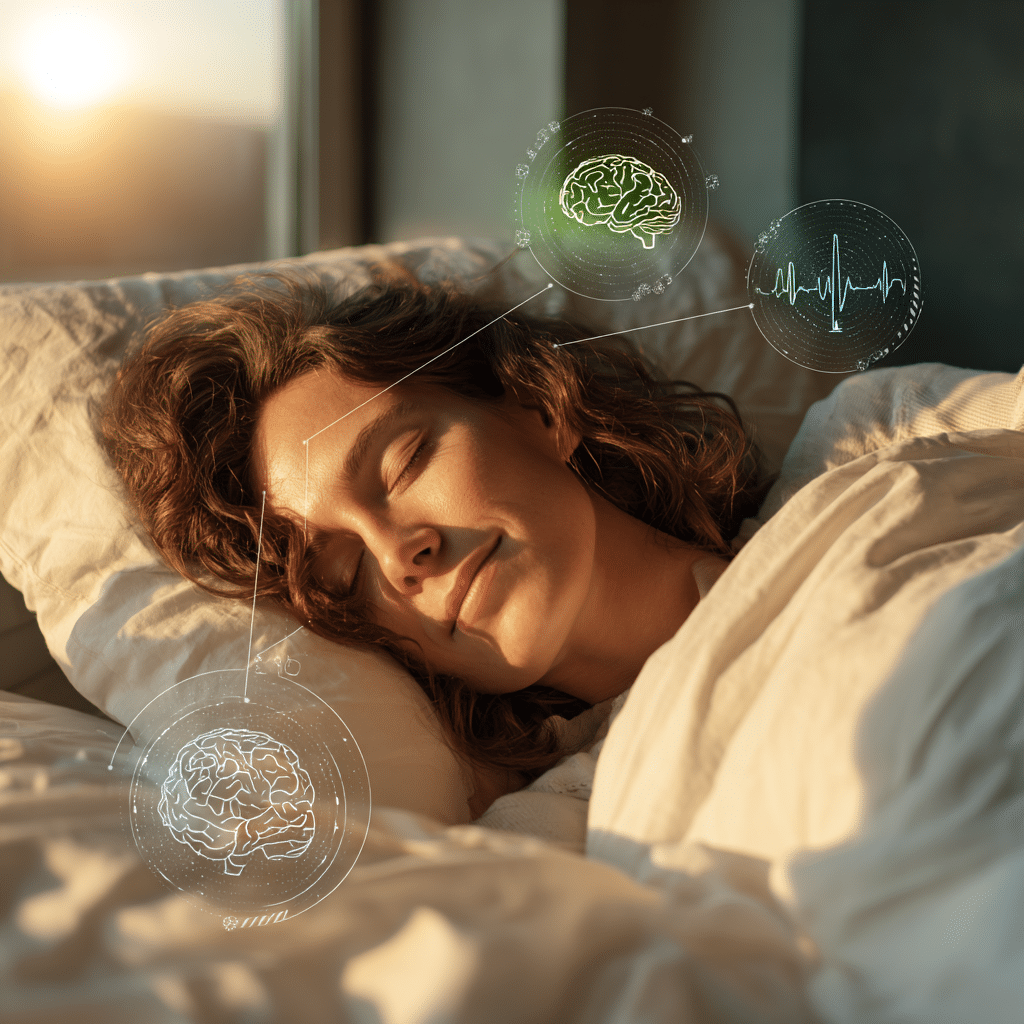
Story-at-a-Glance
• Chronic stress disrupts sleep architecture through three interconnected pathways: HPA axis dysregulation elevates cortisol, autonomic nervous system imbalance increases sympathetic tone, and inflammatory markers like C-reactive protein remain chronically elevated—all preventing restorative sleep stages
• Sleep reactivity acts as a biological vulnerability: People with high sleep reactivity experience drastic sleep deterioration under stress, predicting future insomnia development with remarkable accuracy, while those with low reactivity proceed largely unperturbed
• Cognitive Behavioral Therapy for Insomnia (CBT-I) shows 41% remission rates even in complex PTSD cases, addressing perpetuating factors that maintain stress-induced insomnia through sleep restriction, stimulus control, and cognitive restructuring techniques
• Mindfulness meditation interventions produce large effect sizes (0.89) for sleep quality improvements, superior to sleep hygiene education, particularly through reducing anxiety-mediated pathways rather than depression
• Heart rate variability biofeedback training at 0.1 Hz breathing increases vagal tone and subjective sleep quality with sustained effects, working through synchronization of respiratory sinus arrhythmia and baroreflex activation
• Workplace stress is reaching crisis levels: 47% of employees identify work stress as their primary mental health concern, with 42% reporting stress-induced sleep difficulties—making stress management for disease risk reduction an urgent public health priority
The Hidden Pathway: How Stress Actually Destroys Sleep (And Your Health)
When a recent study tracking 1,700 midlife workers found that job strain significantly increases sleep disturbance risk, researchers weren’t surprised—but they were alarmed by the magnitude of the effect. Published in the American Journal of Industrial Medicine in January 2025, the findings underscore what sleep scientists have been documenting. Stress management techniques for reducing disease risk work primarily through sleep restoration, not around it.
Consider this biological reality: your body treats chronic stress as an existential threat. The hypothalamic-pituitary-adrenal (HPA) axis floods your system with cortisol, keeping you physiologically prepared for danger. Simultaneously, your autonomic nervous system maintains elevated sympathetic tone—increasing heart rate and blood pressure while suppressing the parasympathetic recovery that enables deep sleep. Research published in Frontiers in Psychology demonstrated that perceived stress mediates the longitudinal relationship between sleep quality and internalizing symptoms, creating a bidirectional feedback loop.
The cascade doesn’t stop there. Inflammatory pathways activate, elevating markers like interleukin-6 and C-reactive protein. These aren’t abstract biomarkers—cardiovascular research shows that poor sleep quality contributes to endothelial dysfunction and dysregulated blood pressure through disrupted autonomic functioning, explaining why individuals with poor sleep face 15-20% increased risk of cardiovascular disease and stroke.
The Sleep Reactivity Phenotype: Why Stress Destroys Your Sleep But Not Your Friend’s
Here’s a phenomenon that might explain years of frustration: sleep reactivity. Research from the National Institutes of Health defines this as “the trait-like degree to which stress exposure disrupts sleep.” This results in difficulty falling and staying asleep. People with highly reactive sleep systems experience drastic deterioration of sleep when stressed, whereas those with low sleep reactivity proceed largely unperturbed during stress.
This isn’t just individual variation—it’s a biological vulnerability. The research shows that genetics, familial history of insomnia, female gender, and environmental stress all influence how the sleep system responds to stress. What’s particularly striking? High sleep reactivity predicts risk for future insomnia disorder, with early evidence suggesting it corresponds to severe insomnia phenotypes (sleep onset insomnia and short sleep insomnia specifically).
Dr. Julio Fernandez-Mendoza, Edward O. Bixler Professor of Psychiatry at Penn State College of Medicine, has spent years studying this phenomenon. His research revealed that insomnia with objective short sleep duration—not just subjective complaints—is associated with activation of both limbs of the stress system and indices of physiological hyperarousal. His landmark work demonstrated that this insomnia phenotype carries significant risk of cardiometabolic and neurocognitive morbidity and mortality.
The neurobiological underpinnings involve disrupted cortical networks and dysregulation in the autonomic nervous system and HPA axis. Studies using EEG show elevated cortical activity when trying to fall asleep and during sleep—a marker of insomnia that may represent a shared mechanism increasing risk of mental illness among insomniacs.

The Evidence-Based Arsenal: Three Stress Management Techniques That Actually Restore Sleep
Cognitive Behavioral Therapy for Insomnia: The First-Line Treatment You’ve Probably Never Tried
If you’re experiencing stress-induced sleep problems, the American College of Physicians recommends that you receive CBT-I as first-line treatment. Yet most people reach for sleep medications first—missing the intervention with the strongest evidence base and most durable effects.
Dr. Michael Perlis, Associate Professor of Psychiatry and Director of the Behavioral Sleep Medicine Program at the University of Pennsylvania, has pioneered CBT-I research and training. His work focuses on behavioral, cognitive, and physiologic factors in acute and chronic insomnia, with particular emphasis on how cortical arousal and conditioned CNS activation perpetuate insomnia.
CBT-I addresses the perpetuating factors according to the three-factor model of insomnia. The model identifies three types of factors: predisposing factors (traits that increase vulnerability), precipitating factors (situational conditions like stressful life events), and perpetuating factors. The perpetuating factors—behaviors and cognitions that transition acute to chronic insomnia—are the primary treatment focus. The treatment targets these perpetuators through four core components:
Sleep Restriction Therapy consolidates sleep by initially restricting time in bed to match actual sleep time, then gradually increasing as sleep efficiency improves. This reconsolidates the sleep drive that chronic stress and anxiety fragment.
Stimulus Control Therapy reassociates the bed with sleep rather than wakeful arousal. You go to bed only when tired, limit bed activities to sleep and sex, rise at the same time daily, and leave bed when sleep doesn’t occur within twenty minutes. This breaks the classical conditioning that develops when you spend hours awake in bed, stressed and hyperaroused.
Cognitive Therapy addresses the catastrophic thinking and dysfunctional beliefs about sleep that stress amplifies. Using cognitive restructuring techniques including disputation and decatastrophization, therapists guide patients through a process of changing unhelpful thoughts. Patients replace thoughts like “If I don’t sleep tonight, tomorrow will be ruined” with more adaptive cognitions.
Sleep Hygiene optimizes environmental and behavioral factors—though research shows sleep hygiene alone is insufficient and the American Academy of Sleep Medicine recommends against it as single-component therapy.
The evidence? A meta-analysis of 24 studies comprising 1,977 participants showed CBT-I produced moderate improvements in quality of life (effect size 0.47), with face-to-face and digital CBT-I showing comparable efficacy. Perhaps most impressively, research in veterans with PTSD—a population with extreme stress-induced sleep disruption—demonstrated 41% remission rates with eight-session CBT-I, comparable to treatment in individuals without psychiatric comorbidities.
Recent innovations include digital CBT-I platforms like Smart CBT-I plus, which combines intensive insomnia treatment with anxiety and depression modules. A 2025 randomized controlled trial protocol is examining effectiveness in patients with insomnia combined with anxiety and/or depression—addressing the very population most affected by stress-mediated sleep disruption.
Mindfulness Meditation: The Practice That Changes Your Relationship With Stress
While CBT-I restructures behaviors and cognitions, mindfulness meditation transforms your fundamental relationship with arousing thoughts and emotions. The distinction matters for stress management techniques for reducing disease risk: you’re not fighting stress—you’re changing how your nervous system responds to it.
A landmark 2015 randomized clinical trial in JAMA Internal Medicine examined older adults with moderate sleep disturbances. The mindful awareness practices (MAPs) intervention—six weekly two-hour sessions with assigned homework—produced dramatic results compared to sleep hygiene education. The effect size for sleep quality improvement was 0.89—considered large and clinically relevant. The MAPs group also showed significant improvements in insomnia symptoms, depression, fatigue interference, and fatigue severity.
What’s particularly revealing? A 2019 systematic review and meta-analysis of 18 trials with 1,654 participants found moderate evidence that mindfulness meditation interventions showed no additional benefit compared to specific active controls (like evidence-based sleep treatments), but significant benefits compared to nonspecific controls. This suggests mindfulness works as well as other validated treatments. For stress management techniques for reducing disease risk, this matters because mindfulness may be more accessible than formal CBT-I for many people.
Research in family caregivers of Alzheimer’s patients—a population under extreme chronic stress—found that eight-week mindfulness-based stress reduction (MBSR) improved sleep quality with effects lasting through 25-week follow-up. Crucially, mediation analysis revealed anxiety rather than depression mediated the effect on sleep quality. This mechanistic finding has profound implications: stress management for sleep works primarily through calming the hyperarousal system, not just alleviating mood symptoms.
An 8-week app-based mindfulness intervention study in working women, published in BMC Digital Health in 2025, showed increased REM sleep proportion and decreased non-REM sleep, alongside decreased resting heart rate. These objective physiological changes demonstrate that mindfulness doesn’t just make you feel more relaxed—it fundamentally shifts autonomic balance.
The mechanism involves what researchers call “non-judgmental observation of cognitions.” Rather than engaging with intrusive thoughts about tomorrow’s deadline or yesterday’s conflict, you observe them without attachment. Studies show this reduces the cortical and physiological arousal that stress triggers, allowing the parasympathetic “rest and digest” system to reengage.
Heart Rate Variability Biofeedback: Training Your Nervous System’s Reset Button
If stress management techniques for reducing disease risk work through restoring autonomic balance, then directly training that balance makes logical sense. Heart rate variability biofeedback (HRV-BF) does exactly that.
HRV—the variation in time intervals between heartbeats—reflects autonomic nervous system balance. Higher HRV generally indicates better stress resilience and cardiovascular health. Research shows HRV biofeedback is a non-pharmacological intervention with significant positive effects on hypertension, cardiovascular prognosis, inflammatory state, asthma, depression and anxiety, sleep disturbances, cognitive performance, and pain.
The technique involves breathing at your resonance frequency—typically around 0.1 Hz or six breaths per minute—while receiving real-time feedback on heart rate patterns. A 2022 pilot study found that four weeks of mobile HRV-BF training at 0.1 Hz breathing improved subjective sleep quality in healthy adults (effect size 0.99) as measured by the Pittsburgh Sleep Quality Index. Additionally, HRV-BF training increased time and frequency domain parameters (SDNN, Total Power, LF power), indicating enhanced vagal activity.
Research in family caregivers of cancer patients—another high-stress population—demonstrated that HRV-BF with resonant frequency breathing performed once every two weeks, plus home practice before bedtime, significantly decreased Pittsburgh Sleep Quality Index scores. The sleep quality component showed particularly strong improvements in the group practicing at home.
The physiological mechanism is elegant. According to comprehensive reviews, HRV-BF improves gas exchange efficiency at the alveoli and baroreflex activity through synchronization of respiratory sinus arrhythmia (0° phase relation between heart rate and breathing). This synchronization also optimizes the 180° phase relationship between heart rate and blood pressure. This directly counteracts the autonomic dysregulation that chronic stress induces.
A 2025 global study analyzing 1.8 million user sessions found the most common coherence frequency was 0.10 Hz, though many users with highest coherence levels fell within 0.04-0.10 Hz range. Positive emotions were associated with higher coherence scores and more stable HRV frequencies, while negative emotions showed lower scores and more dispersed patterns—suggesting HRV-BF not only improves physiological markers but emotional regulation as well.
The Cultural Crisis: Why This Matters More Than Ever
The timing of these stress management interventions couldn’t be more critical. Wellhub’s 2025 State of Work-Life Wellness Report revealed that 47% of employees identify work stress as the primary cause of deteriorating mental health. This exceeds concerns about inflation (42%), information overload (14%), or AI anxiety (9%). This is especially pronounced in younger workers: 54% of Gen Z, 49% of millennials, and 48% of Gen X report work stress as their top mental health concern.
January 2025 data shows that 77% of employees recognize physical tolls from stress including headaches, fatigue, and sleep disturbances. The bidirectional relationship is stark: research demonstrates that among workers concerned about job loss, 42% report work-related stress makes sleep difficult, and 36% have seen personal relationships suffer.
Healthcare workers face particularly acute challenges. Studies during recent years show healthcare workers have elevated risk of mental health disorders, impaired work performance, increased medical errors, absenteeism, and turnover. The COVID-19 pandemic significantly impacted mental health, sleep quality, and stress among healthcare workers, with research showing that around 35% suffered sleep disturbances, with frontline workers most vulnerable.
This isn’t just individual suffering—it’s systemic healthcare crisis. As workplace wellness experts note, stress and pressure in healthcare settings compromise patient outcomes, workforce stability, and the long-term health of healthcare systems.
Putting It Together: A Practical Framework
So how do you actually implement stress management techniques for reducing disease risk through sleep restoration? The evidence suggests a strategic, personalized approach:
If your sleep reactivity is high (you lose sleep whenever stressed), CBT-I should be your first intervention. The structured approach to sleep restriction and stimulus control breaks the conditioned association between bed and arousal. Research shows that improvements are durable at six-month follow-up, even in highly stressed populations.
If racing thoughts and anxiety dominate your nights, mindfulness meditation addresses the cognitive-emotional hyperarousal directly. The evidence suggests starting with a structured program—whether in-person MBSR or a validated app-based intervention—provides superior results to unguided meditation attempts.
If you want to directly retrain autonomic function, HRV-BF offers a measurable, biofeedback-guided approach. Studies indicate that even mobile implementations with 0.1 Hz breathing guidance produce meaningful improvements in both HRV parameters and subjective sleep quality.
The interventions aren’t mutually exclusive. Clinical practice often combines CBT-I with mindfulness training or relaxation techniques. What matters is addressing the perpetuating factors—the behaviors, cognitions, and physiological patterns that maintain stress-induced insomnia even after the initial stressor resolves.
Save This Article for Later – Get the PDF Now

The Uncomfortable Truth About Disease Prevention
Here’s what the research really shows about stress management techniques for reducing disease risk: sleep isn’t just another health behavior to optimize—it’s the mediating pathway through which chronic stress causes disease. As Fernandez-Mendoza’s research demonstrates, insomnia with objective short sleep duration carries significant cardiometabolic and neurocognitive risk precisely because the stress system remains activated, preventing restorative sleep stages.
The inflammatory markers don’t lie. The cortisol dysregulation is measurable. The cardiovascular consequences are documented. Research consistently shows that poor sleep quality contributes to endothelial dysfunction, increased inflammatory markers (particularly C-reactive protein and interleukin-6), and dysregulation of blood pressure through disrupted autonomic nervous system functioning.
Yet there’s profound hope here. Unlike genetic predispositions you can’t change or environmental stressors beyond your control, sleep architecture responds to intervention. CBT-I produces remission in 41% of PTSD patients. Mindfulness generates large effect sizes for sleep quality. HRV-BF measurably shifts autonomic balance. These aren’t marginal improvements—they’re clinically significant changes in the biological systems that determine disease risk.
The question isn’t whether stress management techniques work for reducing disease risk. The evidence is clear: they do, primarily by restoring the sleep architecture that stress destroys. The question is whether you’ll implement them before the cascade of stress → sleep disruption → disease becomes entrenched. Because once sleep reactivity becomes chronic insomnia, once HPA axis dysregulation becomes persistent hypercortisolemia, once inflammatory pathways become chronically activated—the path back requires more intensive intervention.
Moving Forward: Your Next Steps
If you recognize yourself in this article—if stress has been stealing your sleep, and you suspect it’s costing you more than just tired days—consider this your evidence-based roadmap. The tools exist. The research validates them. What remains is implementation.
Start by honestly assessing your sleep reactivity. When stress hits, does your sleep collapse? That’s high reactivity, and it deserves intervention before it crystallizes into chronic insomnia. Consider formal CBT-I training—Penn’s Behavioral Sleep Medicine Program offers training resources, or explore validated digital CBT-I platforms that research shows work as well as face-to-face treatment.
If anxiety and rumination dominate your nights, explore mindfulness-based interventions. The evidence supports both formal MBSR programs and structured app-based approaches. What matters is consistent practice and non-judgmental observation of arousing thoughts rather than engagement with them.
For direct autonomic retraining, HRV-BF apps and devices have become increasingly accessible. The key is consistency with resonant frequency breathing (typically 0.1 Hz), ideally with real-time feedback on heart rate variability to guide practice.
And if workplace stress is the primary culprit? The organizational interventions matter too. Research shows that redesigning workloads, promoting worker autonomy, and creating psychologically safe environments aren’t just nice-to-have perks—they’re essential infrastructure for preventing the stress-sleep-disease cascade at population levels.
The biological reality is straightforward: your body wasn’t designed to maintain perpetual vigilance. When stress keeps your HPA axis activated, your sympathetic nervous system on high alert, and your inflammatory pathways engaged, sleep architecture collapses. And when sleep architecture collapses, disease risk escalates. The interventions described here—CBT-I, mindfulness meditation, HRV-BF—work because they address the mechanisms, not just symptoms. They restore the autonomic balance and cortical quieting that allow restorative sleep to return.
For more strategies on managing stress-related sleep problems, explore our article on managing stress and anxiety in young adults, which covers the sleep connection in depth. You might also find valuable information in our guide to stress management techniques for restful sleep.
The question to sit with tonight: What would your health look like a year from now if you prioritized protecting your sleep from stress? Not through sleep medications that mask symptoms, but through interventions that restore the architecture stress destroys?

FAQ
Q: What is stress management techniques for reducing disease risk and how does it relate to sleep?
A: Stress management techniques for reducing disease risk are interventions that work primarily through restoring sleep architecture rather than bypassing it. The relationship is mechanistic: chronic stress activates the HPA axis (elevating cortisol), increases sympathetic nervous system tone, and triggers inflammatory pathways—all of which prevent the restorative sleep stages necessary for health. When evidence-based techniques like CBT-I, mindfulness meditation, or HRV biofeedback restore normal sleep architecture, they simultaneously reduce disease risk by allowing the body’s repair and regulation systems to function during sleep. The key insight is that sleep isn’t just one health behavior among many—it’s the mediating pathway through which chronic stress causes cardiovascular disease, metabolic dysfunction, and cognitive decline.
Q: What is the HPA axis and why does it matter for sleep?
A: The hypothalamic-pituitary-adrenal (HPA) axis is your body’s primary stress response system. When you experience stress, the hypothalamus releases corticotropin-releasing hormone, which signals the pituitary to release ACTH, which in turn causes your adrenal glands to secrete cortisol. While acute cortisol elevation helps you respond to immediate threats, chronic HPA activation from ongoing stress keeps cortisol levels high when they should naturally decline in the evening. Elevated evening cortisol disrupts the transition into deep sleep stages and suppresses melatonin production. This explains why people under chronic stress often report feeling “tired but wired”—their bodies are exhausted but their stress hormones remain elevated, preventing sleep onset and maintenance.
Q: What is sleep reactivity?
A: Sleep reactivity is the trait-like degree to which stress exposure disrupts your sleep. It’s essentially your sleep system’s sensitivity to stress. People with high sleep reactivity experience dramatic sleep deterioration when stressed—difficulty falling asleep, frequent awakenings, early morning awakening. Those with low sleep reactivity maintain relatively normal sleep even during stressful periods. Research shows sleep reactivity is influenced by genetics, family history of insomnia, gender (higher in women), and environmental factors. Importantly, high sleep reactivity predicts future development of chronic insomnia disorder, making it a critical vulnerability factor to identify and address early.
Q: What is CBT-I and how does it differ from regular talk therapy?
A: Cognitive Behavioral Therapy for Insomnia (CBT-I) is a structured, multicomponent intervention specifically targeting the perpetuating factors that maintain chronic insomnia. Unlike general talk therapy that might discuss stressors broadly, CBT-I focuses on four core components: (1) Sleep Restriction Therapy consolidates sleep by initially limiting time in bed to match actual sleep time, (2) Stimulus Control Therapy breaks the association between bed and wakefulness, (3) Cognitive Therapy addresses catastrophic thinking about sleep, and (4) Sleep Hygiene optimizes environmental factors. CBT-I is typically delivered over 6-8 sessions and is recommended by the American College of Physicians as first-line treatment for chronic insomnia—meaning it should be tried before sleep medications.
Q: What are autonomic nervous system and parasympathetic nervous system?
A: The autonomic nervous system controls involuntary bodily functions and has two main branches: sympathetic (“fight or flight”) and parasympathetic (“rest and digest”). The sympathetic system activates during stress—increasing heart rate, blood pressure, cortisol release, and alertness. The parasympathetic system promotes recovery—slowing heart rate, lowering blood pressure, enhancing digestion, and enabling restorative sleep. In healthy individuals, these systems balance dynamically throughout the day. However, chronic stress keeps the sympathetic system overactive, suppressing parasympathetic function. This autonomic imbalance is why stressed people often have elevated resting heart rate, high blood pressure, and difficulty transitioning into sleep. Interventions like HRV biofeedback and mindfulness meditation work by enhancing parasympathetic tone.
Q: What is Heart Rate Variability (HRV)?
A: Heart rate variability is the variation in time intervals between consecutive heartbeats, measured in milliseconds. Counterintuitively, higher HRV is generally better—it indicates your autonomic nervous system can flexibly respond to changing demands. When you’re chronically stressed, HRV typically decreases because sympathetic nervous system dominance reduces the beat-to-beat variation. HRV serves as a window into autonomic function and stress resilience. Low HRV is associated with increased cardiovascular disease risk, poor emotional regulation, and sleep problems. HRV biofeedback trains you to increase variability through paced breathing at your resonance frequency (typically around 0.1 Hz or 6 breaths per minute), which enhances parasympathetic tone and sleep quality.
Q: What is the three-factor (3P) model of insomnia?
A: The 3P model describes insomnia development through three categories: (1) Predisposing factors are traits or conditions that increase vulnerability to insomnia—like high emotional reactivity, genetic predisposition, or being female, (2) Precipitating factors are situational conditions that trigger insomnia onset—typically stressful life events like job loss, relationship conflict, or health problems, and (3) Perpetuating factors are behaviors and cognitions that maintain insomnia after the initial stressor resolves—like spending excessive time in bed trying to “catch up” on sleep, worrying about daytime consequences, or using alcohol to fall asleep. CBT-I primarily targets perpetuating factors because these are what transform acute stress-induced sleep problems into chronic insomnia disorder.
Q: What are cortical networks and why do they matter for insomnia?
A: Cortical networks are interconnected regions of the brain’s outer layer (cortex) that process information and regulate arousal. In people with insomnia, EEG studies show elevated cortical activity—meaning their brains remain more active when trying to fall asleep and during sleep itself. This heightened cortical activity represents a form of hyperarousal where the brain fails to properly transition from wake-like processing to sleep-state quiescence. Research suggests disrupted cortical networks may preexist insomnia development in people with high sleep reactivity, making them constitutionally more sensitive to stress-induced sleep disruption. This explains the subjective experience insomniacs describe: despite feeling exhausted, their minds race with thoughts and their awareness remains vigilant rather than dimming into sleep.
Q: What is resonance frequency breathing?
A: Resonance frequency is the breathing rate at which your cardiovascular system achieves maximum oscillation—essentially the “sweet spot” where breathing, heart rate, and blood pressure variations synchronize optimally. For most adults, this occurs around 0.1 Hz (6 breaths per minute), though it varies individually between approximately 4.5-7 breaths per minute. When you breathe at your resonance frequency, you maximize respiratory sinus arrhythmia (the natural increase in heart rate during inhalation and decrease during exhalation) and optimize baroreflex function (the system that regulates blood pressure). This synchronized state enhances gas exchange efficiency, increases heart rate variability, and shifts autonomic balance toward parasympathetic dominance—all of which promote better sleep quality and stress resilience.
Q: What is sleep architecture?
A: Sleep architecture refers to the structure and pattern of sleep stages throughout the night. Normal sleep architecture cycles through approximately 90-minute periods containing both non-REM sleep (stages N1, N2, N3) and REM sleep. N3 (slow-wave sleep or deep sleep) predominates in the first half of the night and is crucial for physical restoration, immune function, and memory consolidation. REM sleep increases in the second half of the night and is essential for emotional processing and cognitive function. When chronic stress disrupts sleep architecture, you may still “sleep” 7-8 hours but spend excessive time in lighter stages (N1, N2) with insufficient time in restorative deep sleep and REM sleep. This explains why stressed individuals often report sleeping but not feeling refreshed—their sleep architecture is fragmented rather than consolidated into proper restorative cycles.
Q: What are inflammatory markers like C-reactive protein and interleukin-6?
A: These are proteins your immune system produces during inflammation. C-reactive protein (CRP) is synthesized by the liver in response to inflammation and is a widely used clinical marker for cardiovascular disease risk—elevated CRP predicts future heart attacks and strokes. Interleukin-6 (IL-6) is a cytokine that promotes inflammation and is involved in stress responses, immune activation, and tissue damage. In the context of sleep and stress, research consistently shows that poor sleep quality and chronic stress elevate both CRP and IL-6 levels. This creates a vicious cycle: stress disrupts sleep → poor sleep triggers inflammatory response → inflammation promotes further arousal and stress → worse sleep → more inflammation. This inflammatory cascade is thought to be a key mechanism linking stress-induced sleep disruption to increased cardiovascular disease, diabetes, and cognitive decline risk.
Q: How long does it take for stress management interventions to improve sleep?
A: The timeline varies by intervention but research provides specific benchmarks. CBT-I typically shows measurable improvements within 4-6 weeks, with the challenging sleep restriction phase often producing rapid consolidation of sleep in the first 2-3 weeks. Studies show effects are durable at 6-month follow-up. Mindfulness meditation interventions demonstrate significant sleep quality improvements after 6-8 weeks of consistent practice (typically 20 minutes daily). HRV biofeedback can produce measurable changes in autonomic function and subjective sleep quality after 4 weeks of consistent practice. However, it’s crucial to understand that these aren’t quick fixes—the interventions work by retraining your stress response and sleep architecture, which requires consistent practice and patience as your nervous system gradually rebalances.