When Social Fears Keep You Awake: Understanding the Link Between Social Anxiety and Struggling to Sleep
Story-at-a-Glance
• Social anxiety disorder affects approximately 15 million American adults. Anxiety levels have been steadily rising, with 43% of adults reporting feeling more anxious in 2024 than the previous year, up from 37% in 2023 and 32% in 2022
• Poor sleep quality creates a vicious cycle with social anxiety. Inadequate sleep worsens anxiety symptoms, while heightened anxiety disrupts sleep patterns
• Research shows that 68% of Americans report anxiety-related sleep disruptions. Social anxiety is specifically linked to trouble falling asleep, reduced sleep duration, and poor sleep quality
• Studies from 2024-2025 reveal bidirectional effects: sleep duration and anxiety predict each other on subsequent days, creating a self-perpetuating pattern
• Addressing sleep quality may be as important as traditional anxiety treatment, with interventions targeting both issues showing promise in breaking the cycle
• The relationship between struggling to sleep because of social anxiety is more complex—and more hopeful—than many realize.
A 2024 study published in Frontiers in Psychiatry examined 440 Chinese adolescents with depression. A staggering 61.8% reported poor sleep quality. What caught researchers’ attention wasn’t just the prevalence, but how social anxiety weaved through these sleep difficulties. The adolescents weren’t simply lying awake worrying about tomorrow’s presentation or replaying awkward conversations—their social fears were fundamentally altering their ability to rest.
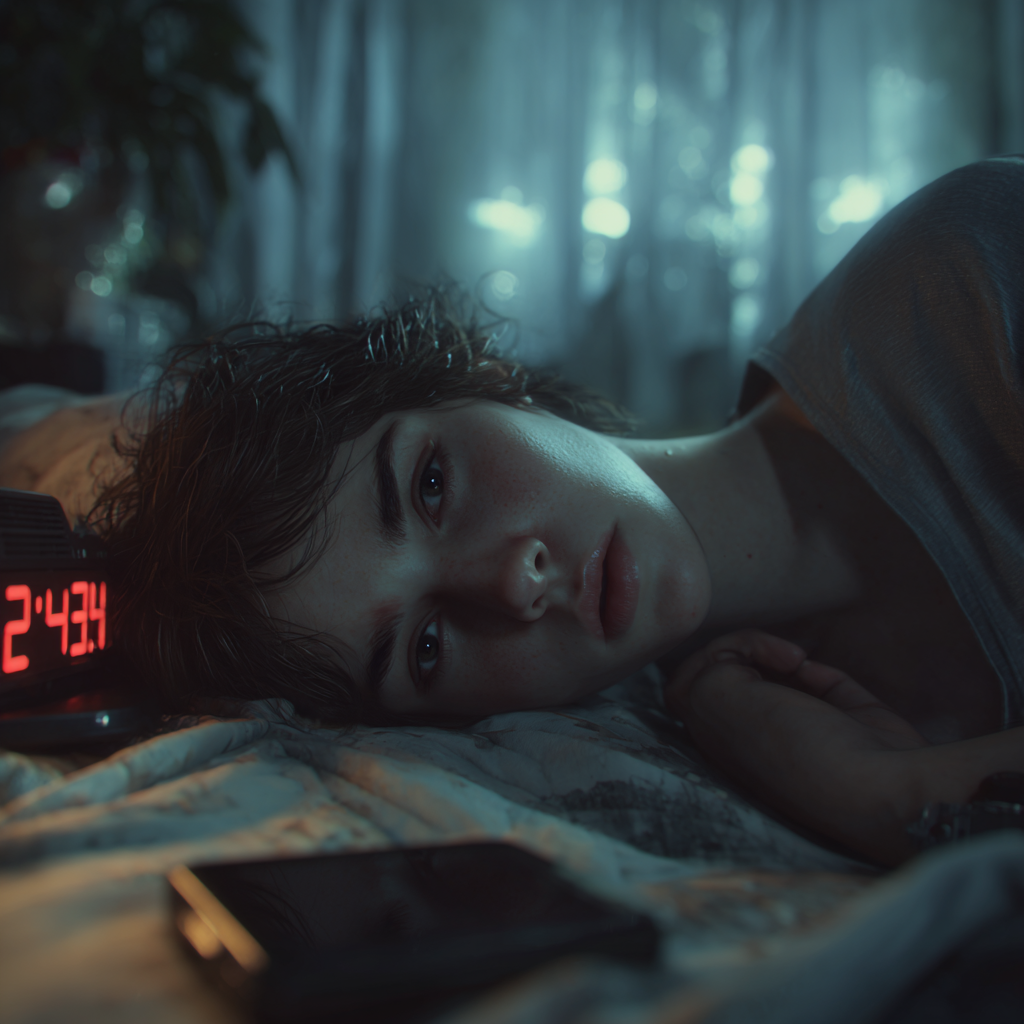
This connection reflects something deeper than casual worry. When you’re struggling to sleep because of social anxiety, your nervous system remains on high alert long after the social interaction has ended. The brain continues rehearsing what you said, analyzing facial expressions, anticipating judgment. It’s exhausting, yet it keeps you achingly awake.
The Science Behind Sleepless Nights
The mechanisms linking social anxiety to poor sleep are surprisingly intricate. Dr. Candice Alfano, Professor of Psychology and Director of the Sleep and Anxiety Center of Houston at the University of Houston, has spent over 15 years investigating how emotional health and sleep interact. Her research reveals that anxiety doesn’t just make falling asleep difficult. It fundamentally alters sleep architecture and emotional processing.
When we experience social anxiety, our body’s stress response activates. The amygdala, our brain’s fear center, becomes hyperactive. Even as we lie in bed trying to relax, cortisol levels remain elevated. Our heart rate stays slightly elevated. Muscle tension persists. The body interprets social threats the same way it interprets physical danger, and it refuses to power down completely.
A 2025 study in Frontiers in Psychology involving Chinese college freshmen found something particularly revealing about this relationship. Sleep quality acted as a partial mediator between physical activity and social anxiety disorder. In simpler terms, poor sleep doesn’t just accompany social anxiety. It actively contributes to its severity. The study noted that inadequate sleep may lead to increased social avoidance and hinder extinction learning, the very process that helps us overcome fears.
Additionally, research published in the British Journal of Clinical Psychology in 2025 examined 87 participants over 21 consecutive days, comparing those with social anxiety disorder to those without. The findings were stark: individuals with social anxiety reported significantly poorer sleep across all measured variables. More intriguingly, the study demonstrated reciprocal effects—sleep duration predicted anxiety levels the next day, and anxiety levels predicted subsequent sleep duration.
Think about what this means for someone struggling with both conditions. You have a difficult social interaction on Monday. That night, you sleep poorly, replaying every moment. Tuesday, you’re more anxious because you’re exhausted, making social situations feel even more threatening. Tuesday night, you sleep worse. By Wednesday, you’re caught in a downward spiral that feels impossible to escape.
Real Cases, Real Struggles
Consider the clinical case of George, a 23-year-old Greek student documented in Procedia – Social and Behavioral Sciences. George sought treatment for severe anxiety triggered by social situations—talking to others, being in public areas, visiting crowded places. His symptoms had progressed to the point where he actively avoided these situations. This significantly impacted his daily functioning. While the case study focused primarily on his treatment through cognitive-behavioral therapy, it highlighted a pattern seen repeatedly in social anxiety cases. The anxiety doesn’t confine itself to waking hours.
In another documented case, a 20-year-old male patient diagnosed with social anxiety disorder, depression, and substance abuse complained of severe anxiety symptoms and panic attacks triggered by social situations. His treatment with cognitive behavioral therapy specifically addressed sleep quality as part of the therapeutic intervention. After 20 sessions, improvements in sleep quality were among the measurable outcomes. This demonstrates that when social anxiety is treated effectively, sleep often improves as well.
A study examining treatment outcomes for social anxiety disorder at a major research institution found that baseline sleep quality significantly predicted treatment response. Participants with poorer sleep quality at the start of exposure therapy showed slower improvement over time. They also had worse outcomes at the end of treatment. The implications are sobering: if you’re struggling to sleep because of social anxiety, that sleep disruption may actually interfere with your recovery from the anxiety itself.
These aren’t isolated cases. They represent a pattern documented across multiple studies and populations.
The Digital Age Amplification
The shift toward digital-first communication has created what researchers describe as a fundamental transformation in how generations develop social skills and manage anxiety. This change has been particularly pronounced for Generation Z, who grew up with screens mediating most of their social interactions during critical developmental years.
A 2024 survey by the American Academy of Sleep Medicine found that 68% of people experienced disrupted sleep due to anxiety. Anxiety levels have been climbing steadily: 43% of adults reported feeling more anxious in 2024 than the previous year, compared to 37% in 2023 and 32% in 2022, reflecting an escalating trend in mental health concerns.
The rise of social media and digital communication as the primary mode of interaction has fundamentally altered social skill development. Unlike previous generations who developed communication abilities through face-to-face interactions, many younger adults now report feeling more comfortable communicating through screens than in person. This creates a concerning cycle where digital interaction becomes the preferred but ultimately unfulfilling social outlet.
Research from Stanford University’s psychology department has found that young adults increasingly struggle with social connection despite craving it. Stanford psychologist Jamil Zaki’s research reveals that people regularly underestimate how friendly and kind others are, leading them to avoid the very social interactions that could improve their wellbeing. This hesitancy is particularly pronounced in Generation Z, who report lower levels of happiness than middle-aged and older adults—a reversal of historical patterns.
Studies examining Generation Z’s relationship with technology reveal a complex picture. A McKinsey Health Institute survey of over 42,000 respondents in 26 countries found that Gen Z users report more negative emotions associated with social media compared to older generations, along with higher incidences of poor mental health. Importantly, passive social media use—such as scrolling—has been linked to declines in subjective wellbeing over time.
The mechanisms behind this are multifaceted. Research published in 2024 found that information overload on social media leads to social media fatigue and “fear of missing out” (FOMO) among Generation Z users. The relationship between FOMO and anxiety is significant, with studies showing partial mediation effects. Digital natives who grew up witnessing technological advancement have experienced a transformation in their behavioral outcomes, with rising issues including stress, fatigue, and anxiety.
One clinical center reported a 908% increase between 2019 and 2024 in calls from Generation Z individuals seeking treatment for social anxiety. This dramatic surge correlates with patterns of digital communication replacing face-to-face interaction during formative years.
Research on face-to-face versus digital communication reveals a crucial insight: in-person interaction remains “the gold standard” for mental health. Studies have found that face-to-face communication is far more relevant for mental wellbeing than digital communication, even when digital text-based communication shows meaningful associations with mental health. Both face-to-face and digital text communication proved stronger predictors of mental health than physical or outdoor activity—yet the gap between in-person and digital interaction remained substantial.
The interconnectedness of these factors suggests that struggling to sleep because of social anxiety isn’t an isolated problem. It’s part of a broader pattern of how reduced face-to-face interaction, information overload, and digital communication preferences disrupt multiple aspects of daily functioning, including sleep regulation.
Save This Article for Later – Get the PDF Now

The Biological Mechanisms at Play
Why does social anxiety so profoundly disrupt sleep? The answer lies in how our brain processes emotional experiences and regulates the sleep-wake cycle.
During sleep, particularly during REM sleep, the brain processes emotional memories and consolidates learning. Research from the University of California, Berkeley has found that lack of sleep, which is common in anxiety disorders, plays a key role in ramping up brain regions that contribute to excessive worrying. The connection becomes circular. Anxiety disrupts sleep, poor sleep amplifies anxiety, which further disrupts sleep.
Dr. Alfano’s work has demonstrated that inadequate sleep impacts emotional health not only by creating more negative emotions but also by altering positive emotional experiences. After just two nights of poor sleep, people derive less pleasure from positive things and are less reactive to them. For someone with social anxiety, this means that the rewarding aspects of social interaction become muted. Connection, validation, and shared joy feel diminished, while the threatening aspects loom larger.
The neurotransmitter systems involved in both anxiety and sleep regulation overlap significantly. GABA, the brain’s primary inhibitory neurotransmitter, is crucial for both calming anxiety and promoting sleep. Serotonin helps regulate both mood and the sleep-wake cycle. When social anxiety chronically activates the stress response, these systems become dysregulated, making quality sleep increasingly elusive.
A 2025 study examining sleep patterns and anxiety in Norwegian adolescents found that chronic insomnia and severe insomnia symptoms at baseline predicted greater risk of anxiety two years later. This held true even when controlling for baseline anxiety. Short school night sleep duration was similarly predictive. The researchers concluded that these findings suggest sleep-sensitive windows where intervention could shift from late-stage treatment to earlier prevention.
This research raises an intriguing possibility: what if improving sleep could help prevent the development or worsening of social anxiety?
When Treatment Addresses Both
The evidence increasingly suggests that addressing sleep problems should be a priority when treating social anxiety, not an afterthought.
A clinical trial examining sleep quality and social anxiety treatment found that while baseline sleep quality didn’t moderate treatment outcomes, the relationship between sleep and anxiety remained clinically significant. Both good and poor sleepers could benefit from cognitive behavioral therapy. Participants with social anxiety disorder reported significantly poorer sleep than healthy controls across all measured variables—sleep quality, latency, duration, efficiency, and disturbances.
Importantly, the study noted that while cognitive behavioral group therapy led to reduction in social anxiety symptoms, it had no significant impact on co-occurring sleep difficulties. This suggests that sleep problems in social anxiety may require targeted intervention. They don’t necessarily resolve automatically when anxiety improves.
Research on cognitive behavioral therapy for insomnia (CBT-I) has shown promising results. The therapy leads to improvements in sleep, which in turn leads to lower levels of depression. Similar approaches show promise for anxiety.
The most effective interventions seem to address both issues simultaneously. Sleep hygiene improvements—maintaining consistent sleep schedules, creating relaxing bedtime routines, limiting screen time before bed—can reduce the physiological arousal that keeps people awake. Meanwhile, anxiety-specific interventions like cognitive restructuring and gradual exposure help reduce the mental rumination and social fear that fuel nighttime worry.
Dr. Alfano emphasizes that parents and individuals should think about sleep as an essential component of overall health, similar to nutrition and physical activity. This perspective shift is crucial for those struggling to sleep because of social anxiety—sleep isn’t a luxury that will return once anxiety is “fixed.” It’s a fundamental biological need that deserves direct attention.
Breaking the Cycle
If you’re struggling to sleep because of social anxiety, where do you begin?
The research suggests several evidence-based approaches, though it’s worth noting that I’m an advisor offering research-based information, not a healthcare provider who can prescribe specific treatment plans.
Address the physical arousal. Progressive muscle relaxation, diaphragmatic breathing, and other relaxation techniques can help calm the body’s stress response at bedtime. These aren’t just “nice to have” practices—they’re targeting the physiological hyperarousal that keeps you awake.
Challenge catastrophic thinking. When lying awake replaying social interactions, your brain often catastrophizes: “Everyone thought I was stupid,” “They definitely noticed I was anxious,” “I’ll never fit in.” Cognitive techniques can help evaluate these thoughts more rationally. Additionally, research on anxiety and sleep in university students emphasizes how worry accounts for a significant portion of sleep difficulties.
Improve sleep hygiene systematically. Consistent sleep and wake times, even on weekends, help regulate circadian rhythms. Creating a dark, cool, quiet sleep environment signals to your body that it’s time to rest. Limiting caffeine and avoiding screens before bed reduces alerting stimuli.
Consider exposure therapy during waking hours. While this might seem counterintuitive for sleep problems, gradually confronting feared social situations during the day can reduce overall anxiety levels, making nighttime rumination less intense.
Track patterns without judgment. Keep a simple log of sleep quality and social interactions. You might notice that certain types of social situations are more likely to disrupt sleep, or that sleep problems make particular social scenarios feel more threatening. This data can guide where to focus your efforts.
The key insight from recent research is that the relationship between social anxiety and sleep is bidirectional and self-perpetuating. However, this also means there are multiple entry points for intervention. Improving either component can create positive momentum.
The Bigger Picture
Stepping back, what does all this research tell us about struggling to sleep because of social anxiety?
First, your experience is remarkably common. Approximately 15 million American adults experience social anxiety disorder. The majority of anxious individuals report sleep disruptions. You’re far from alone in lying awake replaying social interactions.
Second, the connection is real and biologically based. This isn’t weakness or overthinking. It’s a documented pattern involving specific brain regions, neurotransmitters, and stress response systems. Understanding the mechanisms can reduce self-blame and point toward effective interventions.
Third, improvement is possible, but it often requires addressing both issues. Waiting for anxiety to resolve before tackling sleep problems, or vice versa, may leave you stuck. The most promising approaches recognize that these issues feed each other and deserve simultaneous attention.
Research from institutions like the University of Houston’s Sleep and Anxiety Center continues to illuminate how emotional health and sleep interact across the lifespan. As our understanding deepens, interventions become more targeted and effective.
One question worth pondering: if the relationship between sleep and social anxiety is truly bidirectional, might improving your sleep be one of the most practical first steps you can take? Sleep hygiene changes are concrete and can yield relatively quick improvements in how you feel. This is unlike changing ingrained thought patterns or forcing yourself into feared social situations.
Moving Forward
The research is clear: struggling to sleep because of social anxiety represents a genuine clinical challenge, not a character flaw. The encouraging news is that this challenge has been extensively studied, the mechanisms are increasingly understood, and effective interventions exist.
If you’re caught in the cycle of social anxiety and poor sleep, consider starting with one small change. Maybe it’s establishing a consistent bedtime, even when your mind is racing. Perhaps it’s trying five minutes of deep breathing before bed. It could be journaling your worries onto paper so you’re not carrying them into sleep.
The goal isn’t perfection—it’s momentum. Each small improvement in sleep can make social situations slightly more manageable. Each reduction in social anxiety can make sleep a bit more accessible. Over time, these incremental changes can shift the entire pattern.
What’s one aspect of your sleep or social anxiety that you’d like to understand better? The research continues to evolve, offering new insights into this challenging but ultimately addressable problem.

FAQ
Q: What is social anxiety disorder, and how is it different from normal shyness?
A: Social anxiety disorder (SAD) is a clinical condition characterized by intense, persistent fear of social situations where a person might be judged, embarrassed, or humiliated. Unlike normal shyness, SAD causes significant distress and impairment in daily functioning. Shy individuals typically become more comfortable as situations progress, while those with SAD experience intense anxiety that doesn’t diminish during social interactions. SAD affects approximately 15 million American adults.
Q: What does “bidirectional relationship” mean in the context of sleep and anxiety?
A: A bidirectional relationship means that two conditions influence each other in both directions—sleep problems worsen anxiety, and anxiety disrupts sleep. Research shows that poor sleep predicts increased anxiety the next day, and heightened anxiety predicts worse sleep the following night, creating a self-perpetuating cycle. This is why addressing only one aspect may not break the pattern.
Q: What is REM sleep, and why is it important for anxiety?
A: REM (Rapid Eye Movement) sleep is the stage of sleep when most dreaming occurs and when the brain processes emotional memories. During REM sleep, stress chemistry shuts down while the brain consolidates emotional experiences. Disrupted REM sleep interferes with emotional regulation, potentially worsening anxiety symptoms. People with anxiety disorders often have altered REM sleep patterns.
Q: What are cortisol levels, and how do they relate to sleep problems?
A: Cortisol is a hormone released by the adrenal glands as part of the body’s stress response. Normally, cortisol levels are highest in the morning and lowest at night to facilitate sleep. In people with anxiety, cortisol can remain elevated at bedtime, keeping the body in an alert state and making it difficult to fall asleep or achieve deep, restorative sleep.
Q: What is cognitive behavioral therapy (CBT), and how does it help with anxiety and sleep?
A: Cognitive behavioral therapy is an evidence-based psychological treatment that helps people identify and change unhelpful thought patterns and behaviors. For anxiety, CBT teaches techniques to challenge catastrophic thinking and gradually face feared situations. For sleep, CBT for insomnia (CBT-I) addresses behaviors and thoughts that interfere with sleep. Both approaches have strong research support.
Q: What is exposure therapy?
A: Exposure therapy is a psychological treatment where people gradually and systematically face feared situations in a controlled way. For social anxiety, this might involve progressively more challenging social interactions. Research shows that exposure therapy helps the brain learn that feared outcomes are less likely or less catastrophic than anticipated, though poor sleep can interfere with this learning process.
Q: What is sleep hygiene?
A: Sleep hygiene refers to the habits and practices that support quality sleep. This includes maintaining consistent sleep and wake times, creating a dark and cool sleep environment, limiting caffeine and alcohol, avoiding screens before bed, and developing relaxing bedtime routines. Good sleep hygiene creates conditions that make it easier for the body to initiate and maintain sleep.
Q: What does “sleep architecture” mean?
A: Sleep architecture refers to the structure and pattern of sleep, including the different stages (light sleep, deep sleep, REM sleep) and how we cycle through them during the night. Healthy sleep architecture involves predictable cycles through these stages. Anxiety can disrupt sleep architecture, reducing time spent in restorative deep sleep and REM sleep.
Q: What is the amygdala?
A: The amygdala is an almond-shaped structure in the brain that plays a central role in processing emotions, especially fear and threat detection. In people with anxiety disorders, the amygdala tends to be hyperactive, responding strongly to perceived threats (including social situations). This hyperactivity can persist at bedtime, keeping the nervous system on alert.
Q: What are GABA and serotonin, and why are they important for sleep and anxiety?
A: GABA (gamma-aminobutyric acid) and serotonin are neurotransmitters—chemical messengers in the brain. GABA is the brain’s primary “calming” neurotransmitter, reducing neuronal excitability and promoting relaxation and sleep. Serotonin helps regulate mood, anxiety, and the sleep-wake cycle. Many medications for anxiety and sleep disorders work by affecting these neurotransmitter systems.
Q: What is the Pittsburgh Sleep Quality Index (PSQI) mentioned in studies?
A: The PSQI is a standardized questionnaire widely used in sleep research to assess sleep quality over the previous month. It measures seven components: subjective sleep quality, sleep latency (time to fall asleep), sleep duration, sleep efficiency, sleep disturbances, use of sleep medication, and daytime dysfunction. Scores above 5 indicate poor sleep quality.
Q: What does “sleep latency” mean?
A: Sleep latency is the amount of time it takes to fall asleep after getting into bed and turning off the lights. Normal sleep latency is typically 10-20 minutes. People struggling with anxiety often have prolonged sleep latency, sometimes lying awake for an hour or more as they ruminate on social interactions or worry about upcoming events.
Q: What is meant by “sleep efficiency”?
A: Sleep efficiency is the percentage of time spent actually sleeping while in bed. It’s calculated by dividing total sleep time by total time in bed and multiplying by 100. For example, if you’re in bed for 8 hours but only sleep for 6 hours, your sleep efficiency is 75%. Healthy sleep efficiency is typically 85% or higher.
Q: What is cognitive restructuring?
A: Cognitive restructuring is a core technique in cognitive behavioral therapy where you learn to identify, challenge, and change unhelpful thought patterns. For someone struggling with social anxiety and sleep, this might involve examining thoughts like “Everyone noticed I was anxious” or “I’ll never fall asleep” and evaluating whether they’re accurate or helpful.
Q: What does the research mean by “mediating role”?
A: When research says one factor has a “mediating role,” it means that factor helps explain the relationship between two other variables. For example, if physical activity reduces social anxiety partly by improving sleep quality, then sleep quality is a mediator. Understanding mediators helps identify specific intervention targets.
Q: What is progressive muscle relaxation?
A: Progressive muscle relaxation is a technique where you systematically tense and then relax different muscle groups throughout the body. This practice helps reduce physical tension, calm the nervous system, and prepare the body for sleep. It’s particularly helpful for people whose anxiety manifests as physical tension that interferes with sleep.
Q: What is meant by “circadian rhythm”?
A: Circadian rhythm is your body’s internal 24-hour clock that regulates the sleep-wake cycle and many other physiological processes. This rhythm is influenced by environmental cues, especially light and darkness. Disrupted circadian rhythms (from irregular sleep schedules or nighttime light exposure) can worsen both sleep quality and anxiety symptoms.