The Vicious Cycle: Understanding Insomnia and Anxiety in Young Adults
Story-at-a-Glance
- Insomnia and anxiety in young adults exist in a bidirectional relationship, where each condition perpetuates the other through neurobiological mechanisms involving the hypothalamic-pituitary-adrenal (HPA) axis and cortisol dysregulation
- Young adults aged 18-35 face disproportionately high rates of both conditions, with research showing 87-88% of insomnia patients experiencing concurrent anxiety or depression symptoms
- The HPA axis creates a vicious cycle: elevated evening cortisol levels promote sleep fragmentation, which in turn raises cortisol even higher, establishing chronic patterns that precede psychiatric disorders
- Population-level data reveals alarming trends: the one-year incidence rate of acute insomnia reaches 27% in adults, while young adults under 25 show significantly higher vulnerability to insomnia symptoms
- Mechanisms go beyond simple stress responses: impaired executive function, dysregulated cortisol rhythms, and presleep cognitive arousal create a state where the brain cannot distinguish between wakefulness and sleep
- Current cultural factors amplify the problem, including social media use (with 45% of teens reporting it disrupts their sleep), financial insecurity and economic precarity, and what experts call “orthosomnia”—an obsessive quest for perfect sleep
- Effective interventions exist that target both conditions simultaneously, with cognitive behavioral therapy for insomnia (CBT-I) showing superior outcomes to medication in breaking the anxiety-insomnia cycle
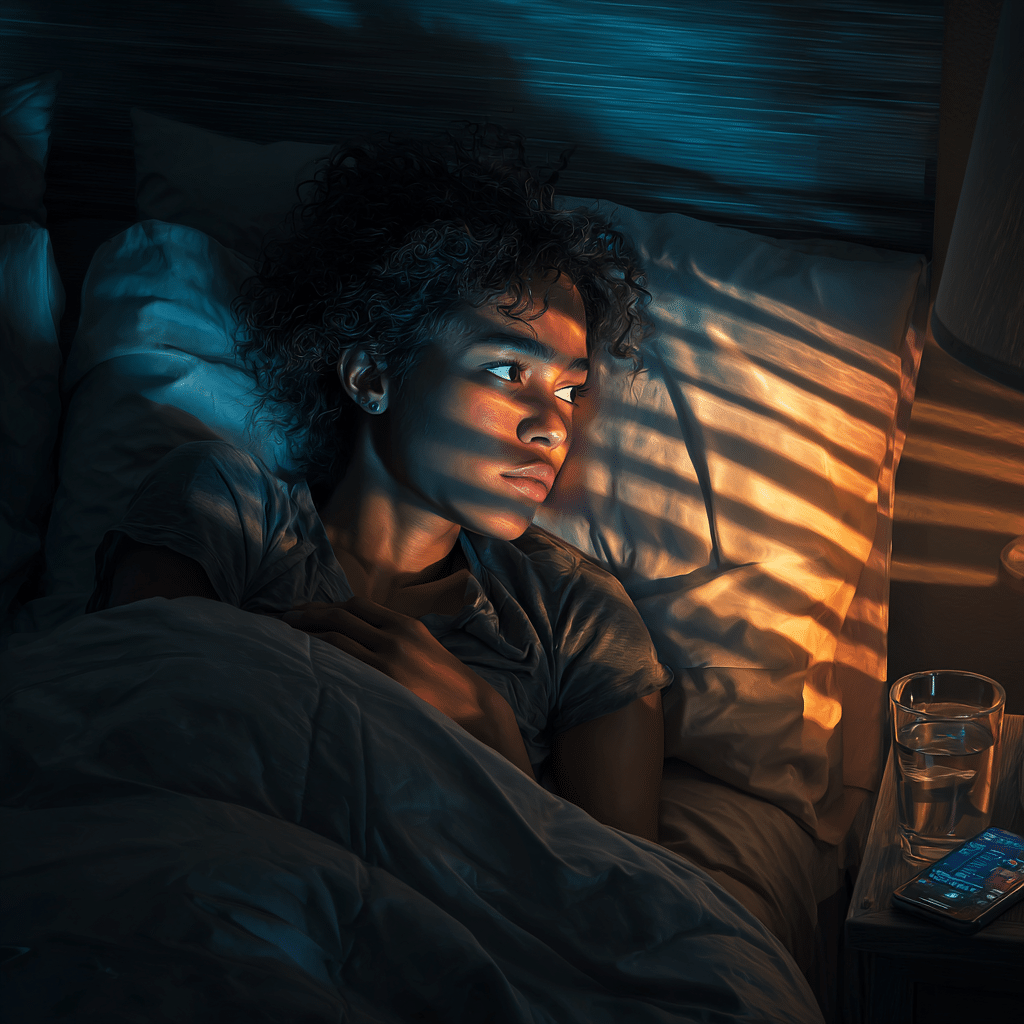
The bedroom ceiling at 3 AM has become an unwanted companion for millions of young adults. Consider the case of a 27-year-old man who sought treatment for persistent insomnia accompanied by generalized anxiety disorder. His symptoms had lasted years—difficulty initiating sleep, daytime fatigue, excessive worry, and irritability that couldn’t be controlled. Despite multiple medications including alprazolam, paroxetine, and risperidone, he found himself trapped in a cycle where anxiety about sleep made sleep impossible. Lack of sleep intensified his anxiety further. This young man’s experience represents a growing crisis affecting the 18-35 age demographic worldwide.
The Surprising Prevalence: You’re Not Alone
When we examine the numbers, the scale of insomnia and anxiety in young adults becomes staggering. Research published in BMC Psychiatry focused on non-clinical young adult males. Sleep quality explained between 14-21% of the variance in anxiety symptoms. But here’s what really caught researchers’ attention: insomnia didn’t just correlate with anxiety—it predicted future anxiety development.
A landmark network analysis study of 1,571 insomnia patients revealed that anxiety and depression prevalence reached 87-88% respectively. These rates were “significantly higher than that in the population,” as the researchers noted. For young adults specifically (aged 18-44), these interconnections appeared even more densely woven than in older populations.
What about the opposite direction? Can anxiety predict insomnia? Absolutely. A cross-sectional study of university students in Ethiopia discovered that younger students (25 years or under) had more than double the odds of insomnia. They were compared to their slightly older peers. The younger age group also showed significantly higher anxiety levels. Each one-point increase in anxiety scores correlated with a 5% increase in insomnia risk.
The natural history of insomnia reveals an even more concerning pattern. The one-year incidence rate of acute insomnia stands at 27%—meaning more than one in four adults will develop insomnia symptoms in any given year. While most recover within weeks, approximately 2 in 100 individuals progress to chronic insomnia. Young adults represent a disproportionate share of these cases.

The Neurobiological Connection: Why This Isn’t “Just Stress”
Understanding why insomnia and anxiety in young adults create such a tenacious partnership requires diving into the brain’s stress-response systems. At the center sits the hypothalamic-pituitary-adrenal (HPA) axis—your body’s primary stress management network.
Dr. Michael Perlis, Director of the Behavioral Sleep Medicine Program at the University of Pennsylvania and one of the founding members of the Society of Behavioral Sleep Medicine, has spent decades investigating what he calls “conditioned CNS activation as a primary perpetuator of chronic insomnia.” His work, alongside that of Dr. Daniel Buysse at the University of Pittsburgh (holder of the UPMC Endowed Chair in Sleep Medicine), has illuminated how insomnia fundamentally alters brain state.
Here’s how the vicious cycle unfolds: When you experience stress or anxiety, your hypothalamus releases corticotropin-releasing hormone (CRH). This triggers the pituitary gland to release adrenocorticotropin hormone (ACTH), ultimately causing your adrenal glands to secrete cortisol. This cascade normally follows a predictable daily rhythm. Cortisol peaks in the early morning to promote wakefulness and declines throughout the day to facilitate sleep.
But in chronic insomnia, this rhythm becomes profoundly disrupted. Research published in Endotext demonstrates that insomnia patients show a 24-hour elevation in ACTH and cortisol secretion. This is consistent with persistent central nervous system hyperarousal. Even more tellingly, studies have found that evening cortisol levels while awake correlate directly with awakenings. The correlation is with the number of awakenings during the subsequent night.
This creates what researchers call a “vicious circle”: elevated HPA activity before sleep promotes sleep fragmentation. Sleep fragmentation in turn increases evening cortisol levels. Over time, this biological feedback loop becomes self-sustaining. As noted in a comprehensive review on HPA axis and sleep, “multiple studies have shown that insomnia precedes and is a risk factor for the development of psychiatric conditions.” These conditions include depression and anxiety.
The impact extends beyond cortisol. Young adults with insomnia and anxiety show impaired executive function—the brain’s ability to regulate thoughts and emotions. Research indicates that “sleep loss may impair executive function.” This then diminishes the ability to regulate or inhibit symptoms of anxiety. This creates another reinforcing loop: poor sleep → worse emotional regulation → more anxiety → poorer sleep.
There’s a fascinating temporal dimension too. While insomnia often appears before or simultaneously with mood disorders (around 40% and 22% respectively), the relationship with anxiety disorders shows a different pattern. According to research, insomnia appeared simultaneously with (~38%) or after (~34%) the onset of anxiety disorders. This suggests that anxiety may in some cases directly trigger sleep problems.
When the Mind Won’t Quiet: Cognitive Arousal and Intrusive Thoughts
Beyond hormones and brain chemistry lies another crucial mechanism: presleep cognitive arousal. Anyone who’s lain awake replaying conversations or worrying about tomorrow knows this state intimately. For young adults with anxiety, the inability to sleep creates what one study described as “a period of unstructured time in bed at night marked by social isolation and limited behavioral distractions.” It’s a veritable tabula rasa for perseverating on trials and tribulations.
Think about it: when you can’t sleep, there are no colleagues to distract you, no emails demanding attention, no errands to run. Just you and your thoughts in the dark. This environmental reality makes individuals with sleep difficulties “especially vulnerable to intrusive thoughts,” as the research notes.
The consequences ripple outward. A two-year prospective study found that poor sleepers experiencing stress-induced cognitive intrusions were at substantially higher risk for developing depression. But here’s the intriguing part: it was the combination of insomnia symptoms and cognitive intrusions that created the highest risk, not either factor alone.
This finding highlights something important: insomnia and anxiety in young adults don’t just coexist—they interact synergistically, each amplifying the other’s effects through multiple biological and psychological pathways.
Real-World Manifestations: How This Plays Out
Beyond statistics and mechanisms, how does this bidirectional relationship actually manifest? A Brazilian case report of a 32-year-old woman provides illuminating details. She had been previously treated for anxiety with some improvement in her anxious symptoms—but her sleep quality never improved. Only when treatment specifically targeted her insomnia through cognitive-behavioral therapy did both her sleep and her anxiety symptoms improve substantially.
This case “points to the importance of caring for patients’ sleep habits, even those whose primary complaint is another mental disorder,” the researchers concluded. It’s a pattern I’ve seen repeatedly: treating only anxiety while ignoring sleep problems leaves patients partially helped at best. The reverse is equally true.
Another instructive case involved a 13-year-old boy with chronic insomnia and daytime sleepiness linked to excessive nighttime media use—a particularly relevant scenario for today’s young adults. Simply implementing a 9 PM screen time restriction led to significant sleep improvements. While this patient was younger than our 18-35 focus, the pattern reflects a broader cultural phenomenon affecting the entire young adult demographic.
Recent research at Stanford Medicine led by Dr. Jamie Zeitzer discovered something counterintuitive about young adults and sleep timing. Going to bed early and waking early benefits mental health regardless of whether someone is naturally a night owl. This surprised the researchers, who expected it would be healthier to live aligned with one’s “chronotype.” Yet late bedtimes correlated with higher depression and anxiety risks even in natural night owls.
Dr. Zeitzer’s explanation involves what he calls “mind after midnight”—the idea that after midnight, your brain makes choices it wouldn’t make at noon. “Late at night, there are fewer social guardrails because everyone else is asleep. You’ve been awake for 16 hours, so the cumulative experiences and stress of the day can change your decision-making processes,” he noted.
Save This Article for Later – Get the PDF Now

The Cultural Context: Why Now?
The prevalence of insomnia and anxiety in young adults isn’t occurring in a vacuum. Multiple cultural and societal factors have converged to create what some call a perfect storm for sleep and mental health problems.
The Digital Dilemma: The National Sleep Foundation’s 2024 Sleep in America Poll found that healthy sleep behaviors are closely linked to mental health in teens. Nearly 80% of teens earning a grade of “B” or higher for sleep behaviors were free of significant depressive symptoms. Yet recent data shows that 45% of U.S. teens say social media hurts their sleep, and 40% report it impacts their productivity. More than 4 in 10 teens acknowledge spending too much time on social media.
The Economic Precarity Crisis: A substantial body of research has identified financial insecurity as a primary driver of deteriorating mental health and sleep quality among young adults. Studies examining the relationship between economic stress and health outcomes reveal a particularly concerning pattern: financial worry doesn’t just create psychological distress—it directly disrupts sleep architecture and intensifies anxiety symptoms through chronic stress activation.
Research published in the Journal of Youth Studies found that young adults facing student debt burdens, housing unaffordability, and employment instability show significantly elevated rates of both insomnia and anxiety disorders compared to their economically stable peers. The mechanisms are multifaceted: financial stress chronically activates the HPA axis (the same stress system we discussed earlier), leading to sustained cortisol elevation that fragments sleep. This creates a devastating feedback loop where poor sleep impairs job performance and decision-making, potentially worsening financial circumstances, which further disrupts sleep.
A longitudinal study tracking young adults over five years discovered that those experiencing housing insecurity were 2.3 times more likely to develop chronic insomnia and 1.8 times more likely to meet criteria for generalized anxiety disorder. The researchers noted that “the psychological burden of uncertain living situations creates a state of chronic vigilance that is fundamentally incompatible with the relaxation required for healthy sleep.”
The student debt crisis particularly impacts the sleep-anxiety connection. A 2023 study in Social Science & Medicine found that young adults with student loan debt exceeding $50,000 reported significantly worse sleep quality and higher anxiety scores than those without debt, even when controlling for income level. The constant cognitive burden of financial obligations—what researchers call “financial cognitive load”—creates the same type of presleep cognitive arousal that perpetuates insomnia. As one researcher explained, “When you’re lying in bed calculating whether you can make rent and loan payments, your brain cannot transition into sleep mode.”
Research from Youth Futures Foundation identified “declining sleep quality” as one of several key drivers of young people’s deteriorating mental health, alongside employment precarity and affordability pressures. Young people from households experiencing financial difficulties consistently report poorer mental health and worse sleep than their peers. The organization’s research emphasizes that this isn’t simply about absolute poverty—it’s about the perceived instability and unpredictability of financial futures that keeps young adults’ stress systems perpetually activated.
The Orthosomnia Phenomenon: Perhaps most ironically, the wellness industry’s focus on optimization has created what sleep experts call “orthosomnia”—an obsession with achieving perfect sleep that paradoxically creates sleep anxiety. According to the Global Wellness Institute, more than one-third of Americans occasionally or consistently worry about their sleep quality, and this anxiety about sleep itself has become a significant barrier to actual rest.
These factors create what we might call a “sleep-anxiety complex”—an interconnected web of biological vulnerability, psychological stress, and environmental pressures that particularly affects the 18-35 demographic navigating early adulthood transitions.
Why Young Adults Are Particularly Vulnerable
But why do young adults specifically face such elevated risk for this bidirectional relationship? Several factors converge during these formative years.
Life Transitions: The 18-35 age range encompasses major life transitions—leaving home, starting college, beginning careers, forming long-term relationships, potentially having children. Research on university students noted that younger students “experiencing university life for the first time, are required to make some major adjustments.” These include sudden changes in their sleeping environment, an unfamiliar type of accommodation, the anxiety of staying away from family, and a transition to higher academic standards of performance.
Neurobiological Development: While the brain continues developing into the mid-20s, the stress-response systems are fully functional. This creates a situation where young adults have mature stress reactions but still-developing regulatory capacity. This mismatch may partially explain why anxiety so readily disrupts sleep in this demographic.
Social Isolation Paradox: Despite being more “connected” than ever through technology, youth mental health statistics reveal concerning rates of social disconnection. In 2024, a quarter of young people ages 10-24 said they did not feel supported by family. This social isolation removes important buffers against both anxiety and sleep problems.
Sleep Reactivity: Some researchers propose that young adults may have higher “sleep reactivity”—meaning their sleep systems respond more dramatically to stress. Dr. Perlis’s research on the natural history of insomnia suggests that “high sleep reactivity interacts with greater life stress to predict the onset of acute insomnia.” Given that young adulthood often involves maximal life stress combined with still-developing coping skills, this creates vulnerability.
The Network Effect: How Symptoms Reinforce Each Other
A groundbreaking 2025 study used network analysis to examine the interconnections between insomnia symptoms and psychological distress. The study included over 1,200 young adults with a mean age of 23.3 years. The researchers classified participants as either “good sleepers” or “poor sleepers” and then mapped the connections between various symptoms.
The findings were striking: poor sleepers showed much denser symptom networks. This meant their symptoms were more tightly interconnected. “Worry about sleep” emerged as one of the most central nodes in both groups, but anxiety symptoms played a far more influential role in poor sleepers’ networks. The researchers concluded that “worry about sleep, stress, and anxiety play key roles in sleep-mental health links.”
This network perspective helps explain why insomnia and anxiety in young adults can be so difficult to treat when addressed separately. You’re not dealing with two independent problems but rather an integrated system where changing one element ripples through the entire network. It’s like trying to untangle two chains that have become intertwined—pulling on just one rarely works.
Breaking the Cycle: What Actually Works
Given this complex, bidirectional relationship, what approaches show genuine effectiveness? Fortunately, substantial evidence exists for interventions targeting both conditions simultaneously.
Cognitive Behavioral Therapy for Insomnia (CBT-I) has emerged as the gold-standard treatment. A 2025 systematic review and meta-analysis of 22 randomized controlled trials involving over 6,000 young adult university students found significant results. Psychological interventions significantly improved sleep quality. CBT-I specifically showed effect sizes of 0.72. This was substantially larger than mindfulness interventions (0.16).
What makes CBT-I particularly relevant for insomnia and anxiety in young adults is that it addresses both the behavioral and cognitive components of the problem. As explained in work by Drs. Perlis, Buysse, and colleagues, CBT-I helps patients:
- Re-pair sleep with the bed (instead of pairing the bed with anxiety and wakefulness)
- Build up adequate “sleep hunger” by avoiding long daytime naps
- Address catastrophic thinking about sleep (“If I don’t get 8 hours, I’ll fail my exam”)
- Establish consistent sleep-wake schedules that align with circadian rhythms
The beauty of CBT-I is that improvements in sleep often lead to improvements in anxiety—not because anxiety is being directly treated, but because the biological mechanisms linking the two are being disrupted. Research on diabetes patients with insomnia found that CBT-I improved not just sleep quality but also anxiety symptoms. Adherent patients even showed fasting glucose reductions.
For young adults dealing with both conditions, there’s also growing evidence for integrated approaches. Breaking the Anxiety-Sleep Cycle through evidence-based techniques that address both stress and sleep simultaneously appears more effective than treating either condition in isolation.
Behavioral modifications matter enormously. The case studies we’ve examined highlight practical interventions:
- Screen time restrictions particularly in the hours before bed (remember that 45% of teens report social media hurts their sleep)
- Regular sleep-wake schedules even on weekends—Dr. Zeitzer’s research suggests this matters more than we realized
- Exercise timing as research shows physical activity can help rewire sleep architecture
- Stress management techniques integrated with sleep hygiene practices
When medication is necessary, the evidence suggests combining it with behavioral interventions produces better long-term outcomes. This is superior to medication alone. The clinical guidelines note that “tapering and discontinuation of hypnotic medication is facilitated by concurrent application of cognitive-behavioral therapies.” These therapies increase rates of successful discontinuation and duration of abstinence.
Looking Forward: A Call for Comprehensive Understanding
As I’ve examined the research on insomnia and anxiety in young adults, what strikes me most is how the traditional medical model of treating discrete diagnoses falls short here. We’re not dealing with “insomnia plus anxiety.” We’re dealing with an integrated psychophysiological syndrome where sleep disruption and anxiety amplify each other through multiple biological and psychological mechanisms.
The recent American Academy of Sleep Medicine survey released in May 2024 found that mental health conditions disrupt sleep for a majority of Americans. Yet how often do we screen for sleep problems when someone presents with anxiety? How often do we assess anxiety when someone complains of insomnia? The bidirectional nature of this relationship demands bidirectional assessment and treatment.
For young adults navigating the complex landscape of early adulthood—with its financial pressures, social media influences, economic precarity, and life transitions—understanding this interconnection isn’t just academically interesting. It’s potentially life-changing. Knowing that treating sleep problems can improve anxiety, and that managing anxiety can enhance sleep, opens therapeutic possibilities. These possibilities cannot be provided by treating either condition alone.
Here’s what I find myself reflecting on: We’ve created a society where young adults are expected to be constantly productive, perpetually connected, and somehow maintain perfect sleep hygiene. And they’re doing this while navigating unprecedented stressors. Is it any wonder that 27% develop acute insomnia in a given year? That anxiety and insomnia have become so tightly intertwined in this demographic?
Perhaps the real question isn’t “How do we fix this problem?” but rather “How do we create conditions where this problem becomes less likely in the first place?”
What’s your experience been with the anxiety-insomnia cycle? Have you noticed connections between your stress levels and sleep quality? Understanding your own patterns—without judgment—can be the first step toward addressing them effectively.

FAQ
Q: What is the HPA axis and why does it matter for sleep and anxiety?
A: The hypothalamic-pituitary-adrenal (HPA) axis is your body’s primary stress response system. It’s a communication network between your hypothalamus (in your brain), pituitary gland, and adrenal glands. When you experience stress, this axis triggers the release of cortisol, a hormone that helps you respond to threats. In people with chronic insomnia and anxiety, this system becomes dysregulated—cortisol levels stay elevated even when they should drop (particularly in the evening), creating a biological state that promotes both wakefulness and anxiety symptoms.
Q: What does “bidirectional relationship” mean in the context of insomnia and anxiety?
A: A bidirectional relationship means that each condition can cause or worsen the other—the causation flows in both directions. Anxiety can trigger insomnia by elevating cortisol, creating cognitive arousal, and making it difficult to relax at bedtime. Simultaneously, insomnia can trigger or worsen anxiety by impairing executive function (your ability to regulate emotions), disrupting stress hormones, and creating anxiety specifically about sleep itself. This creates a self-perpetuating cycle where each problem reinforces the other.
Q: How common is insomnia among young adults aged 18-35?
A: Research shows that the one-year incidence rate of acute insomnia (experiencing insomnia symptoms for 2-12 weeks) is approximately 27% in adults—meaning more than one in four adults will develop insomnia in any given year. Young adults, particularly those under 25, show even higher vulnerability. Among university students specifically, prevalence rates have been reported as high as 44-61% in some studies, though rates vary based on how insomnia is defined and measured.
Q: What is CBT-I and why is it considered the “gold standard” treatment?
A: CBT-I stands for Cognitive Behavioral Therapy for Insomnia. It’s a structured program (typically 4-8 sessions) that addresses both the thoughts and behaviors perpetuating insomnia. CBT-I teaches specific techniques including: sleep restriction (limiting time in bed to build sleep drive), stimulus control (re-associating the bed with sleep rather than wakefulness), cognitive restructuring (addressing catastrophic thoughts about sleep), and sleep hygiene education. It’s considered the gold standard because research consistently shows it produces better long-term outcomes than medication, with effect sizes around 0.72 in young adult populations. Unlike sleep medications, the improvements from CBT-I persist after treatment ends.
Q: What is “orthosomnia” and how does it relate to sleep anxiety?
A: Orthosomnia is a term coined by sleep researchers to describe an obsessive quest for “perfect” sleep—often driven by sleep tracking devices and wellness culture. People with orthosomnia become so focused on achieving optimal sleep metrics (like 8 hours of deep sleep, perfect sleep scores, etc.) that this focus itself creates anxiety about sleep, which paradoxically makes sleep worse. It represents a modern irony: the tools and information meant to improve sleep can, when used obsessively, create the very sleep anxiety they’re supposed to alleviate.
Q: Why are young adults particularly vulnerable to both insomnia and anxiety?
A: Several factors converge to make the 18-35 age range especially vulnerable: (1) Major life transitions (leaving home, starting college/careers, forming relationships) create both stress and disrupted routines; (2) The brain is still developing regulatory capacity into the mid-20s while stress response systems are fully mature; (3) Financial pressures and economic precarity disproportionately affect this demographic; (4) Social media use and screen time habits are highest in young adults; (5) Social isolation despite digital connectivity; and (6) Cultural expectations around constant productivity and achievement. These factors create a “perfect storm” for the anxiety-insomnia cycle to develop and persist.
Q: What does “presleep cognitive arousal” mean?
A: Presleep cognitive arousal refers to mental activity—racing thoughts, worries, rumination—that occurs during the period when you’re trying to fall asleep. Instead of your mind quieting down, it becomes active with intrusive thoughts about the day’s events, tomorrow’s worries, or concerns about not sleeping. For people with anxiety, this cognitive arousal is particularly problematic because bedtime creates an environment with few distractions (it’s dark, quiet, you’re alone) that would normally pull attention away from worries. This makes the bed a “tabula rasa”—blank slate—for anxious thoughts to proliferate.
Q: Can treating insomnia actually improve anxiety symptoms?
A: Yes—and this is one of the most important findings in sleep medicine research. Multiple studies have shown that effectively treating insomnia (particularly with CBT-I) leads to improvements in anxiety symptoms even when anxiety isn’t directly targeted by the treatment. This occurs because the biological mechanisms (HPA axis dysregulation, executive function impairment) underlying both conditions are interconnected. By improving sleep, you’re also helping to normalize cortisol rhythms, reduce cognitive arousal, and improve emotional regulation capacity—all of which help alleviate anxiety. One case study showed a woman whose anxiety symptoms improved substantially only after her insomnia was specifically addressed, despite previous anxiety treatment.
Q: What is the “vicious cycle” of cortisol and sleep fragmentation?
A: Research has identified a self-perpetuating biological feedback loop: Elevated cortisol levels in the evening (when cortisol should be low) promote sleep fragmentation—meaning you wake up multiple times during the night or have lighter, less restorative sleep. This fragmented, poor-quality sleep then causes the body to produce even more cortisol the next evening, particularly in response to the stress of not sleeping well. This creates a cycle where each night of poor sleep makes the next night worse by further dysregulating the HPA axis. Breaking this cycle often requires interventions that directly address both sleep behavior and stress physiology.
Q: How does sleep duration affect mental health in young adults specifically?
A: Research on young adult university students has found what scientists call a “U-shaped association” between sleep duration and mental health: both shorter sleep durations (less than 7 hours) and longer sleep durations (more than 9 hours) are associated with higher risks for anxiety, depression, and poor wellbeing outcomes. The optimal range appears to be 8-9 hours for most young adults. Importantly, this pattern holds true for both male and female students, suggesting sleep duration acts as what researchers call a “transdiagnostic marker”—meaning it’s relevant across multiple types of mental health conditions.
Q: What role does social media play in the insomnia-anxiety connection for young adults?
A: Social media affects both sleep and mental health through multiple pathways. Recent data shows 45% of U.S. teens report that social media hurts their sleep, and 40% say it impacts their productivity. The mechanisms include: (1) Blue light from screens suppressing melatonin production; (2) Cognitive arousal from engaging content making it hard to “turn off” the mind; (3) Social comparison and FOMO (fear of missing out) creating anxiety; (4) Displacement of sleep time—teens using social media late into the night; and (5) Exposure to upsetting content or cyberbullying increasing stress. The combination creates a situation where social media use can simultaneously trigger anxiety and disrupt the sleep that would help manage that anxiety.
Q: Are there genetic factors that make some young adults more vulnerable to the anxiety-insomnia cycle?
A: Yes, research suggests genetic vulnerability in several areas. Some people have genetic variations affecting: (1) How their bodies metabolize caffeine—those who metabolize it slowly are more vulnerable to caffeine-induced sleep disruption; (2) Their HPA axis sensitivity—certain genetic variants in glucocorticoid and mineralocorticoid receptors affect how strongly the stress response activates; (3) “Sleep reactivity”—some individuals’ sleep systems respond much more dramatically to stress; and (4) Anxiety temperament—genetic factors influence baseline anxiety levels and stress reactivity. However, genes aren’t destiny—environmental factors, behaviors, and interventions can substantially modify these genetic predispositions.
Q: What is the relationship between insomnia, anxiety, and depression in young adults?
A: The three conditions form a complex interconnected network. Research shows that in most cases, insomnia appears prior to or simultaneously with mood disorders. However, the temporal relationship with anxiety disorders differs—insomnia appeared simultaneously with (~38%) or after (~34%) the onset of anxiety disorders, suggesting anxiety may directly trigger sleep problems. Depression is also frequently present, with 87-88% of insomnia patients meeting criteria for either anxiety or depression. The three conditions share overlapping neurobiological mechanisms (HPA axis dysfunction, disrupted circadian rhythms, impaired emotional regulation) and each can exacerbate the others, creating complex clinical presentations that require comprehensive treatment approaches.